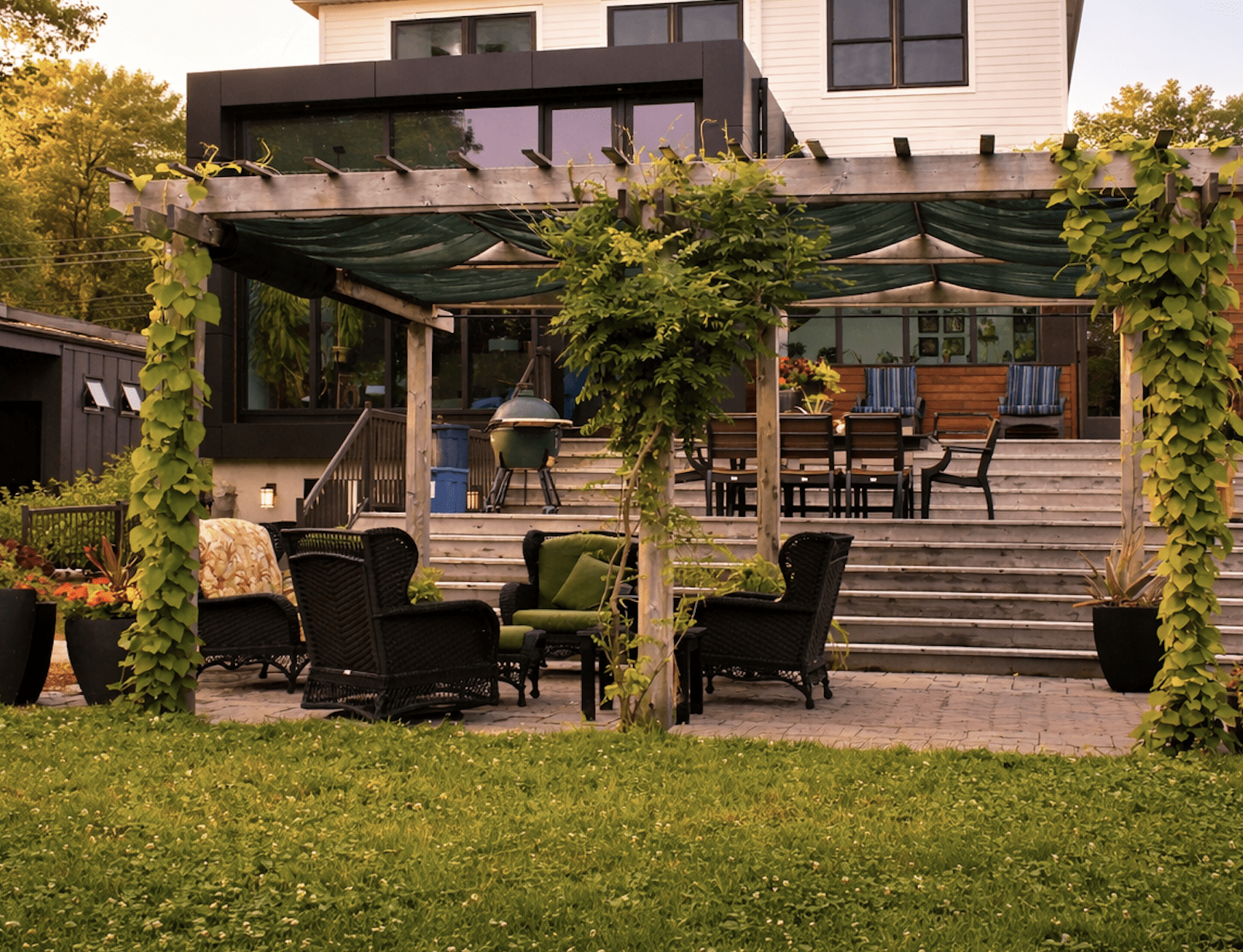
A Two-Property Landscape Built Side-by-Side
Waterloo Region, Ontario | Drystone walls, permeable details, patios,
woodland trails, and layered planting—designed as one cohesive plan
Most landscape projects focus on a single lot. This one was different: we designed and built the outdoor spaces for two adjacent properties at the same time, using a shared concept
plan so the front streetscape and backyard experiences felt intentional together—not like two separate projects happening to touch at the property line.
Working side-by-side also solved a real-world challenge: when you’re building retaining walls, managing grades, and establishing gardens along a shared edge, the best results come
from one coordinated design, one sequence, and one standard of finish—especially when access, drainage, and planting transitions need to line up cleanly.
The design intent
The goal was a landscape that felt settled and functional immediately, with a structure that could handle everyday use and planting that would mature into a
natural, layered look over time.
Key themes across both properties:
- Strong “bones”: drystone retaining, natural stone steps, durable paving, clean grading
- Thoughtful water management: permeable paver strips and practical base prep
- Naturalistic softness: shrubs, perennials, groundcovers, and woodland-style planting where shade and trees called for it
- A cohesive shared edge: planting and grading that respected the relationship between the two lots
Big moves across the two properties
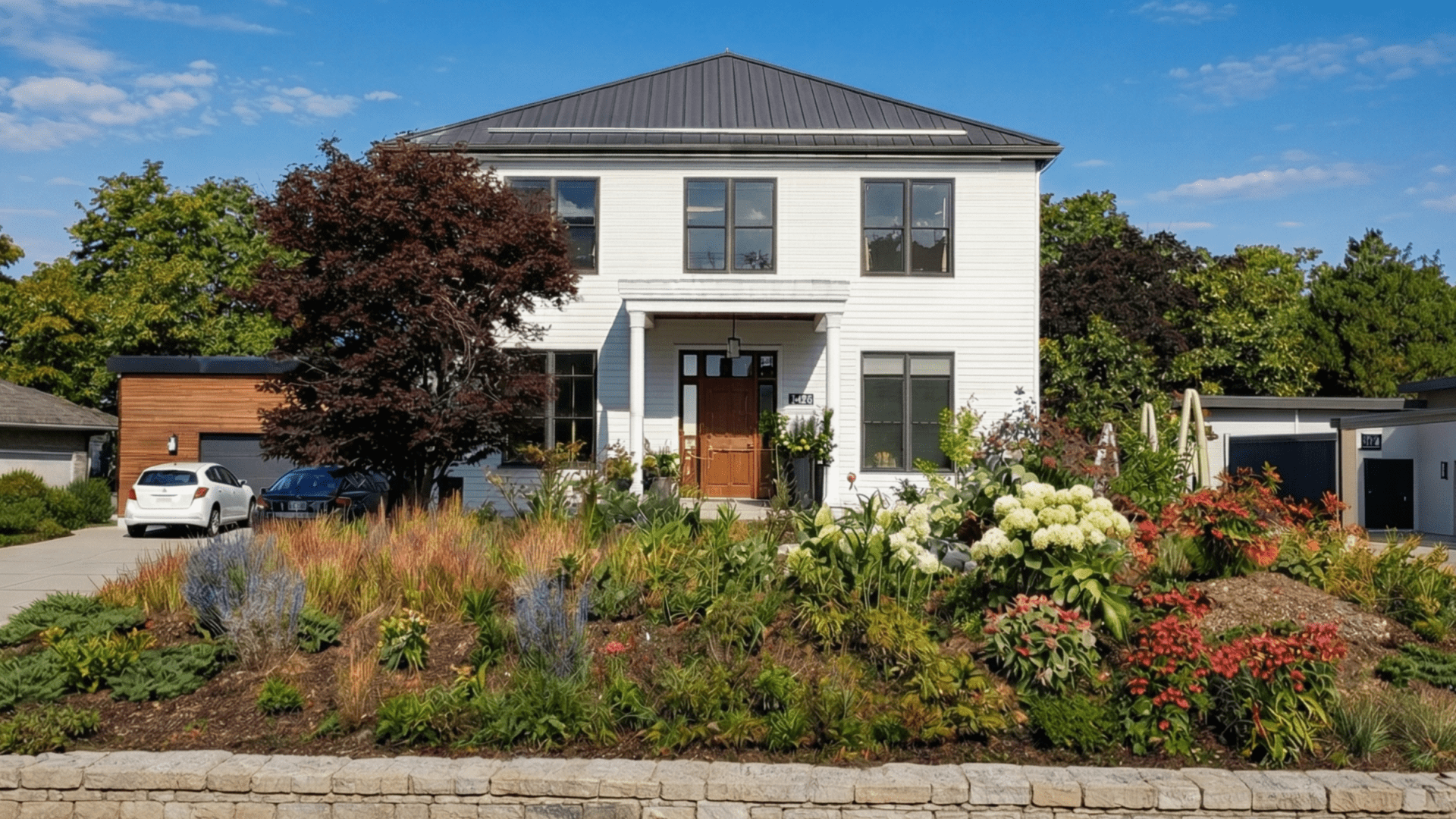
1) Front arrival that feels finished
On the primary property, the front entry focused on clear circulation and a strong first impression:
- Paver walkways (Unilock Thornbury) for a clean, timeless surface
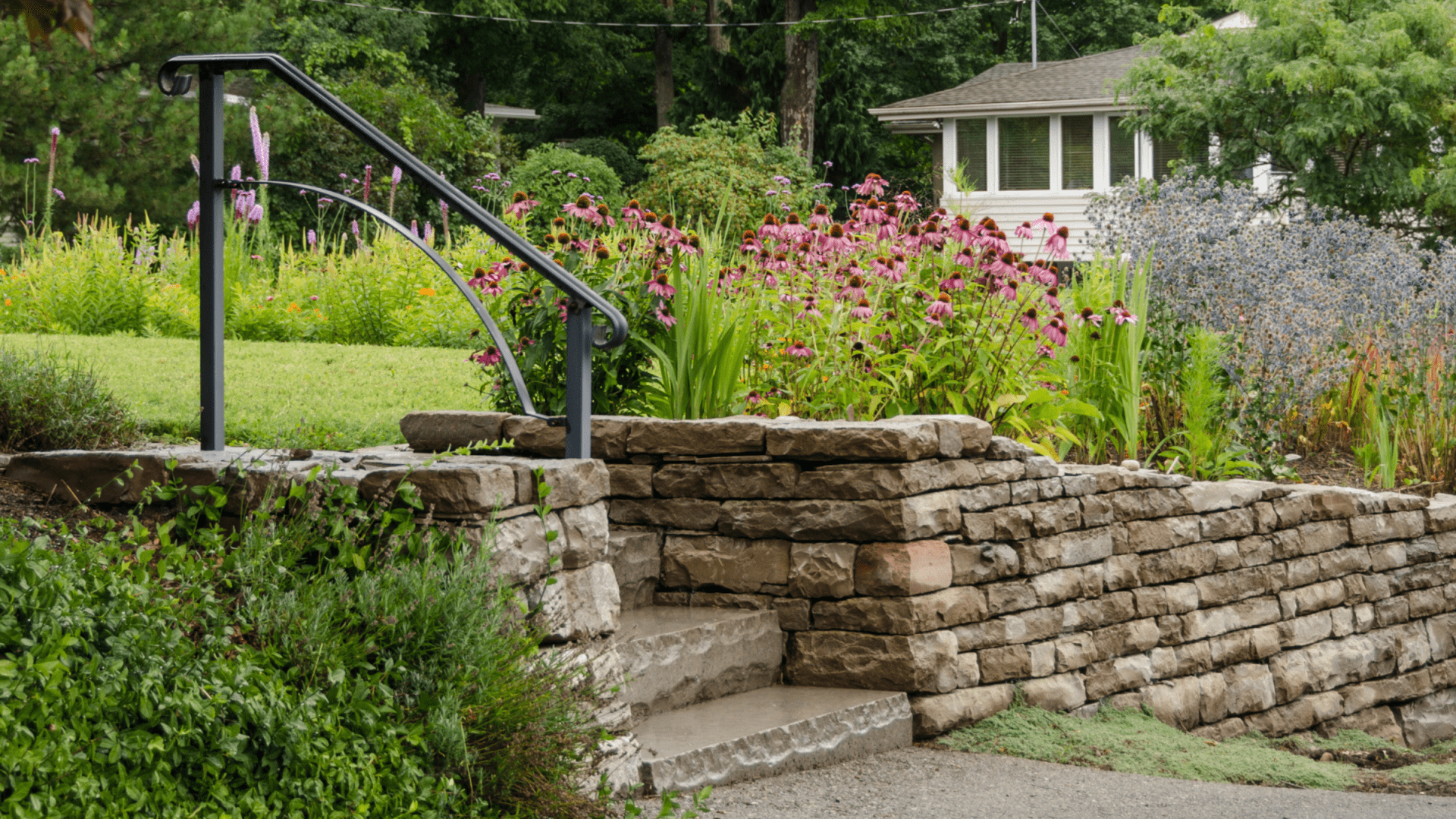
- Natural stone slab steps for a substantial, architectural feel
- Drystone retaining to manage grade changes and frame the approach
On the adjacent property, the front was supported with:
- Foundation and side gardens to soften the home and define edges
Large tree planting to quickly add scale and an established feel
2) Retaining and grade control (the “make it feel settled” work)
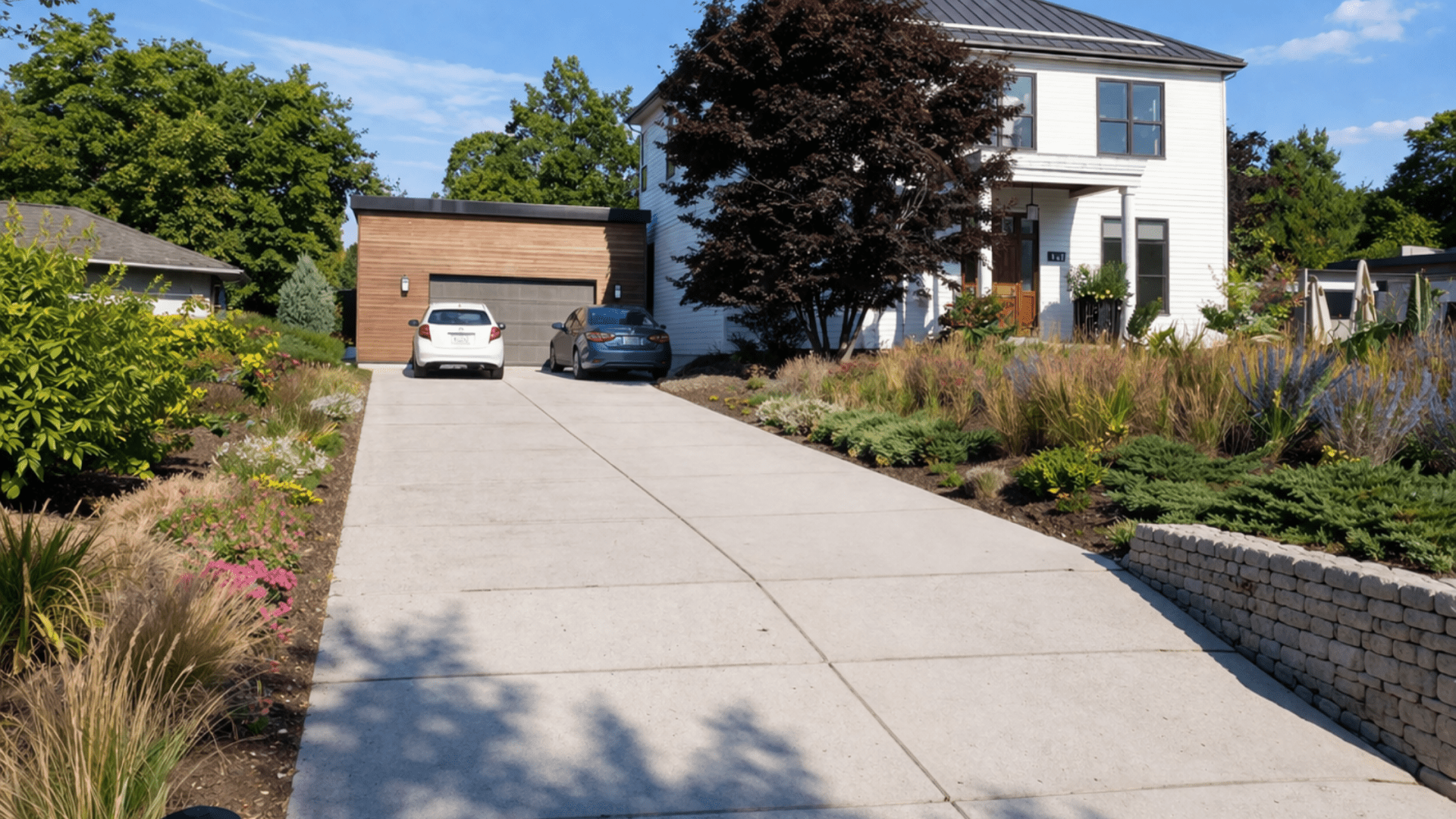
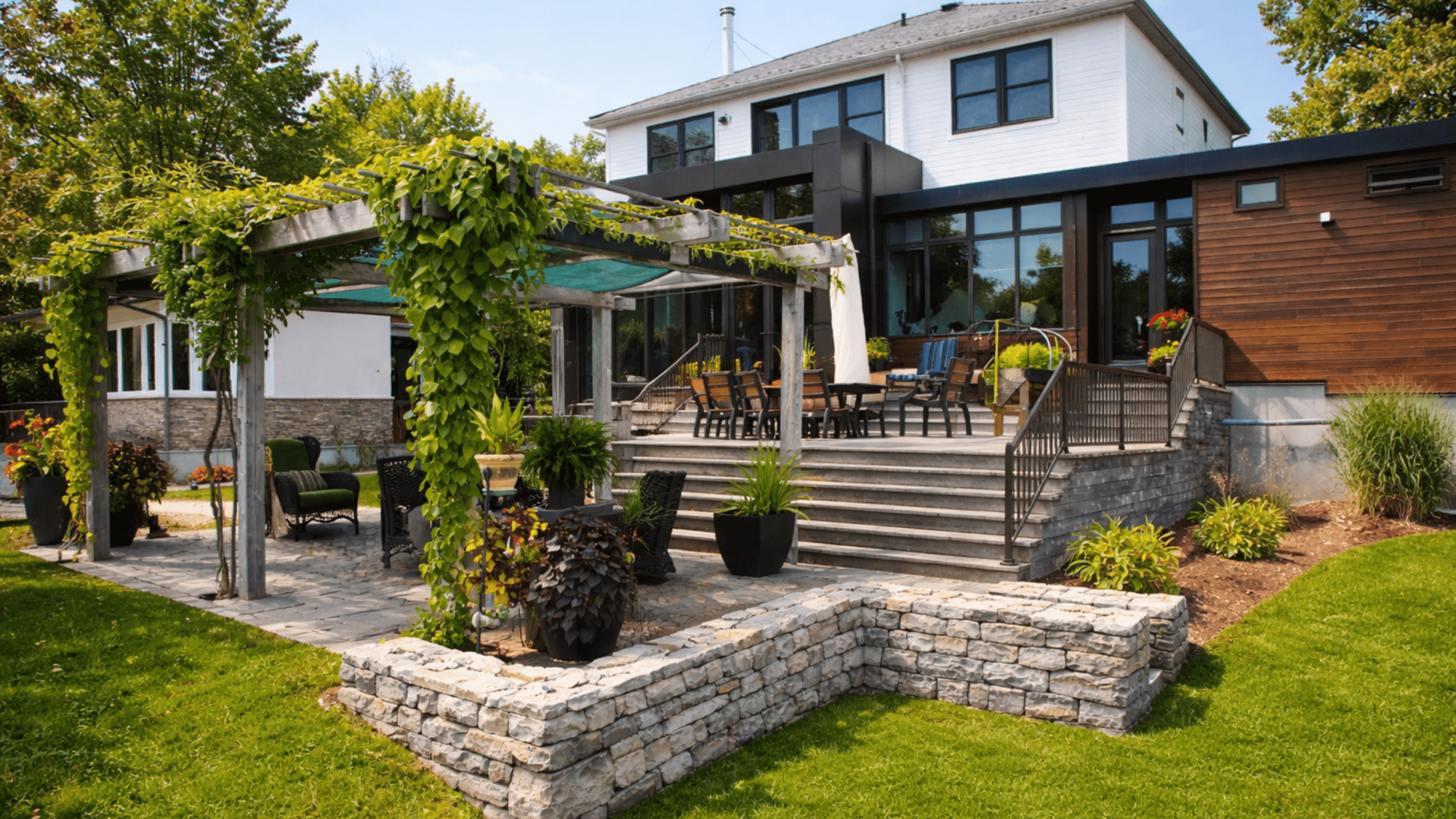
One of the biggest pieces of the overall project was the drystone retaining wall system—especially on the primary property where retaining was used along key edges like the driveway, walkways, and shared boundary areas. It wasn’t just about holding soil; it gave the entire property a grounded, finished look.
In the concept plan, you can see how the layout and grades were being organized early—garage/drive zones, utility access, and the way the landscape needed to “flow” across the two lots rather than fight the edges.
3) Driveways designed with permeability in mind
Both properties included asphalt driveways with permeable paver strips, which is a smart way to add infiltration and manage water while keeping the driveway practical and clean-looking.
- Property A: permeable strip with Unilock Eco-Priora and chip stone-filled joints
- Property B: permeable strip with Unilock Eco-Optiloc
This approach is especially helpful where you want a driveway that performs well, but also want to be deliberate about runoff and drainage behaviour.
4) Backyard living spaces (patios, steps, and “usable zones”)
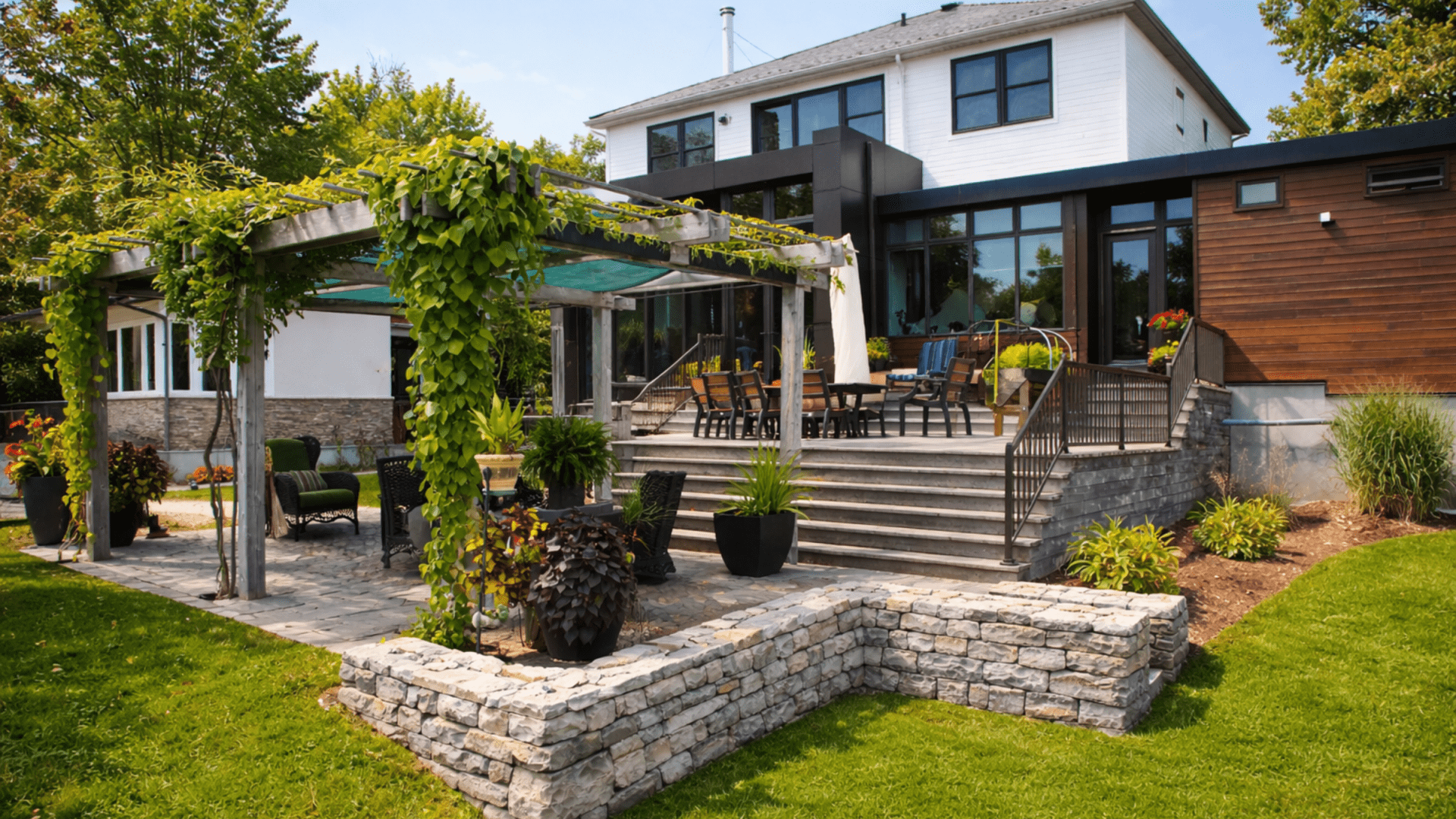
The primary property’s backyard included a defined patio with:
- A two-zone paver patio (including an “area rug” detail using Unilock Copthorne inside Thornbury)
- Drystone retaining and natural stone steps to transition down to turf areas
- A dedicated solution for basement door access with proper stairs, landing, retaining, and integration around an existing drain line
On the adjacent property, the backyard experience leaned more naturalistic and shaded:
- Walking trails built with a gravel base and compacted stone dust finish
- An informal seating area tucked into an existing tree grouping
- Select boulder edging to define trail lines and give the path a natural structure
Together, the two backyards offered different “vibes” while still feeling related—one more patio-forward, one more woodland-walk-forward.
Planting approach: layered, natural, and designed to mature
Planting did a lot of heavy lifting on this project—softening new construction lines, creating privacy, and building that “established” feeling sooner.
Across the two properties, planting included combinations of:
- Foundation gardens (front, sides, and rear)
- Perennial + shrub borders to define the edge between the livable lawn and naturalized areas
- Woodland/understory planting in shaded zones
- Groundcover border planting with a focus on easy care and wildlife value (native-forward selections were noted)
A key detail: one section of planting was intentionally planned to extend through a shared area between properties so the transition felt seamless rather than chopped up.
Grading, turf, and “project closeout.”
New landscapes don’t feel complete until the grading is clean and the turf is re-established.
This scope included:
- Managing existing fill/topsoil left onsite
- Fine grading for lawn areas
- Sod in key areas plus seed where appropriate
- A drought-tolerant low-mow lawn/seed mix was specified in places as an alternative to traditional turf
There was also targeted work for erosion control and naturalization planting on a steep slope area (shrubs/young plants installed to help stabilize and re-green the zone).
Construction sequencing: why doing both properties at once mattered
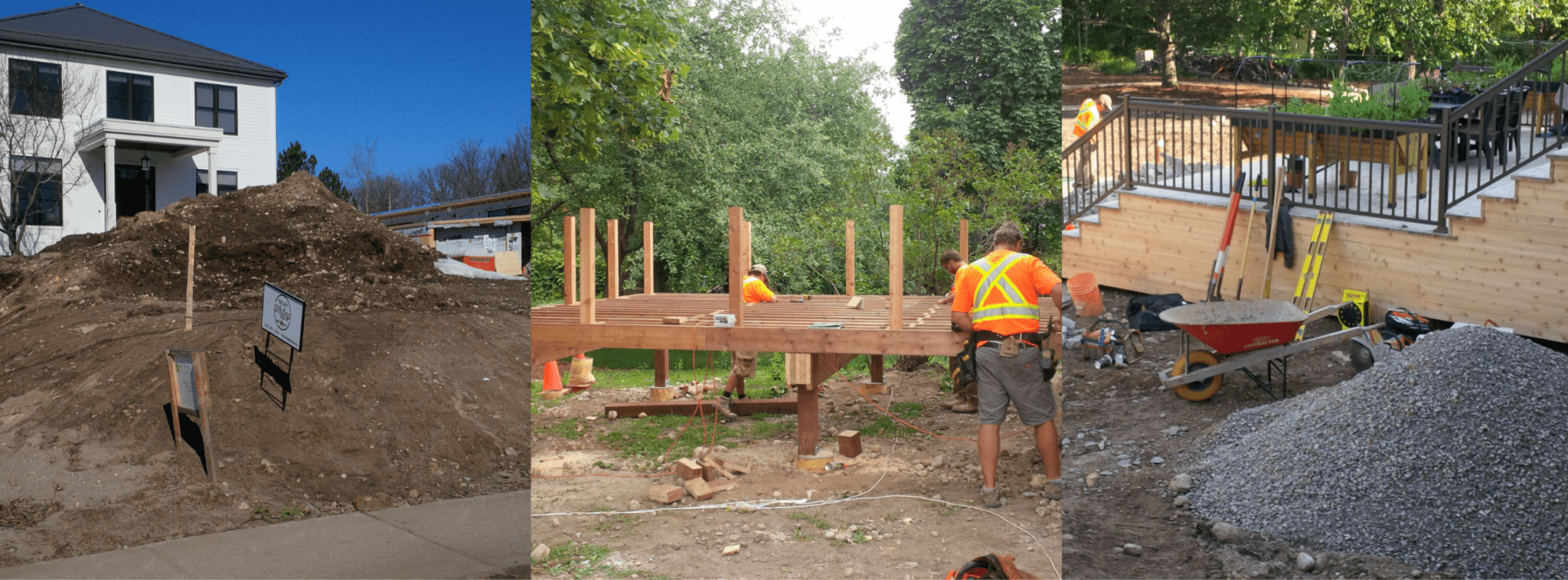
Because the projects were adjacent, sequencing had real advantages:
- Shared coordination for deliveries, access, and staging
- Cleaner integration of retaining, grading, and planting along the shared edge
- A more consistent finish level (materials, lines, and transitions) across both landscapes
In short: doing them together helped the final result feel like a mini streetscape upgrade, not two separate jobs competing for attention.
High-level budget guidance (2015 pricing)
These projects took place in 2015, and pricing reflects that time period (materials, labour, and market conditions have changed significantly since).
Generalized 2015 investment ranges:
- Property A (more hardscape/retaining intensive): roughly the mid–high $100Ks (CAD)
- Property B (smaller scope with deck, trails, and planting): roughly the mid $60Ks (CAD)
- Combined two-property build: roughly the low $200Ks (CAD)
If you’re comparing to today, treat these as historical context only—current pricing depends heavily on site conditions, access, materials, and
how much structural work (retaining/base/slabs) is involved.
The Takeaway
This was a rare kind of project: two neighbours improving their properties at the same time, using one coordinated plan to create a stronger overall result. The finished landscapes delivered structure, usability, and a naturalistic feel—plus the practical details (grading, permeability, access) that make everything hold up long after install day.