Modern Luxury Poolscape Near Guelph, Ontario
A Clean, Architectural Backyard Built for Real Weather (and Real Life)
If you live in southern Ontario—especially in the Guelph area—you already know the truth about outdoor projects: spring can be a mud bath, summer storms
can be intense, and freeze/thaw will test everything you build. This backyard was designed with those realities in mind.
The homeowners wanted a pool environment that felt calm, modern, and intentional—not busy, not trendy, and definitely not something that
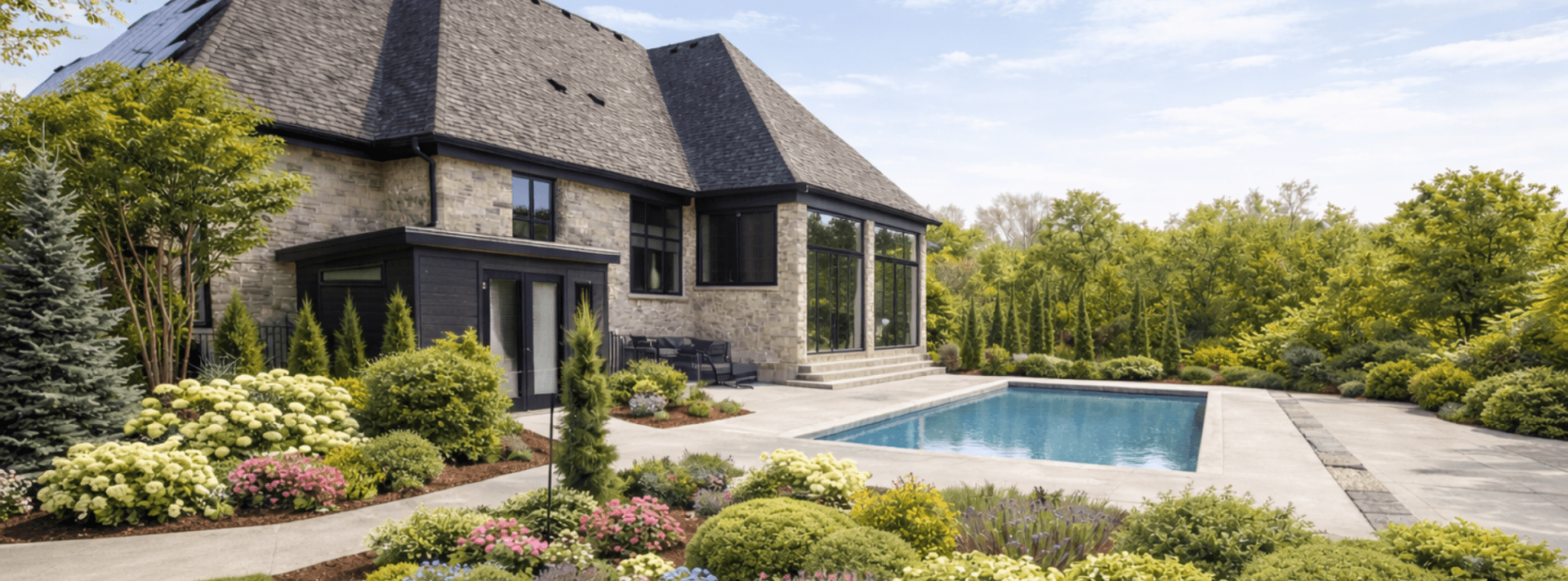
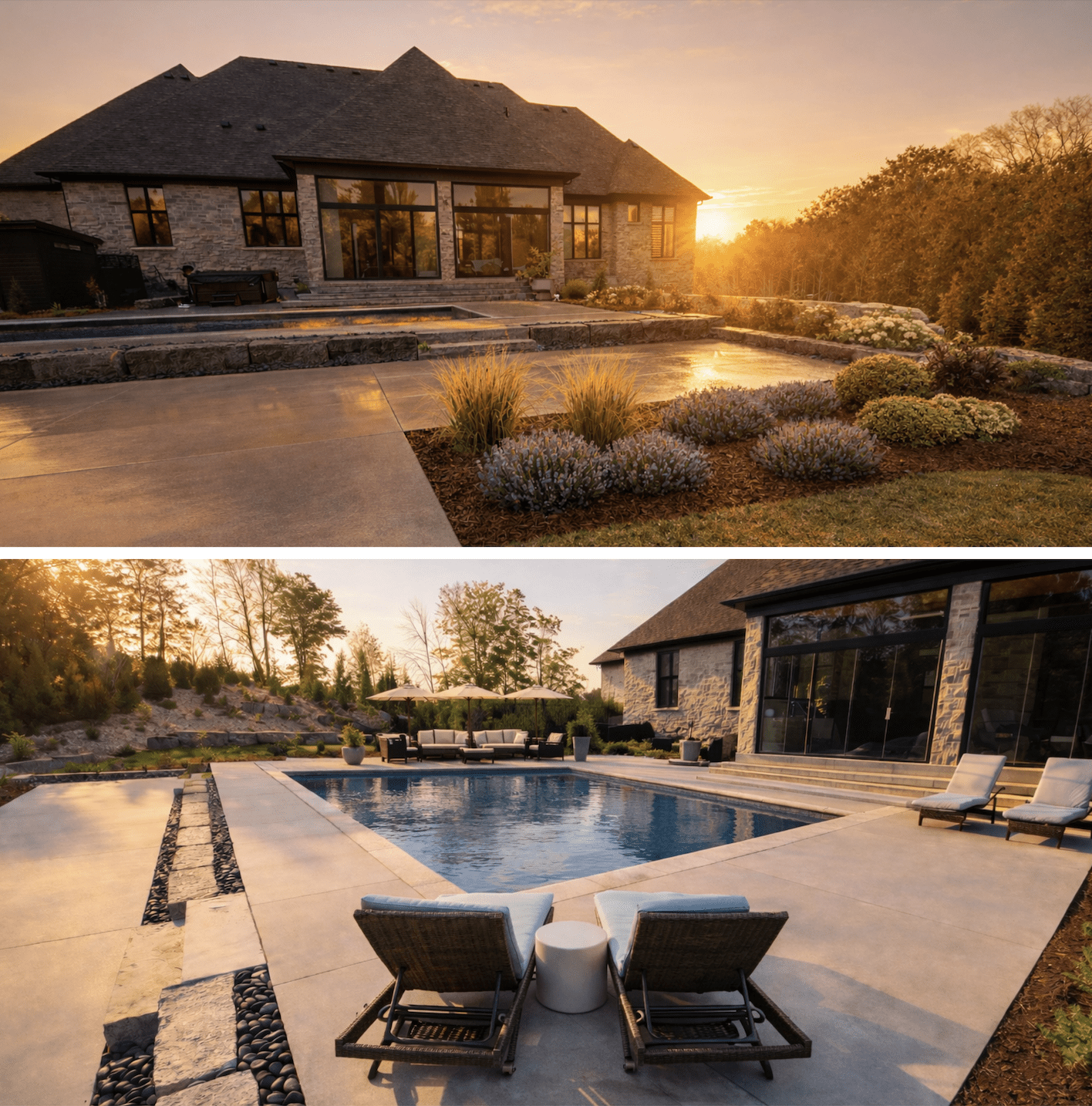
would feel dated in a few years. The final result is a crisp, architectural poolscape with expansive concrete terraces, bold natural stone transitions, and planting
that softens the space without adding maintenance chaos.
And because construction doesn’t happen in a vacuum, the build also had to survive an extremely rainy season with multiple contractors and trades working on site—
a common reality on pool projects. The success of this job came down to planning, sequencing, protection, and making sure water management
was built into the project from day one.
The Big Idea: Simple Lines, Strong Materials, Low-Stress Living
A minimalist backyard is never “simple” behind the scenes. It’s disciplined.
This space works because every element has a clear purpose:
- Large, clean concrete zones that feel like outdoor rooms
- Confident stone edges that handle grade changes without fuss
- Drainage that’s integrated, not patched in later
- Privacy planting that will mature into a true buffer
The goal wasn’t to fill the yard with features. It was to create a property that feels finished—and is easy to enjoy.
What Was Built (and Why It Matters Here)
1) Jobsite setup + protection
(the part that keeps the project calm)
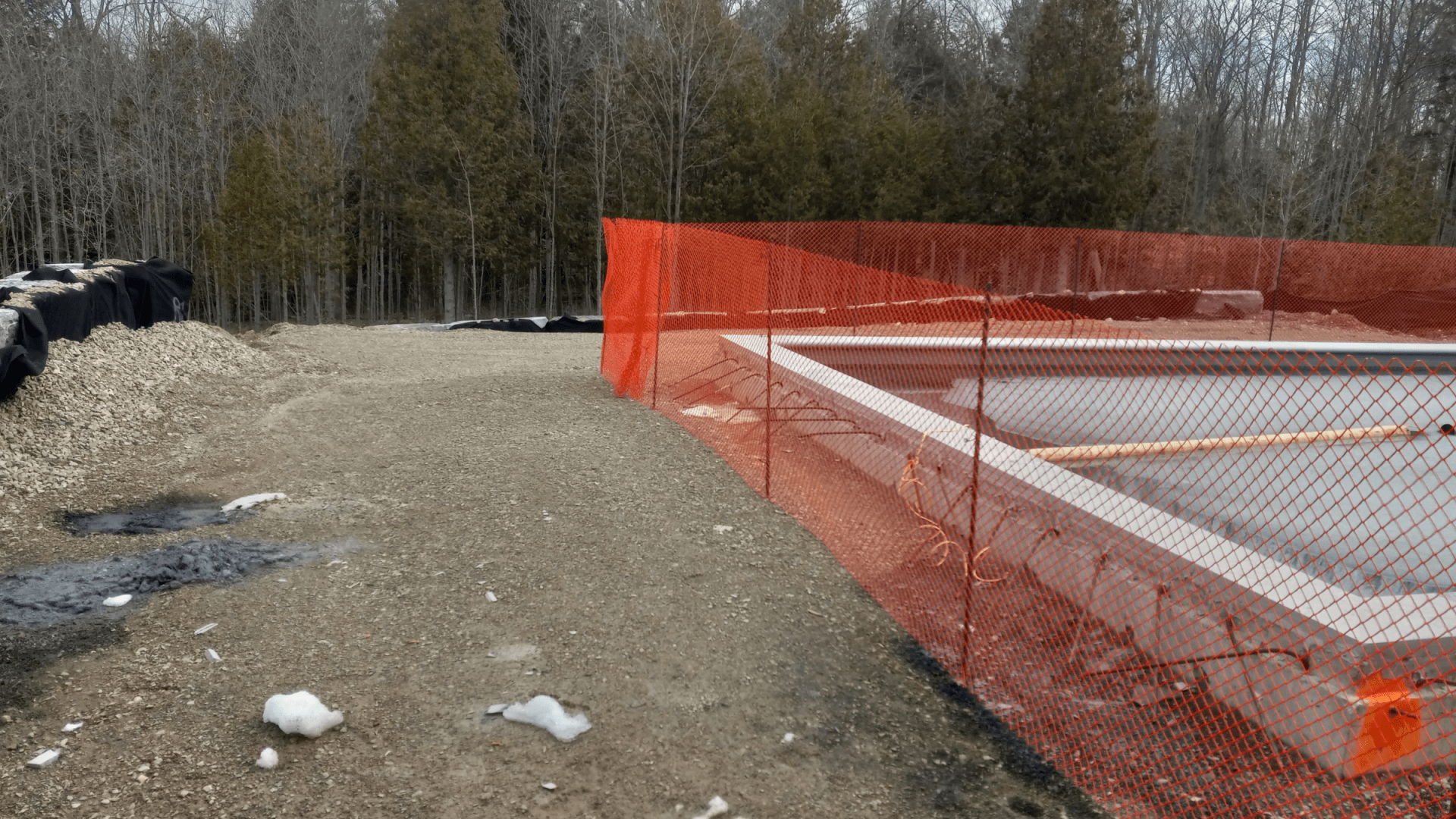
When several trades are moving through a site—especially during a wet season—organization is the difference between a smooth build and weeks of avoidable frustration.
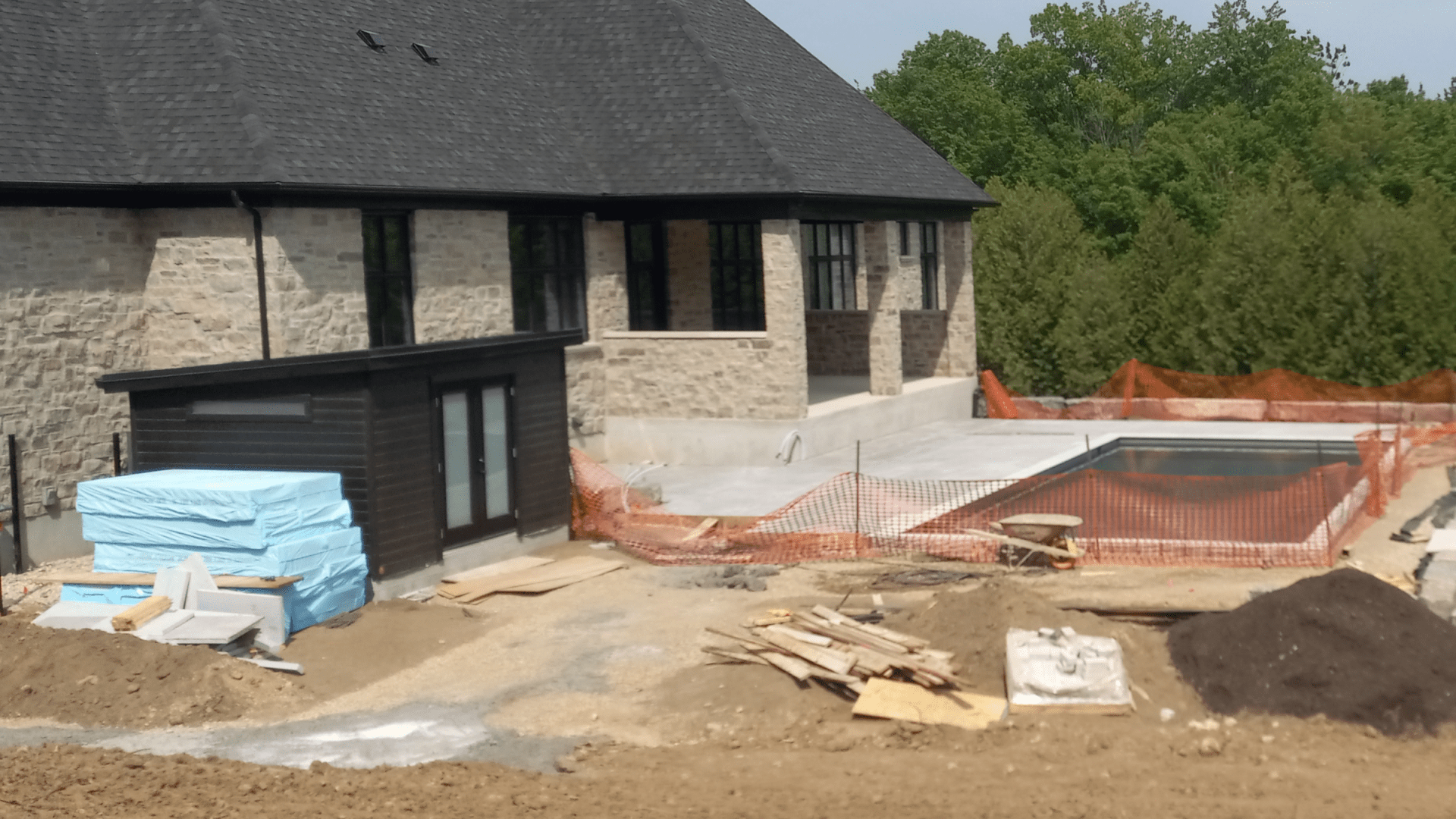
This scope included practical but essential details like directing deliveries, protecting existing hardscape surfaces, and controlling access as needed (including temporary fencing and potential sediment control).
2) Demolition, removals, and excavation
Before the beautiful work starts, the groundwork matters. This phase included removing unwanted vegetation, handling construction debris left from the pool installation, selective asphalt removal, and excavation/base prep for new hardscape areas.
3) Drainage + downspout realignment (a must-have for a rainy year)
This is one of the most important layers of the entire project.
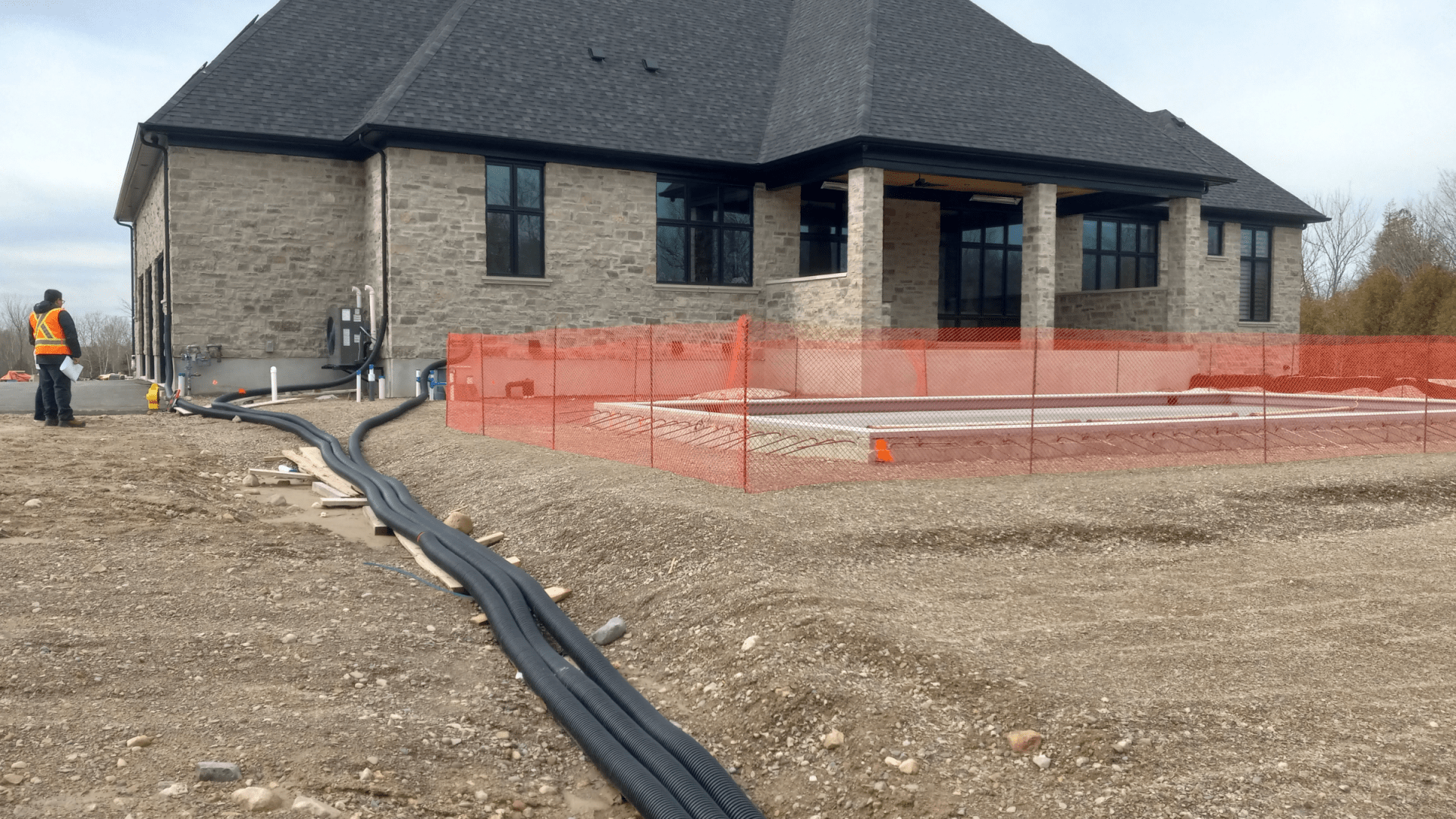
The plan included reworking downspouts into PVC where needed and installing a surface slot drain between the steps and the pool patio. The drain system used a narrow stainless top grate and tied into solid PVC with cleanout wells for future maintenance access—exactly the kind of detail that helps a pool deck stay clean and functional over the long haul.
Why it matters in southern Ontario: water management protects your investment. It helps prevent staining, nuisance puddling, and long-term settlement issues that can show up when patios and grade transitions are built without a plan.
4) Armour stone walls + natural stone steps
(structure that feels permanent)
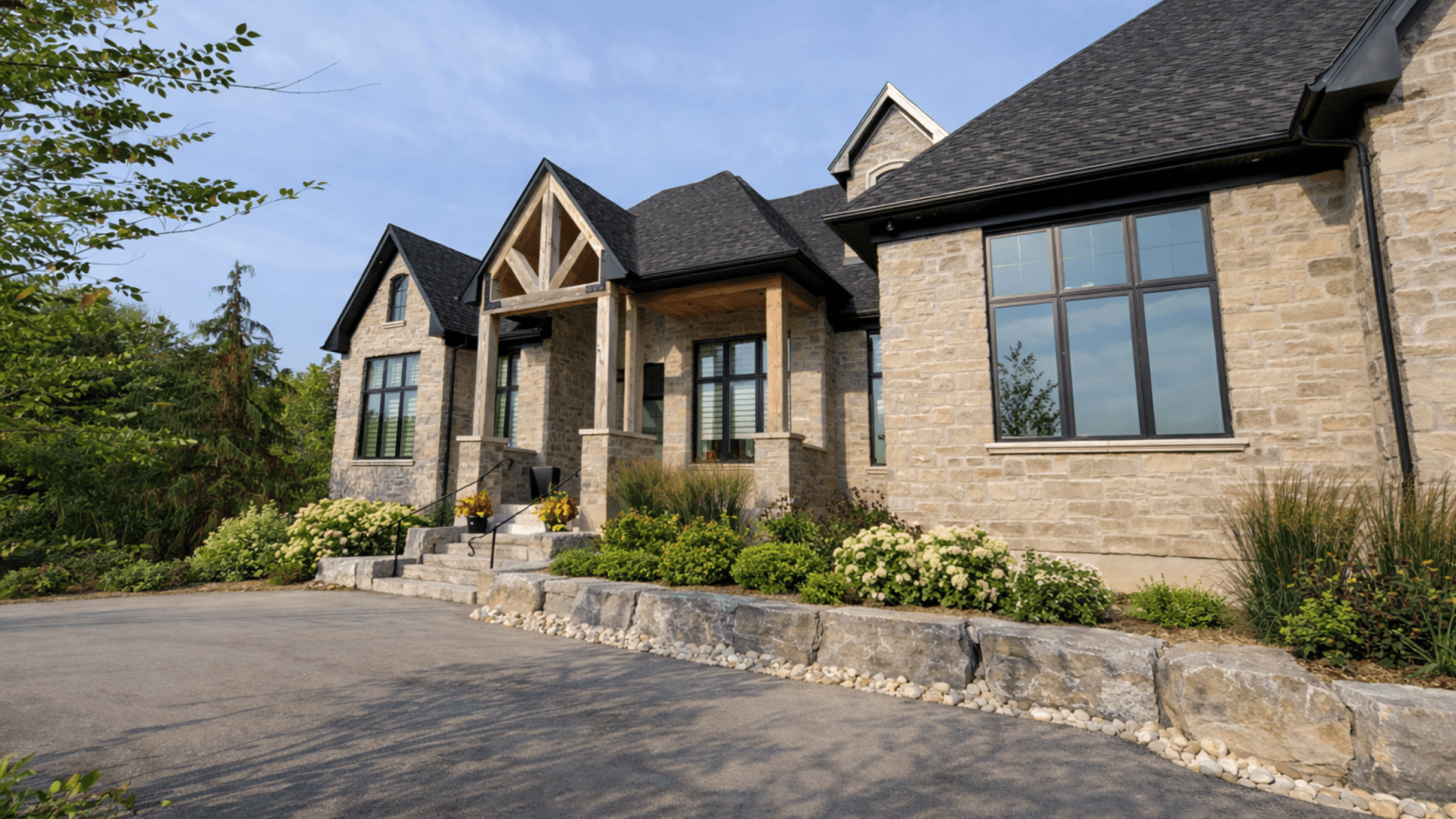
Grade changes were handled with Kawartha Dark armour stone and cutback Eramosa sandblasted steps, creating clean, confident transitions that match the home’s scale and architecture.
This is the kind of stonework that doesn’t just “hold soil”—it makes the whole yard feel designed.
5) Concrete patios, steps, and accent banding
(the visual anchor of the backyard)
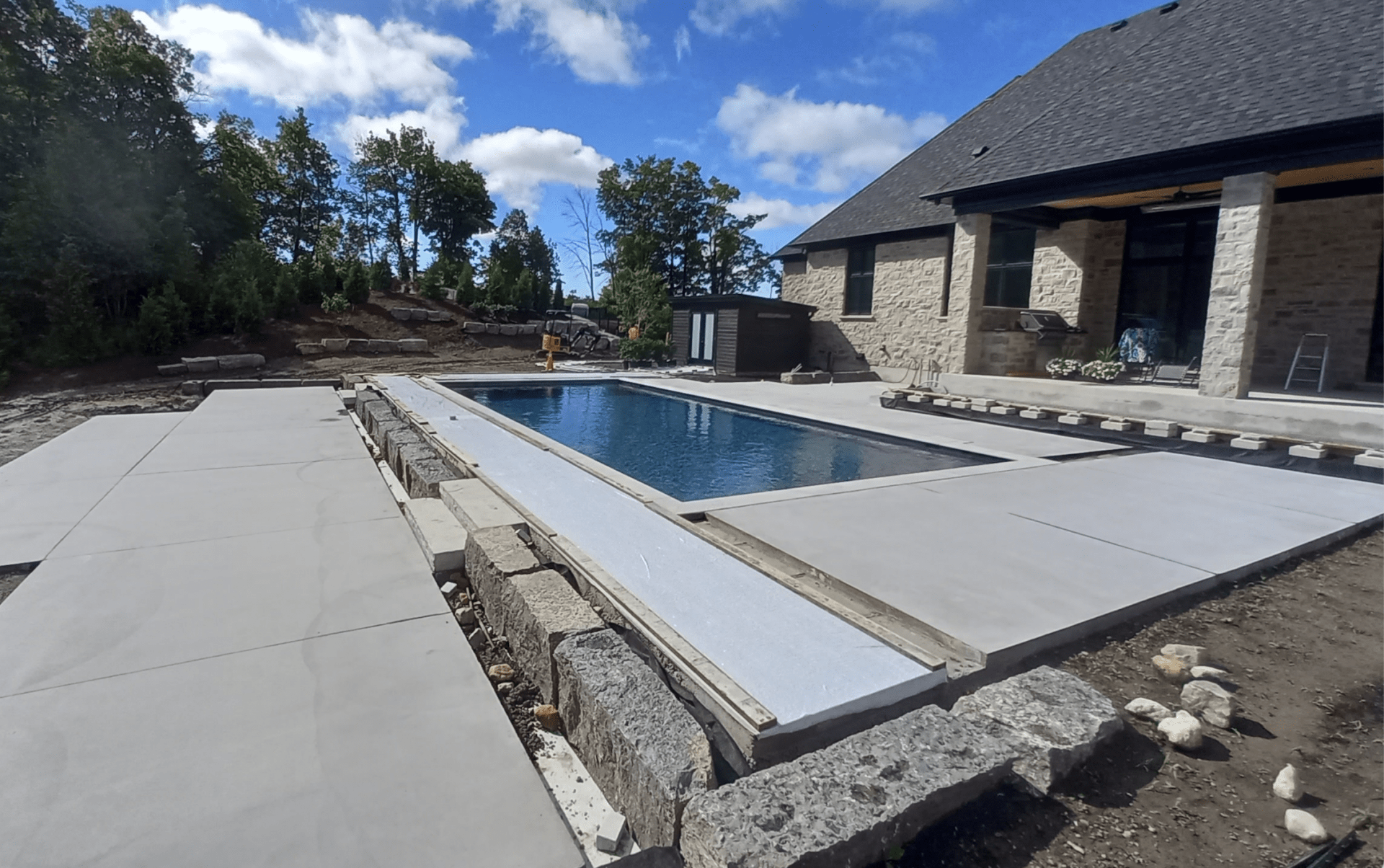
The concrete is what gives this project its calm, modern feel: big, open spaces around the pool with the right joints and details so everything reads intentional.
Key details included:
- ~2,450 sq ft of 6″ slab, poured in multiple stages
- Control joints are laid out deliberately to suit the design
- Eramosa sandblasted accent strips (mortared bands that add refinement without visual clutter)
- Strong recommendation for 2″ rigid insulation under slabs on grade to help reduce frost-related movement between pool and patio (with the honest note that no contractor can guarantee zero movement or cracking over time).
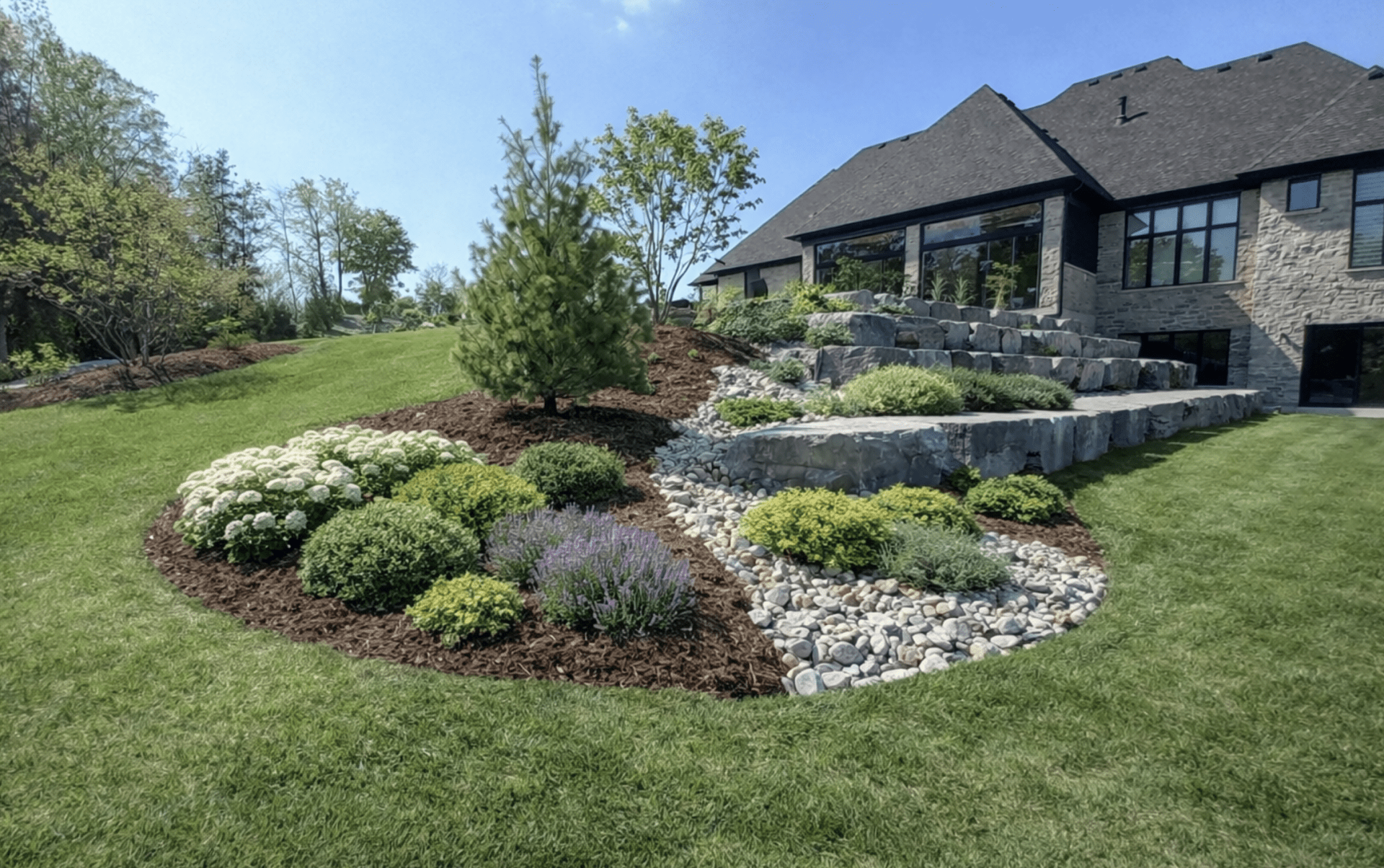
6) Gardens + privacy planting (softness without “garden clutter”)
Planting was designed to bring the site to life while staying clean and low-drama. The gardens layer structure, texture, and seasonal colour using a mix of native and drought-tolerant perennials, shrubs, grasses, and trees (with specified plant allowances).
Privacy planting was also key, including tree line planting along the driveway and north property line, plus cedar buffers and berm seeding in backyard areas.
One practical note: plant availability can fluctuate year to year. This project included allowances, with material invoiced at actual cost at the time of ordering due to nursery volatility.
The Real Challenge: An Extremely Rainy Season + Multiple Trades On Site
Pool environments are multi-trade by nature—pool contractor, concrete team, drainage, stone, planting, and site logistics all overlap.
Layer on a rainy year, and sequencing becomes everything:
- protecting access routes and finished surfaces
- Timing excavation and base prep around saturated soils
- keeping the site safe and usable while trades rotate through
- ensuring drainage is functional even mid-build
A great finished yard isn’t just about design. It’s about executing the work with enough planning and control that weather and scheduling don’t compromise the final result.
Budget Guidance: What a Project Like This Typically Costs Today (Near Guelph)
For homeowners budgeting in today’s market for a similar level of finish and scope in southern Ontario, a realistic planning range for the landscape portion is approximately:
- ~$400K+ (incl. HST) for the landscape build at this scale and complexity
Important: the pool is in addition to the landscape scope above. For a comparable pool build, a reasonable budgeting number is ~$200K,
Depending on specifications, equipment, and site conditions.
Also worth noting: site restoration/closeout was structured as time-and-materials in the proposal, with defined hourly rates—
because restoration needs can vary depending on conditions and access impacts during construction.