
Boxwood Alternatives: Resilient Evergreen
Structure for Ontario Winters
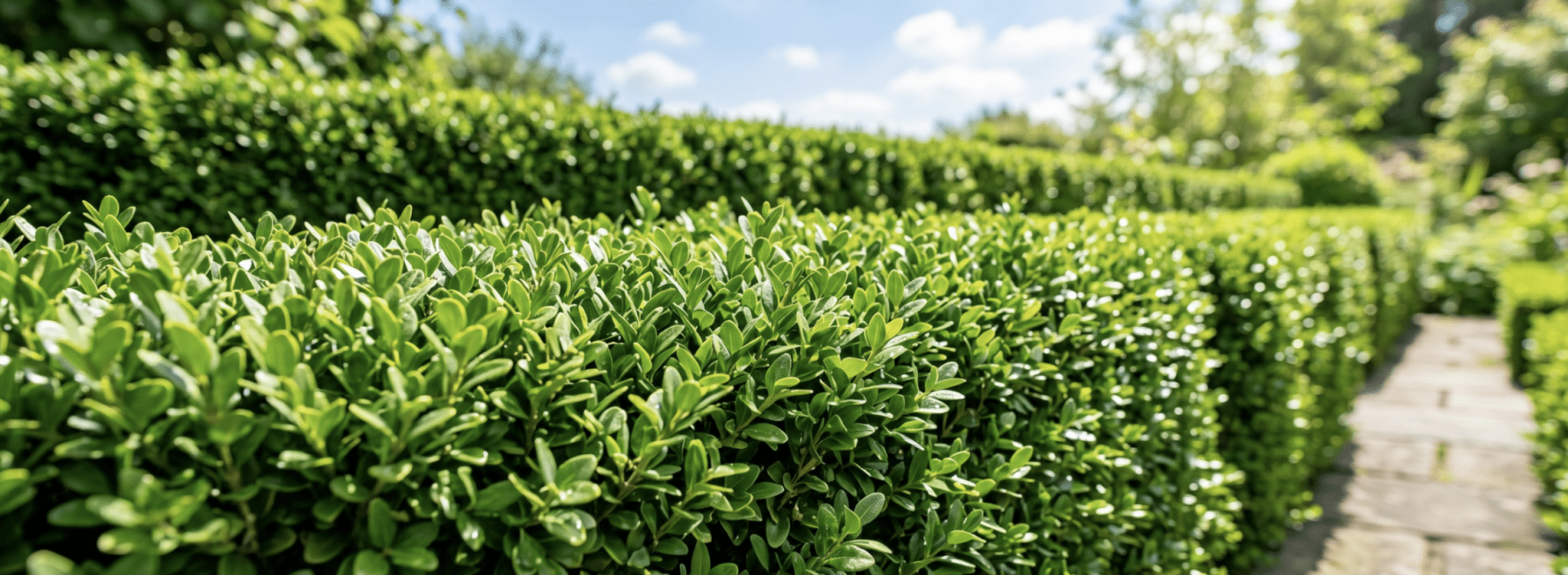
There’s a quiet disappointment many Ontario homeowners share—but rarely talk about until it’s too late. You plant boxwoods for structure, for that crisp,
evergreen backbone that holds your landscape together through winter, for a sense of permanence that makes everything feel intentional and complete. And then one spring… they don’t come back the same. What was once lush and reliable turns into patchy browning, signs of winter burn, and in some cases, entire sections struggling—or gone altogether.
If you’ve experienced this, you’re not alone. Across Ontario, boxwoods are becoming increasingly unreliable due to harsh freeze-thaw cycles, persistent wind exposure,
and growing disease pressure. And yet, the role they once played—the need for year-round structure and a calm, cohesive design—hasn’t gone anywhere.
The good news is that there are better options now. Let’s explore boxwood alternatives that not only survive Ontario winters,
but elevate your landscape in a more natural, enduring way.
What to Look for in a Boxwood Alternative
Not all evergreens are created equal. The goal isn’t just to replace boxwood—it’s to improve the long-term resilience and beauty of your landscape.
Here’s what matters most:
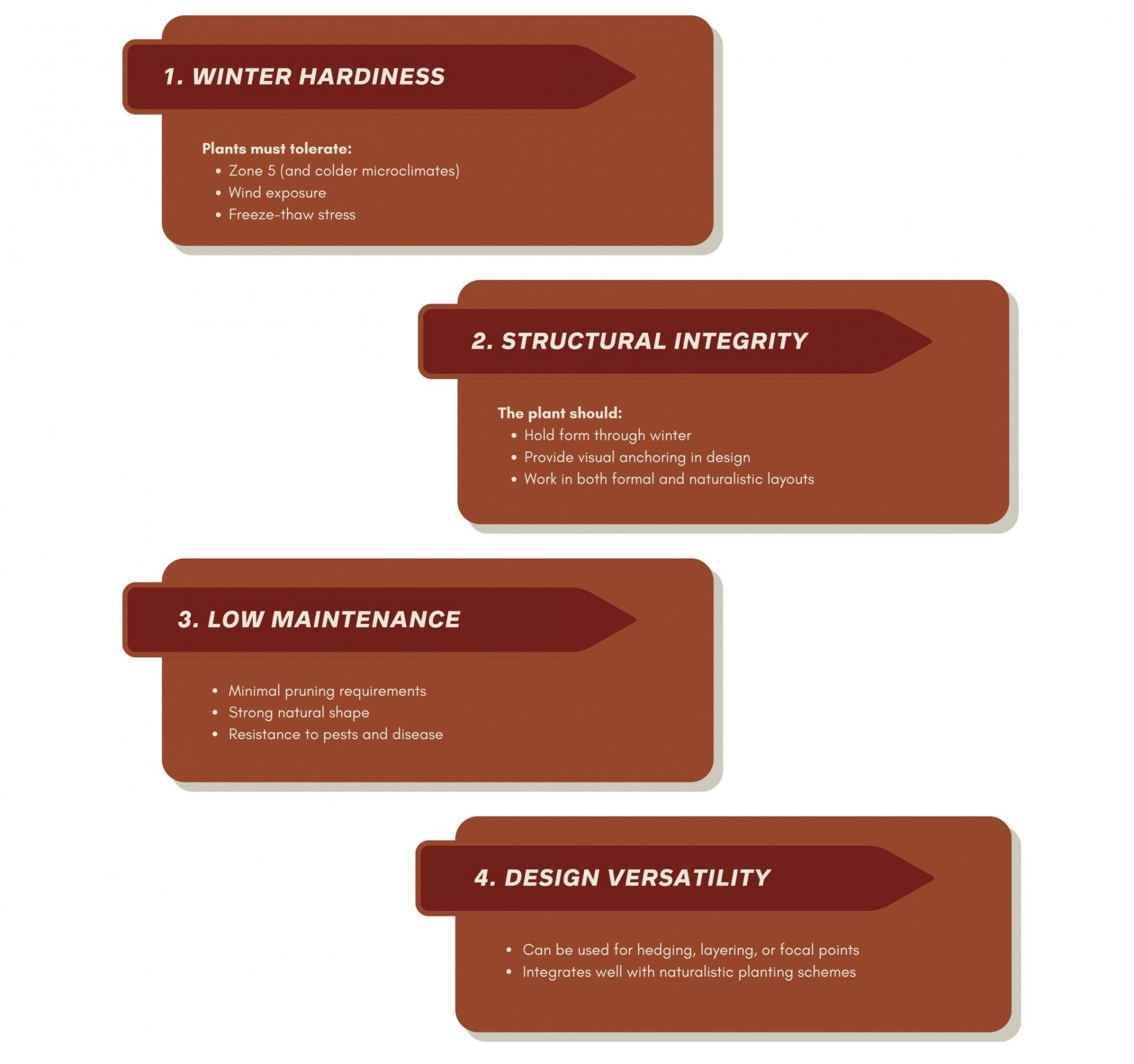
When these criteria are met, your landscape stops feeling fragile—and starts feeling grounded, intentional, and timeless.
Top Boxwood Alternatives for Ontario Landscapes
Let’s walk through some of the most reliable, design-forward options.
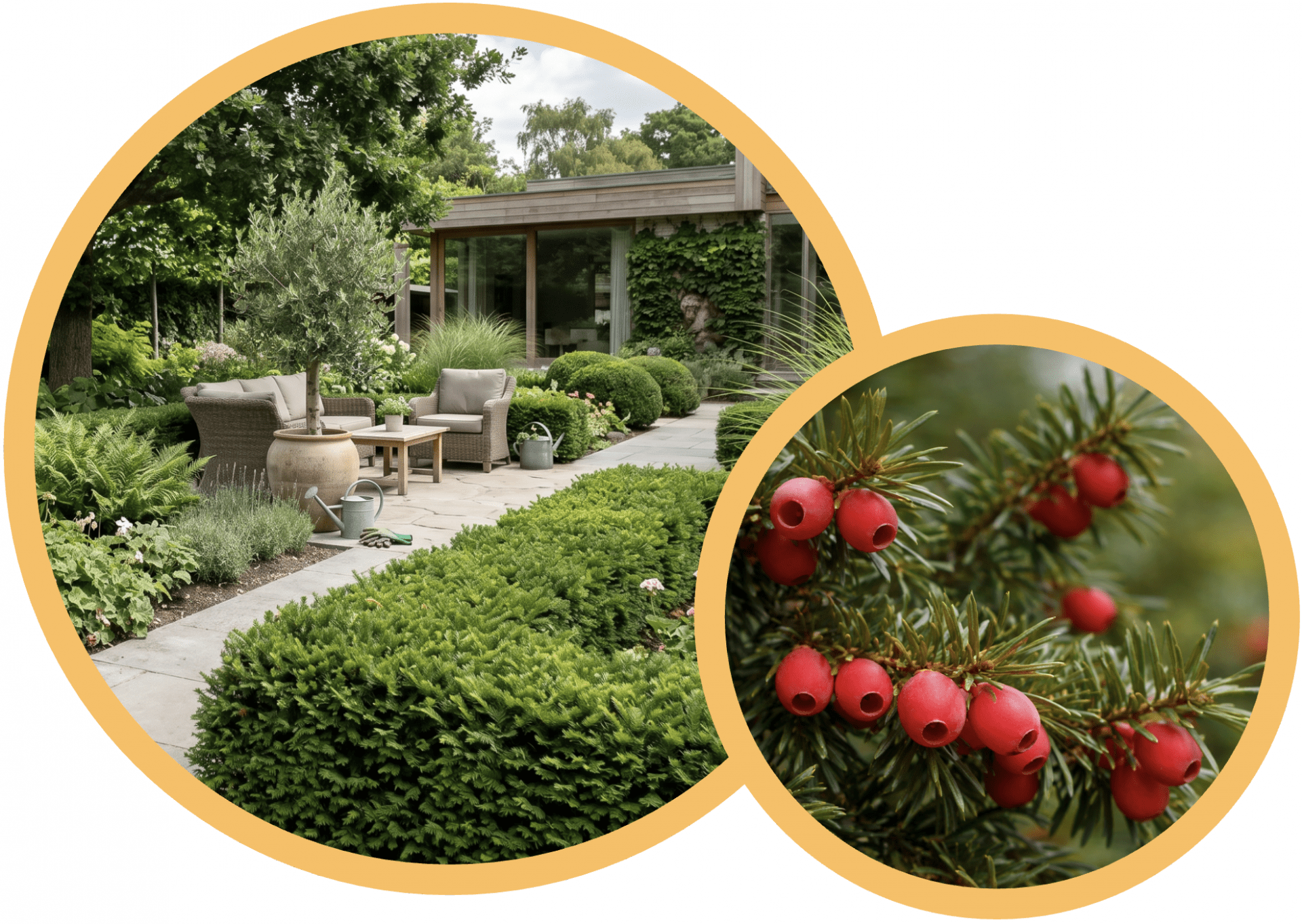
1. Yew (Taxus spp.) —
The Quiet Workhorse
If there’s one plant that consistently replaces boxwood in Ontario, it’s yew.
Why it works:
- Exceptionally hardy
- Tolerates pruning beautifully
- Maintains rich green colour year-round
- Thrives in both sun and shade
Best uses:
- Formal hedging
- Foundation planting
- Structured garden “rooms.”
Design insight:
Yew offers something boxwood often struggles with: depth and softness. It reads less rigid, more grounded—especially when paired with natural stone and layered plantings.
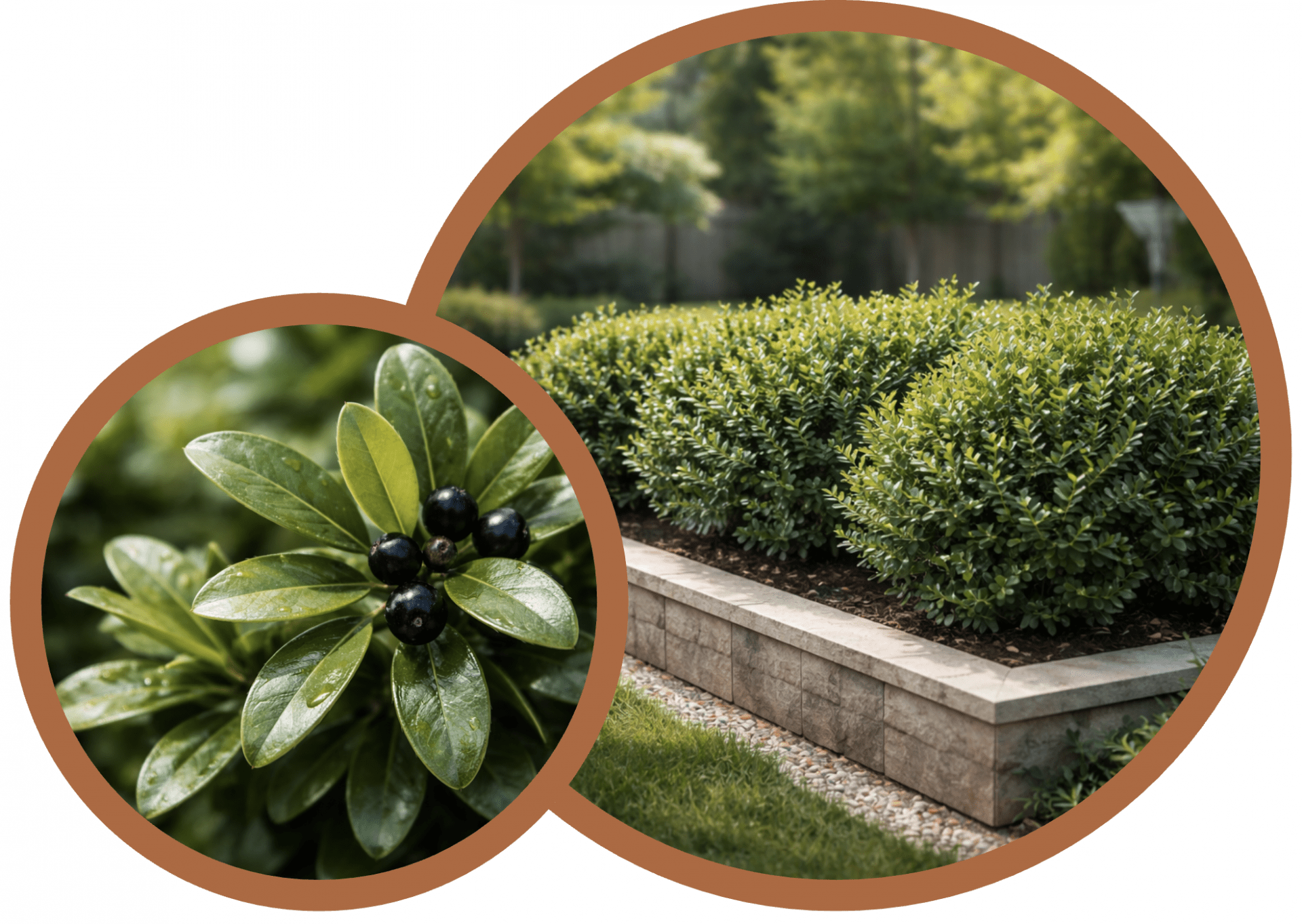
2. Inkberry Holly (Ilex glabra) — Native, Subtle, Reliable
Inkberry is gaining popularity as a more natural alternative.
Why it works:
- Native to North America
- Tolerates wet soils better than boxwood
- Maintains a soft, rounded form
- Good winter colour retention
Best uses:
- Informal hedging
- Mass planting
- Naturalistic garden edges
Design insight:
Inkberry doesn’t try to be perfectly geometric—and that’s its strength. It fits beautifully into ecological, meadow-inspired landscapes where structure still matters, but rigidity doesn’t.
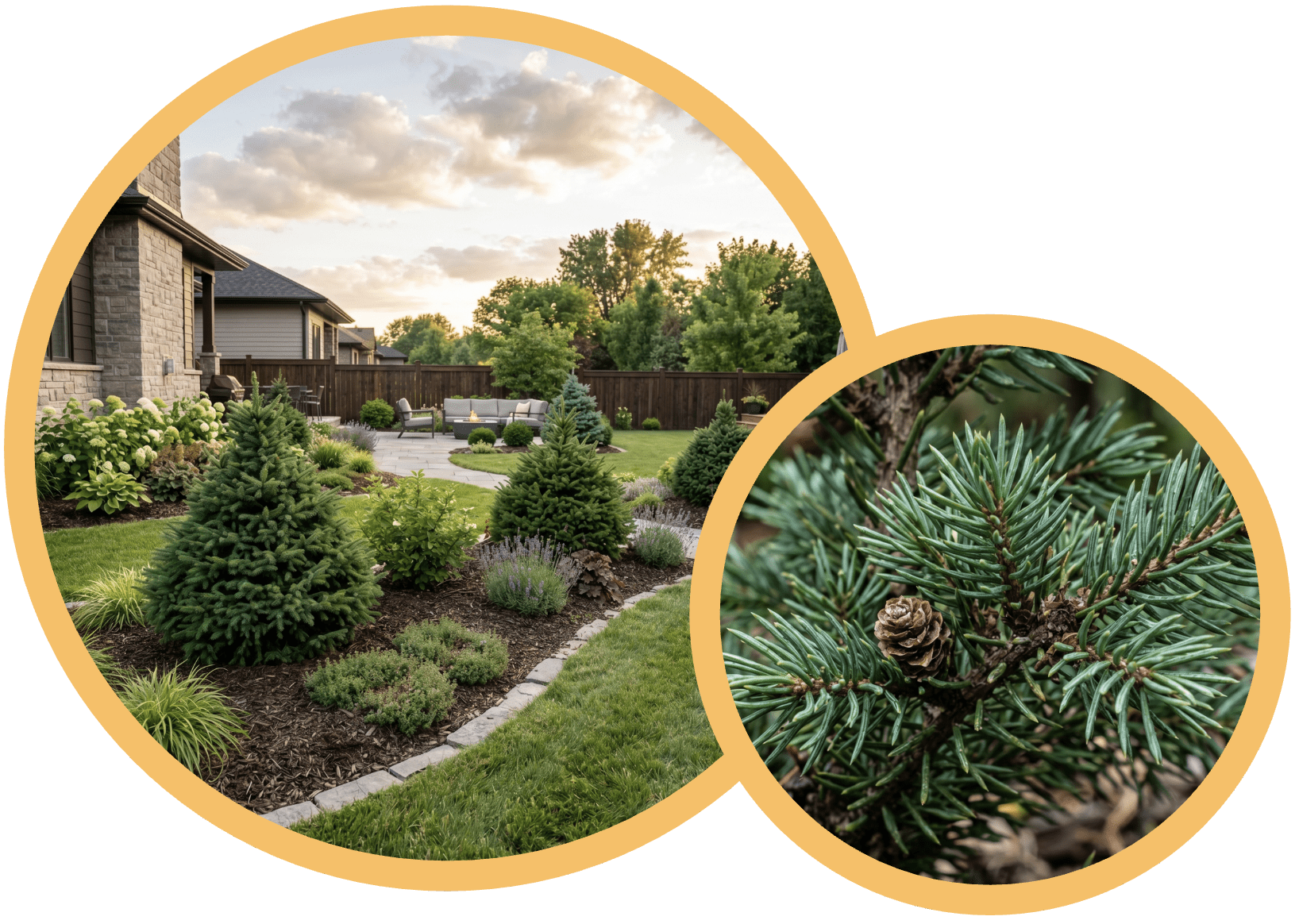
3. Dwarf Spruce (Picea varieties) — Sculptural and Strong
For a slightly different look, dwarf spruce varieties offer excellent winter structure.
Why it works:
- Extremely cold-hardy
- Dense, compact growth
- Strong architectural presence
Best uses:
- Accent plants
- Repetition in modern landscapes
- Winter focal points
Design insight:
Use these sparingly. A repeating rhythm of dwarf spruce can create a quiet, sculptural backbone—especially effective in contemporary outdoor spaces.
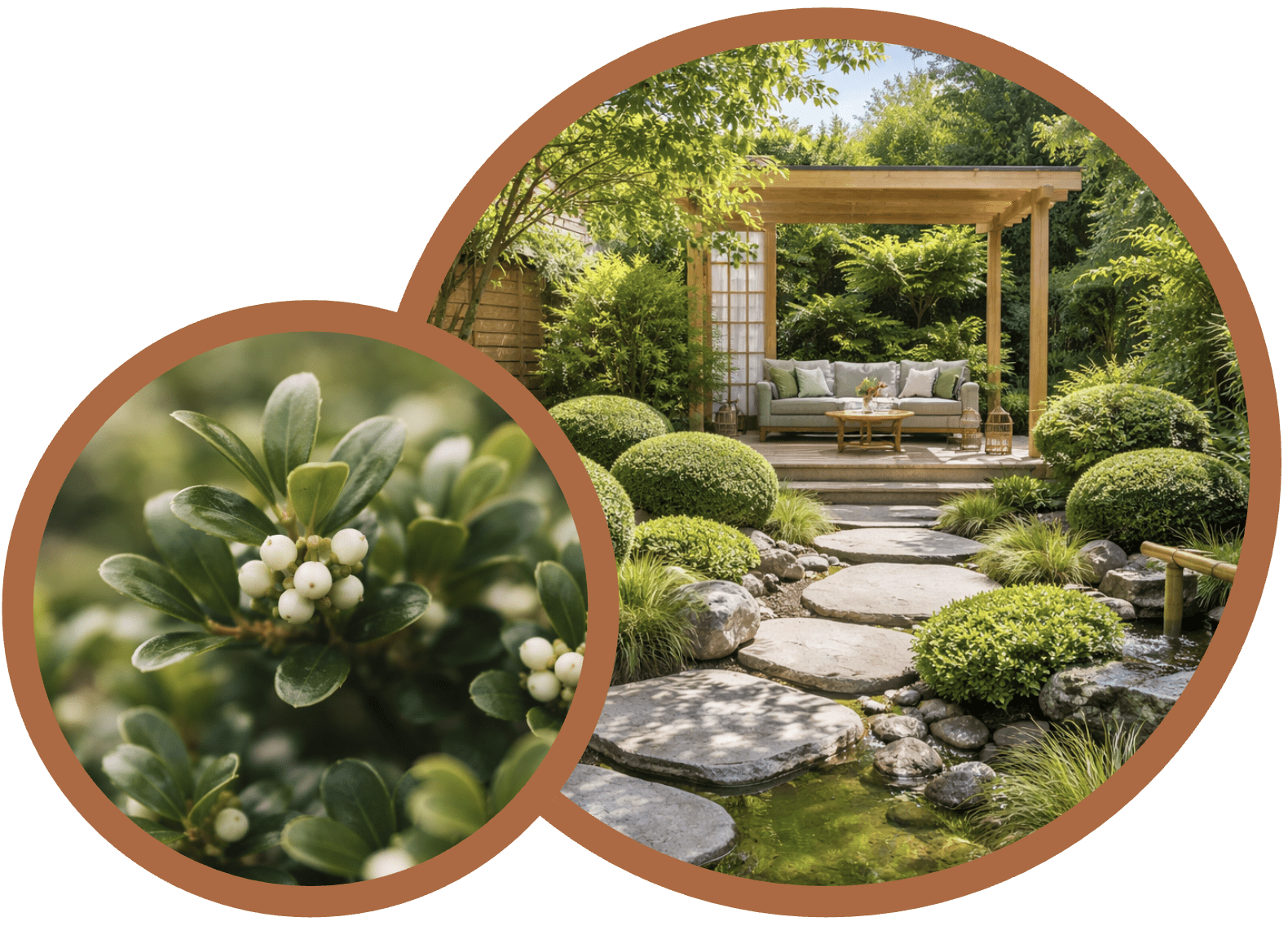
4. Boxwood-Like Alternatives: Japanese Holly (Ilex crenata)
For those who truly love the look of boxwood, Japanese holly is often considered.
Important note:
It can work—but only in protected microclimates.
Why it works (conditionally):
- Similar leaf and form to boxwood
- Can be shaped into formal hedges
Risks:
- Less hardy in exposed Ontario conditions
- Requires careful placement
Design insight:
We rarely recommend forcing a plant to perform outside its comfort zone. If you love this look, it’s better to recreate the feeling, not replicate the exact plant.
5. Juniper (Juniperus spp.) —
Tough and Textural
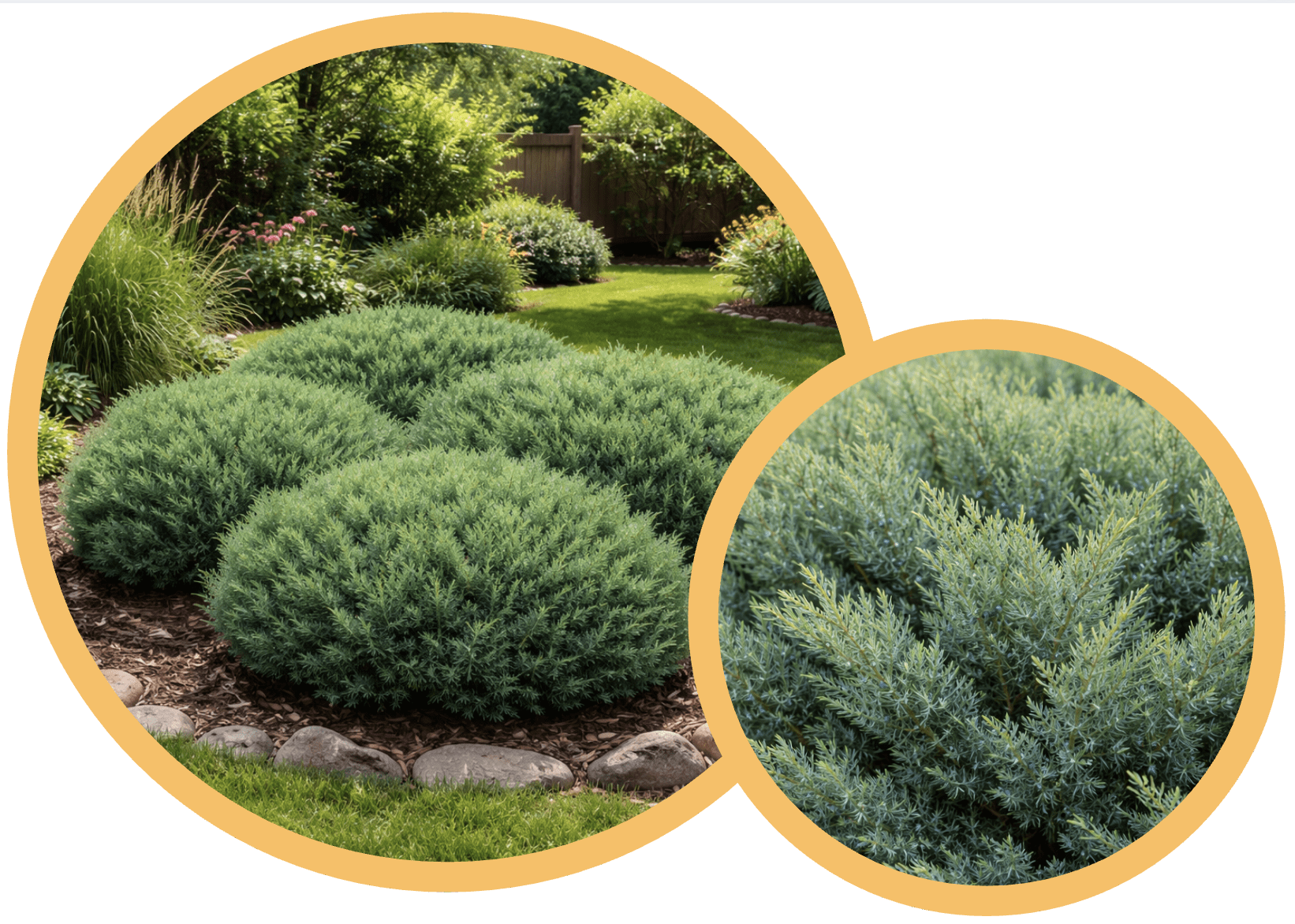
Junipers are often overlooked—but incredibly resilient.
Why it works:
- Thrives in poor soils
- Handles wind and drought
- Wide range of forms (upright, spreading, mounding)
Best uses:
- Slopes and challenging sites
- Modern or minimalist designs
- Groundcover structure
Design insight:
Juniper brings a slightly wilder texture. It’s perfect when you want a landscape that feels natural, not overly controlled.
Designing with Evergreen Structure (Beyond Boxwood Thinking)
Replacing boxwood isn’t just about swapping plants—it’s about rethinking structure entirely.
Traditional landscapes relied heavily on:
- Repetition of a single species
- Tight hedging
- Symmetry
Modern, high-end landscapes—especially in Ontario—are shifting toward:
Layered Planting Design
Instead of one hedge, think in layers:
- Low evergreen structure (yew, inkberry)
- Mid-height shrubs (hydrangea, viburnum)
- Taller canopy elements
Seasonal Contrast
Structure doesn’t have to come only from evergreens.
Consider:
- Ornamental grasses for winter movement
- Seed heads and perennials for texture
- Deciduous shrubs with strong branching
Natural Patterns
In nature, you rarely see straight lines of identical plants.
Instead:
- Group in clusters
- Vary spacing slightly
- Allow plants to “breathe”
This creates a landscape that feels intentional—but not forced.
A Real-World Example: From Boxwood Failure to Resilient Design
A homeowner in the Waterloo region came to us after losing over 60% of their boxwood hedge in a single winter.
Their original goal:
“Clean, structured, low-maintenance.”
Instead of replanting boxwood, we redesigned the front landscape using:
- A layered yew hedge for structure
- Inkberry clusters to soften transitions
- Perennial groupings for seasonal interest
- Natural stone edging to define space
The result?
- No winter damage the following year
- Reduced maintenance
- A landscape that looked better—not just “repaired”
Most importantly, it felt like a place, not just a collection of plants.
Common Mistakes to Avoid
When moving away from boxwood, it’s easy to fall into a few traps:
1. Replacing One Monoculture with Another
Diversity increases resilience. Avoid planting a single species everywhere.
2. Over-Pruning
Let plants express their natural form. Constant shearing creates stress.
3. Ignoring Microclimates
Wind exposure, sun patterns, and soil conditions matter more than plant labels.
4. Designing for Summer Only
Ontario landscapes spend nearly half the year in colder conditions. Winter structure isn’t optional—it’s essential.

A Final Thought: Designing for the Long Term
There’s something deeply satisfying about a landscape that holds its shape through winter—not perfectly trimmed or artificially controlled, but steady, grounded, and quietly beautiful. That’s the shift we’re seeing more and more across Ontario: a move away from fragile, high-maintenance choices toward resilient, natural structures that continue to improve over time. At Quiet Nature, we believe your outdoor space should feel like a true extension of your home and lifestyle—a place that works in every season, not just the easy ones. With thoughtful design, quality materials, and a clear, well-managed process, it’s entirely possible to create a landscape that is both beautiful and built to last.
Ready to Rethink Your Landscape?
If your boxwoods are struggling—or you’re planning a new outdoor space—this is an opportunity to do something better. Something more resilient. More intentional. More aligned with how you actually live. We’d be happy to walk your property with you, explore what’s possible, and design a landscape that feels like it belongs—year-round.