
How to Prepare Your Garden for Vacation:
So You Come Home to Beauty

There’s a quiet kind of heartbreak that happens when you return from a beautiful vacation… only to find your own backyard has fallen into disarray.
The plants are stressed. The lawn is patchy. That carefully designed garden—the one that felt like a sanctuary just weeks ago—looks tired, neglected,
and slightly out of sync with itself. It’s a jarring contrast. You’ve just come back from rest and inspiration… but your outdoor space feels like it needs rescuing.
The truth is, gardens don’t pause when you leave. They continue growing, reacting, and evolving. And without the right preparation,
even a short trip can undo months of thoughtful care.
At Quiet Nature, preparing gardens for a client’s absence isn’t just about maintenance—it’s about stewardship. It’s about ensuring that when you return,
your landscape greets you with the same calm, beauty, and intention you left behind. Let’s walk through how that actually happens.
Why Vacation Garden Prep Matters More Than You Think
A garden is not static—it’s a living system.
Even in a single week, subtle changes can compound:
- Soil dries out or becomes oversaturated
- Weeds gain a foothold
- Perennials shift from bloom to decline
- Pests exploit moments of neglect
- Irrigation inconsistencies create uneven growth
In high-end landscapes—especially naturalistic gardens or custom outdoor living spaces—these small imbalances are more noticeable. That’s because the design relies on harmony: plant layering, timing, texture, and rhythm.
When one piece slips, the entire composition can feel off.
That’s why vacation preparation isn’t just a checklist. It’s a proactive, design-aware approach to keeping everything in balance.
Step 1: Pre-Vacation Garden Assessment
Before any physical work begins, we take a step back.
What is this garden about to experience while you’re away?
We look at:
- Weather patterns (heat waves, rainfall trends, wind exposure)
- Seasonal timing (peak bloom, transition periods, dormancy shifts)
- Plant maturity (new installations vs. established gardens)
- Microclimates (sun pockets, shaded areas, moisture zones)
This step is often overlooked in DIY preparation—but it’s critical.
A newly planted garden in early summer needs a completely different strategy than a mature landscape in late fall.
Real-world scenario:
A client with a newly installed natural pool landscape left for two weeks in July. Without adjusting irrigation and mulching levels, the planting beds would have experienced stress within days. With proper pre-assessment, we stabilized moisture and ensured consistent growth.
Step 2: Precision Pruning for Stability (Not Just Appearance)
Pruning before a vacation isn’t about making things look tidy—it’s about controlling growth patterns while you’re away.
We focus on:
- Removing weak or leggy growth that could collapse
- Deadheading flowers to extend bloom cycles
- Cutting back aggressive species that could overtake others
- Shaping plants to maintain structure through unattended growth
In naturalistic design, this is especially important.
Because the goal isn’t rigid control—it’s guided freedom.
Without subtle intervention, fast growers can dominate, and the layered composition begins to lose its balance.
Step 3: Soil Moisture Management (The Hidden Foundation)
Most garden issues during travel trace back to one thing: inconsistent moisture.
Too dry, and plants stress.
Too wet, and roots suffocate.
The solution isn’t just “more watering.” It’s smarter water management.
What we do:
- Deep watering before departure to saturate root zones
- Adjust irrigation systems based on forecast and plant needs
- Test zones individually (not all plants need the same schedule)
- Add or refresh mulch to regulate soil temperature and moisture
Mulch, in particular, is underrated.
A properly mulched garden can retain moisture significantly longer, reduce weed pressure, and buffer against temperature swings—all while enhancing the visual finish.
Step 4: Intelligent Irrigation (Not Set-and-Forget)
Smart irrigation systems have come a long way—but they still require human judgment.
Before a client leaves, we:
- Reprogram schedules based on upcoming weather
- Adjust for plant-specific zones (lawns vs. garden beds vs. trees)
- Check for leaks, clogs, or uneven coverage
- Integrate rain sensors where appropriate
One of the biggest mistakes homeowners make is assuming their system will “handle it.”
But irrigation systems don’t understand nuance—like a shaded garden needing less water than a sun-exposed stone patio edge.
A well-calibrated system mimics natural rainfall patterns, not just timers.
Step 5: Weed and Pest Pre-Control
Weeds and pests don’t take vacations.
In fact, they thrive when gardens are left unattended.
Pre-departure strategy:
- Thorough hand-weeding (especially deep-rooted species)
- Edge definition to prevent grass creep into beds
- Early pest inspection (aphids, beetles, fungal issues)
- Preventative treatments where necessary
The goal isn’t perfection—it’s prevention.
If you leave a garden with even minor weed pressure, it can multiply quickly. The same goes for pests—small issues can escalate without intervention.
Step 6: Garden “Momentum” Planning
This is where thoughtful design meets practical care.
We ask:
What will this garden look like in 10–14 days without touchpoints?
Then we plan for that version.
This might include:
- Staggering blooms so something is always peaking
- Reinforcing focal points that hold visual structure
- Ensuring pathways and seating areas remain usable
- Supporting plants that may flop without attention
Case-style insight:
In one backyard retreat, we knew the client would return during a hosting weekend. We intentionally timed late-summer perennials to peak during that window—so the garden didn’t just survive their absence, it welcomed them back with a sense of occasion.
That’s the difference between maintenance and intentional care.
Step 7: Optional Ongoing Garden Care While You’re Away
For many of our clients, the most seamless solution is simple:
We continue caring for the garden while they’re gone.
This might include:
- Scheduled watering adjustments
- Light pruning and deadheading
- Monitoring plant health
- Keeping outdoor living areas clean and ready
This aligns with what many homeowners truly want: a landscape that improves over time, without becoming a second job.
Because ultimately, a well-designed outdoor space isn’t just about how it looks—it’s about how it feels to live with.
Designing Gardens That Travel Well
Not all landscapes handle absence equally.
Some require constant attention. Others are designed to be resilient.
At Quiet Nature, we intentionally design gardens that:
- Use the right plant for the right place
- Embrace natural processes instead of fighting them
- Minimize resource dependency
- Maintain visual structure even between maintenance cycles
This philosophy creates landscapes that feel alive—but never chaotic.
And it’s especially valuable for homeowners who travel frequently.
Common Mistakes to Avoid Before Leaving
Even well-intentioned preparation can go wrong. Here are a few pitfalls we often see:
1. Overwatering before departure
Saturating the garden excessively can lead to root issues and fungal growth.
2. Ignoring microclimates
Not all areas of your yard behave the same—uniform watering rarely works.
3. Skipping pruning
Unchecked growth can quickly make a garden feel overgrown.
4. Relying solely on neighbors
Without clear guidance, even helpful neighbors can unintentionally disrupt plant care.
5. Leaving new plantings unsupported
Young gardens need extra attention—they haven’t established resilience yet.
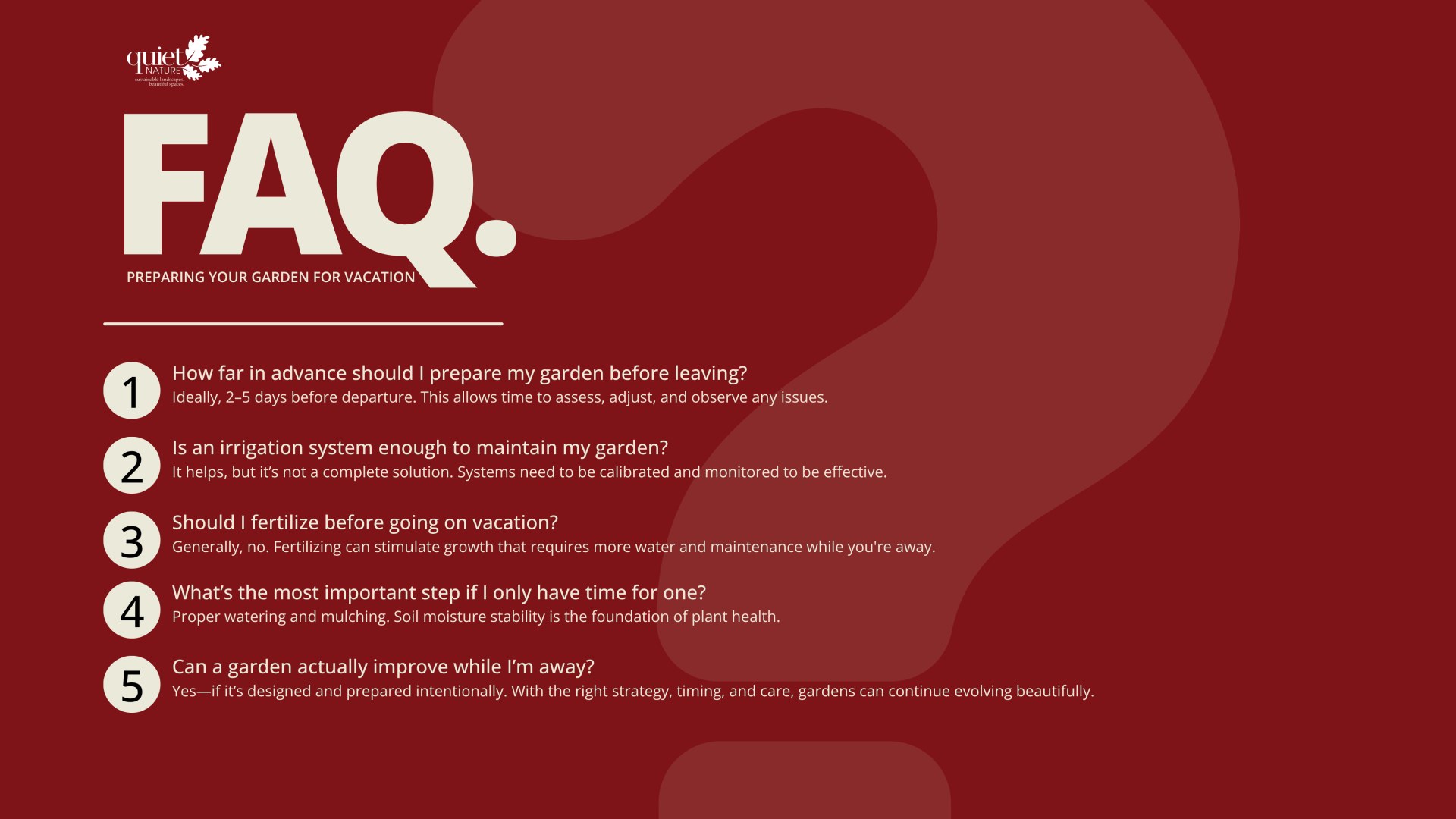
Coming Home to Something That Feels Right
There’s a subtle but powerful feeling when you return home and step into your backyard—and everything feels right. The plants are thriving, the space feels calm and composed, and nothing is demanding your attention. Instead of a to-do list, you’re greeted by a sense of arrival. That kind of experience doesn’t happen by accident; it’s the result of thoughtful preparation, intentional design, and a deep understanding of how landscapes live and breathe—even when you’re not there. At Quiet Nature, we believe your outdoor space should support your life, not complicate it—and that includes the moments when you step away.
A Gentle Next Step
If you’re planning time away and want the peace of mind that your garden will be cared for—and even improve in your absence—we’re here to help. Whether it’s preparing your space before you leave or providing ongoing boutique garden care, our approach is simple: Thoughtful, proactive, and grounded in respect for both people and place.
Because you deserve to come home to something beautiful.