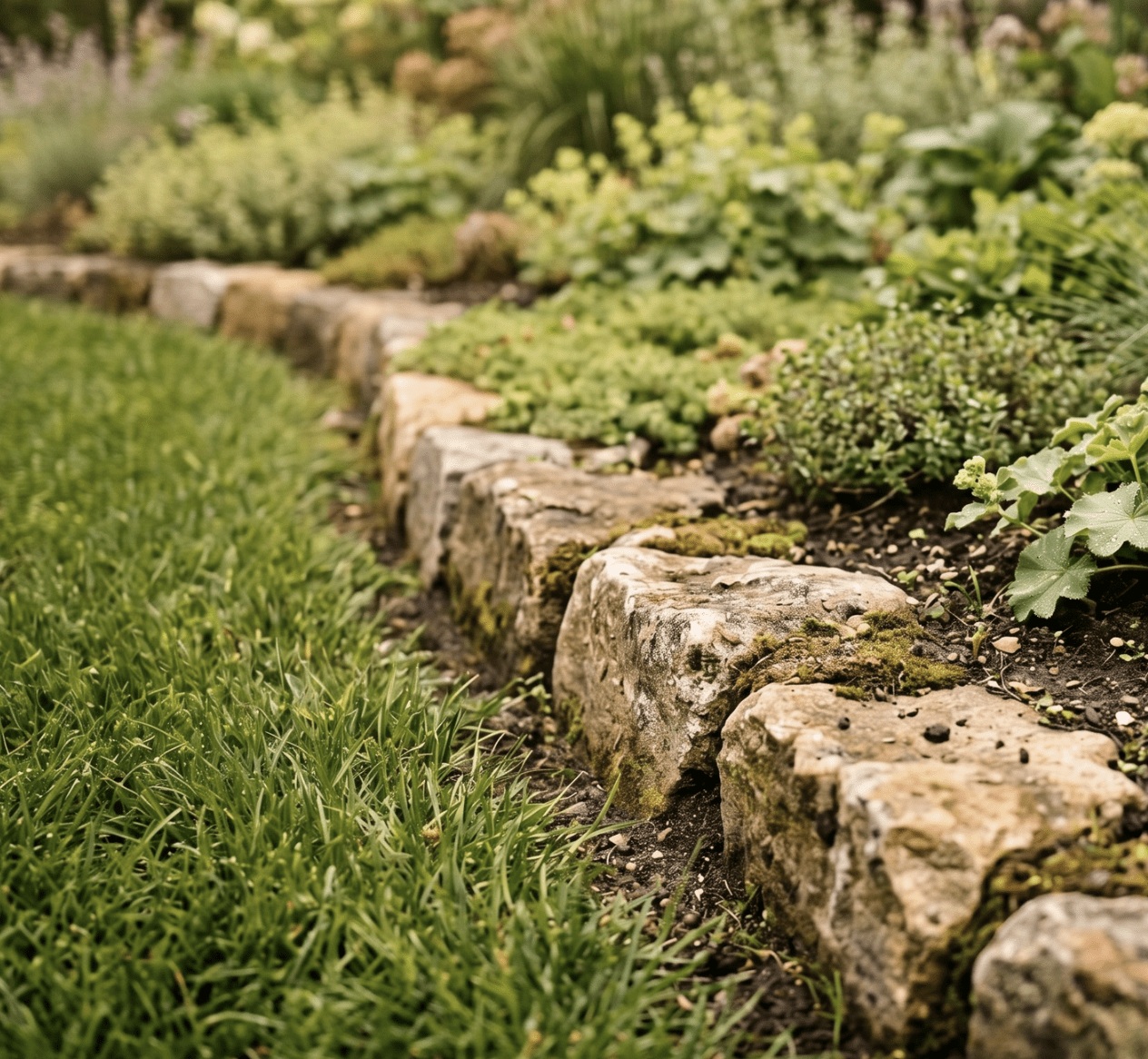
Garden Edging: The Small Detail That
Makes a Garden Look “Kept”
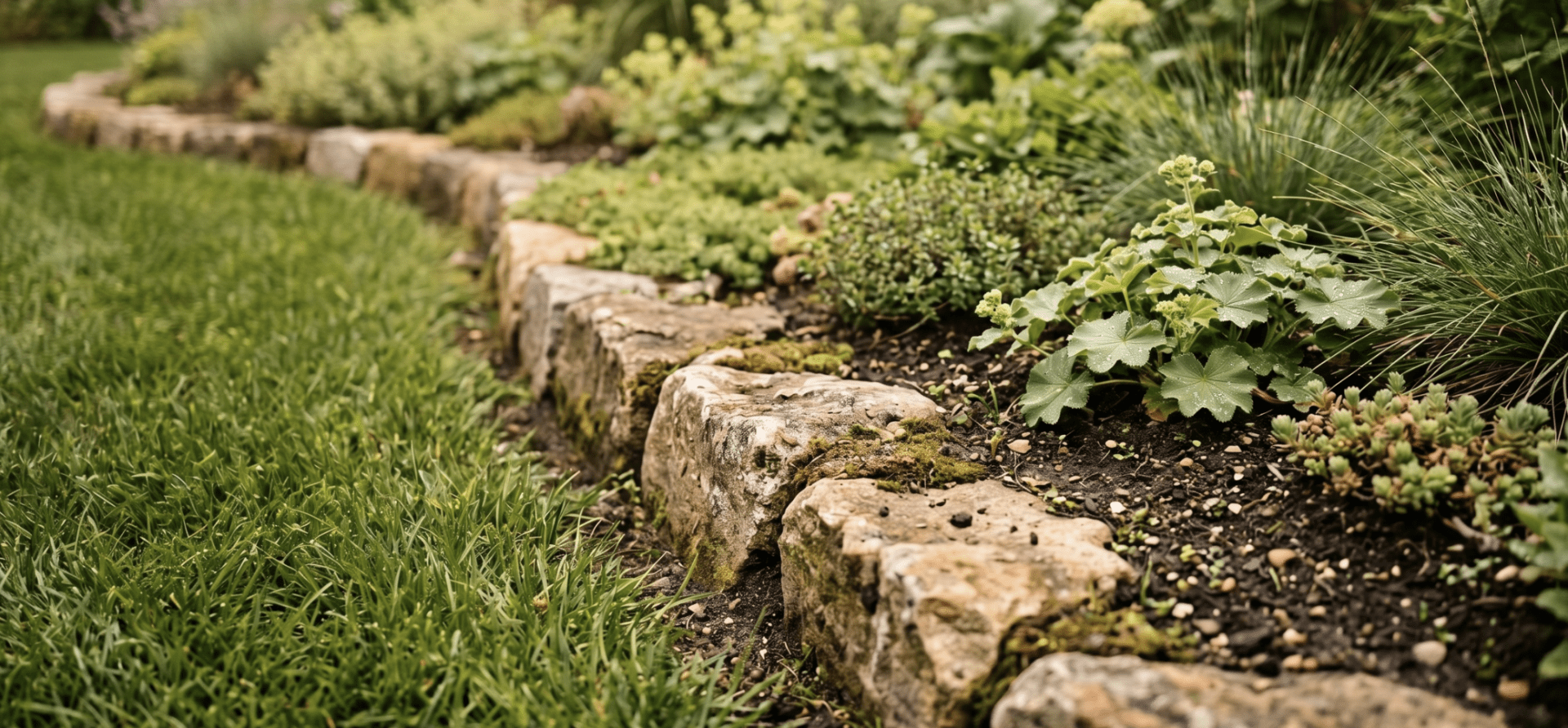
There is a moment many homeowners recognize, even if they can’t quite put it into words. A garden feels almost finished… the planting is beautiful, the structure is there,
the materials are high quality—but something still feels loose. Slightly unfinished. Not quite “settled.” Then edging is added. And suddenly, everything clicks into place. Paths feel intentional. Beds feel defined. Lawns stop bleeding into gardens. The entire landscape looks cared for—even when nothing else has changed.
Garden edging is one of those rare design details that quietly does far more than it gets credit for. It doesn’t scream for attention. Instead,
it creates order, calm, and clarity—the foundation of a landscape that feels truly “kept.”
At Quiet Nature, we often say that a great landscape isn’t just about what you add, but how clearly each
element belongs where it is. Edging is where that clarity begins.
What Is Garden Edging (and Why It Matters More Than People Think)
Garden edging is the physical or visual boundary that separates one part of a landscape from another—most commonly:
- Lawn from garden beds
- Pathways from planting areas
- Gravel from soil or mulch
- Hardscape from softscape
But its real purpose goes far beyond separation.
Good edging:
- Defines intention in the landscape
- Controls maintenance over time
- Prevents material migration (soil, mulch, gravel)
- Creates visual order and structure
- Elevates the overall design from “yard” to “landscape”
In high-end residential design, edging is not an afterthought. It is part of the foundational geometry of the space—decided early, refined carefully, and built to last.
Without it, even the most beautiful planting scheme can slowly lose its clarity.
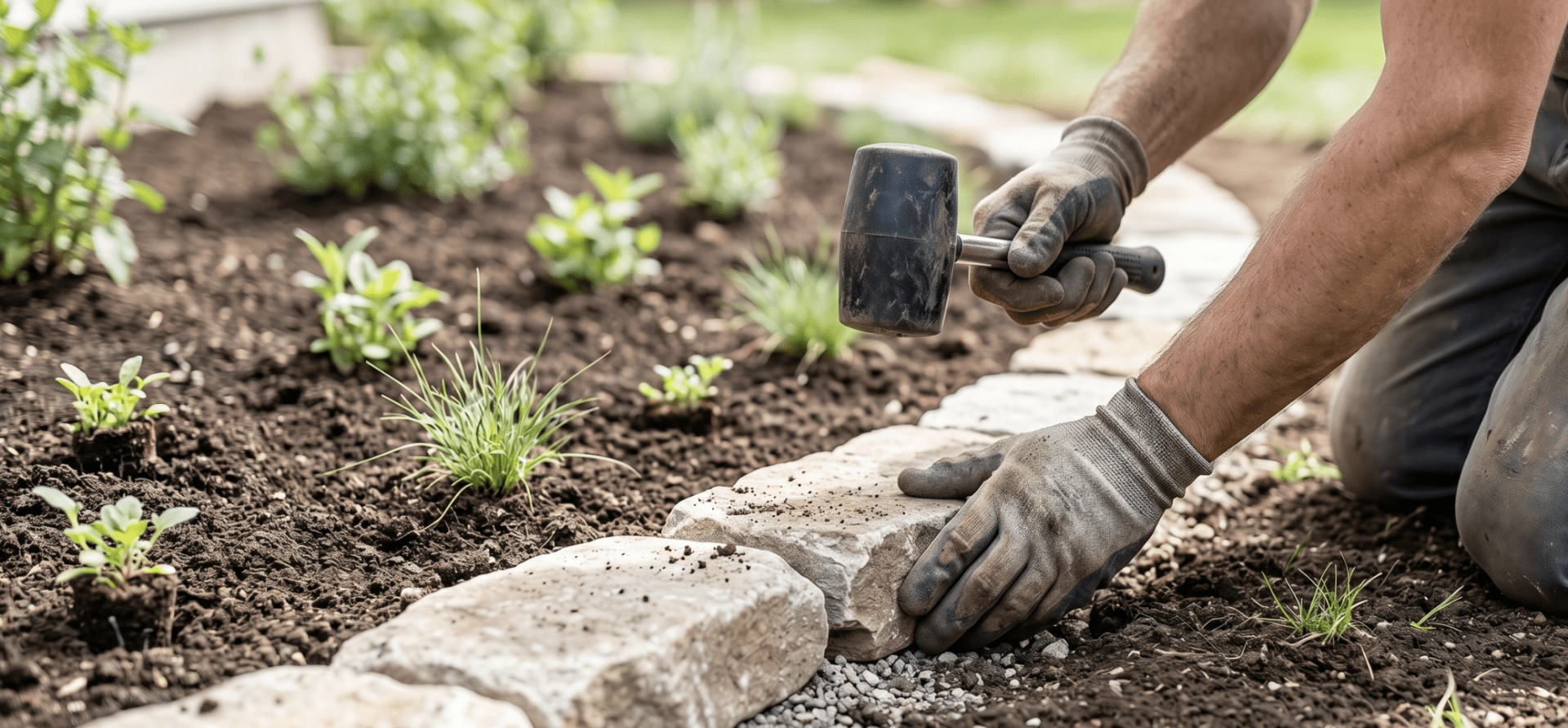
The Psychology of a “Kept Garden”
There is a subtle psychological effect at play when we perceive a garden as “kept.”
It has less to do with perfection and more to do with readability.
A kept garden feels:
- Organized, not chaotic
- Intentional, not accidental
- Calm, not visually noisy
Garden edging plays a direct role in this perception.
When edges are crisp and consistent, the brain can easily interpret where each zone begins and ends. That clarity creates a sense of order—even in lush, naturalistic designs.
On the other hand, without defined edges:
- Grass creeps into beds
- Mulch spills into lawns
- Planting feels blurred
- Maintenance signals “neglect,” even if care is ongoing
In other words, edging doesn’t just affect the garden—it affects how the garden is read.
This is especially important for homeowners who value a refined, low-stress outdoor environment that supports both everyday living and entertaining.
Types of Garden Edging (and When to Use Them)
Not all edging is created equal. The best choice depends on the design intent, maintenance expectations, and overall architecture of the property.
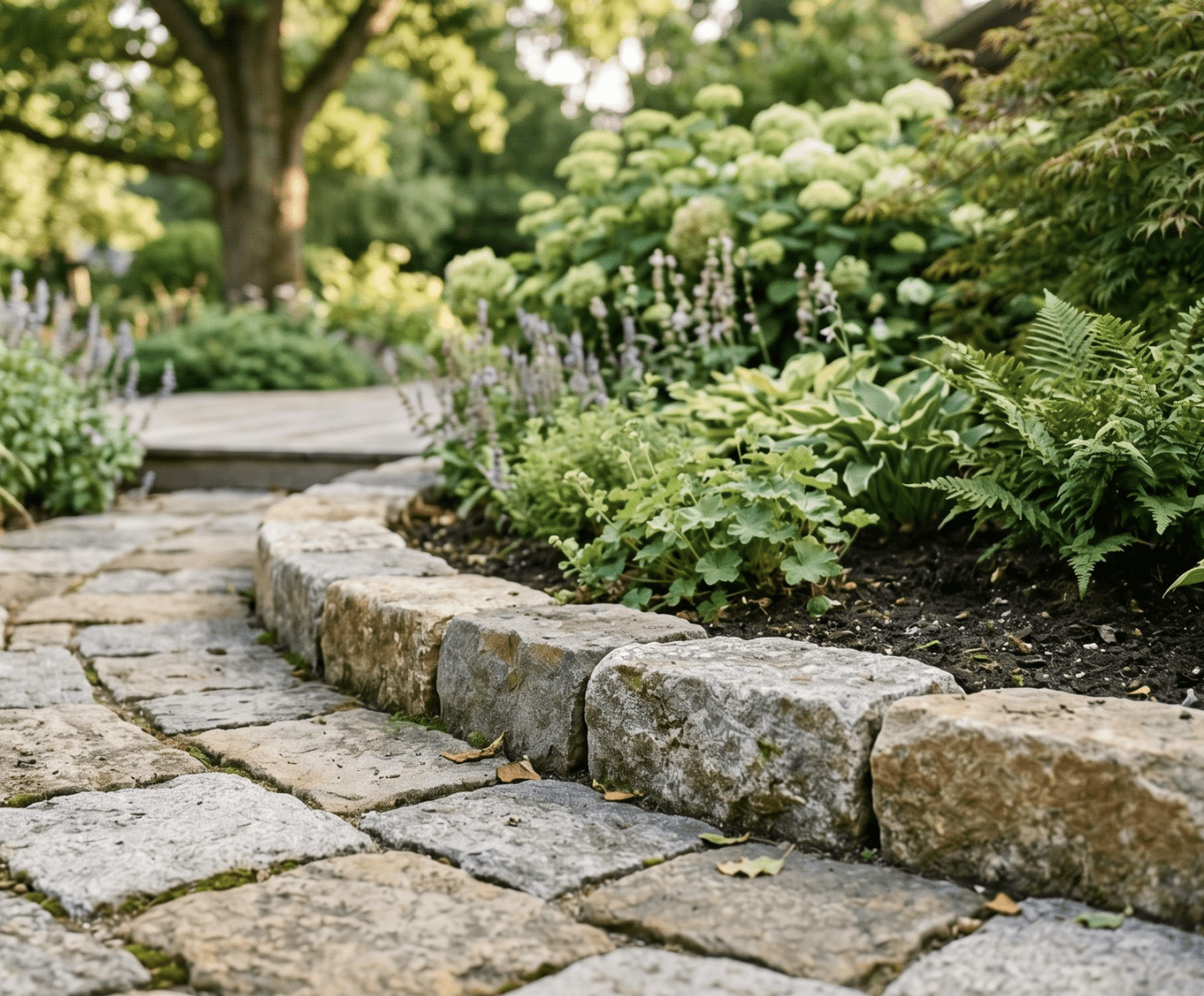
Natural Stone Edging
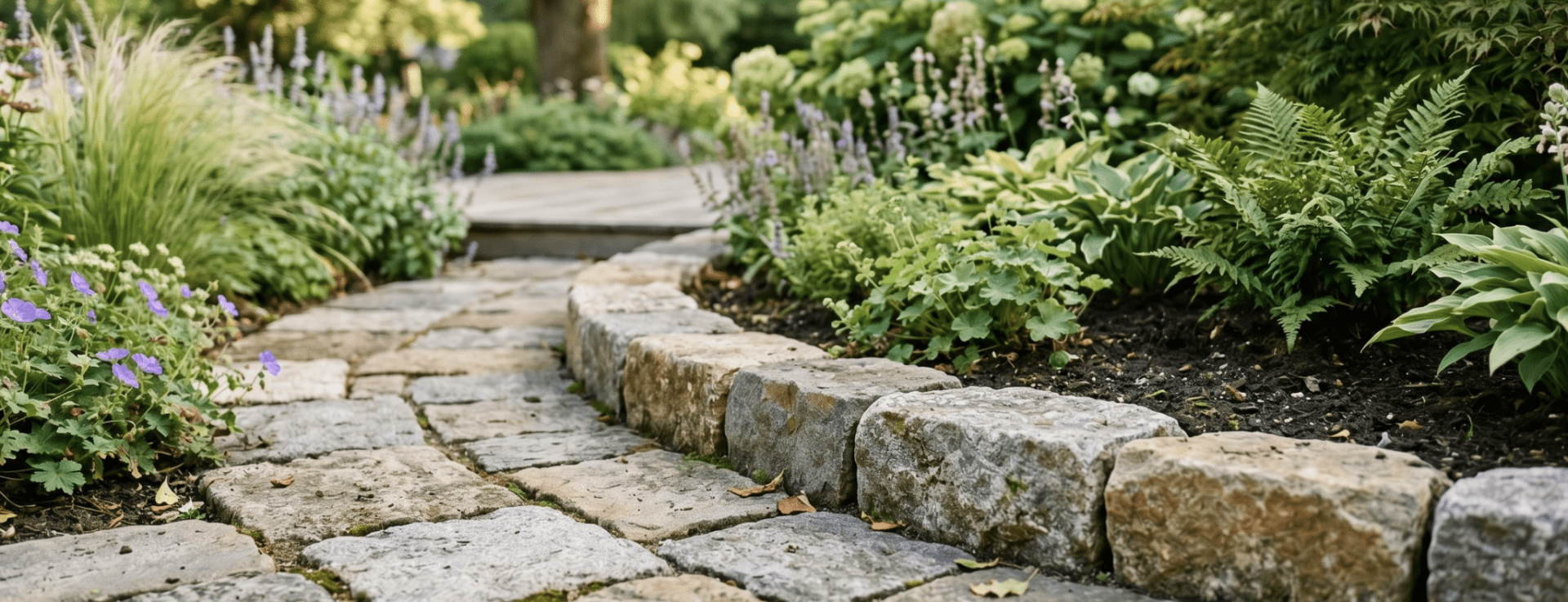
Natural stone edging is one of the most enduring and visually timeless options. It aligns closely with naturalistic landscape principles—materials that feel like they belong in the environment rather than imposed upon it.
Best for:
- Naturalistic gardens
- High-end residential landscapes
- Transitional spaces between hardscape and planting
Why it works:
- Ages beautifully
- Blends into planting over time
- Extremely durable
- Reinforces a sense of permanence
At Quiet Nature, natural stone is often preferred because it supports a “designed but not artificial” aesthetic—especially in properties where architecture and landscape are meant to feel integrated.
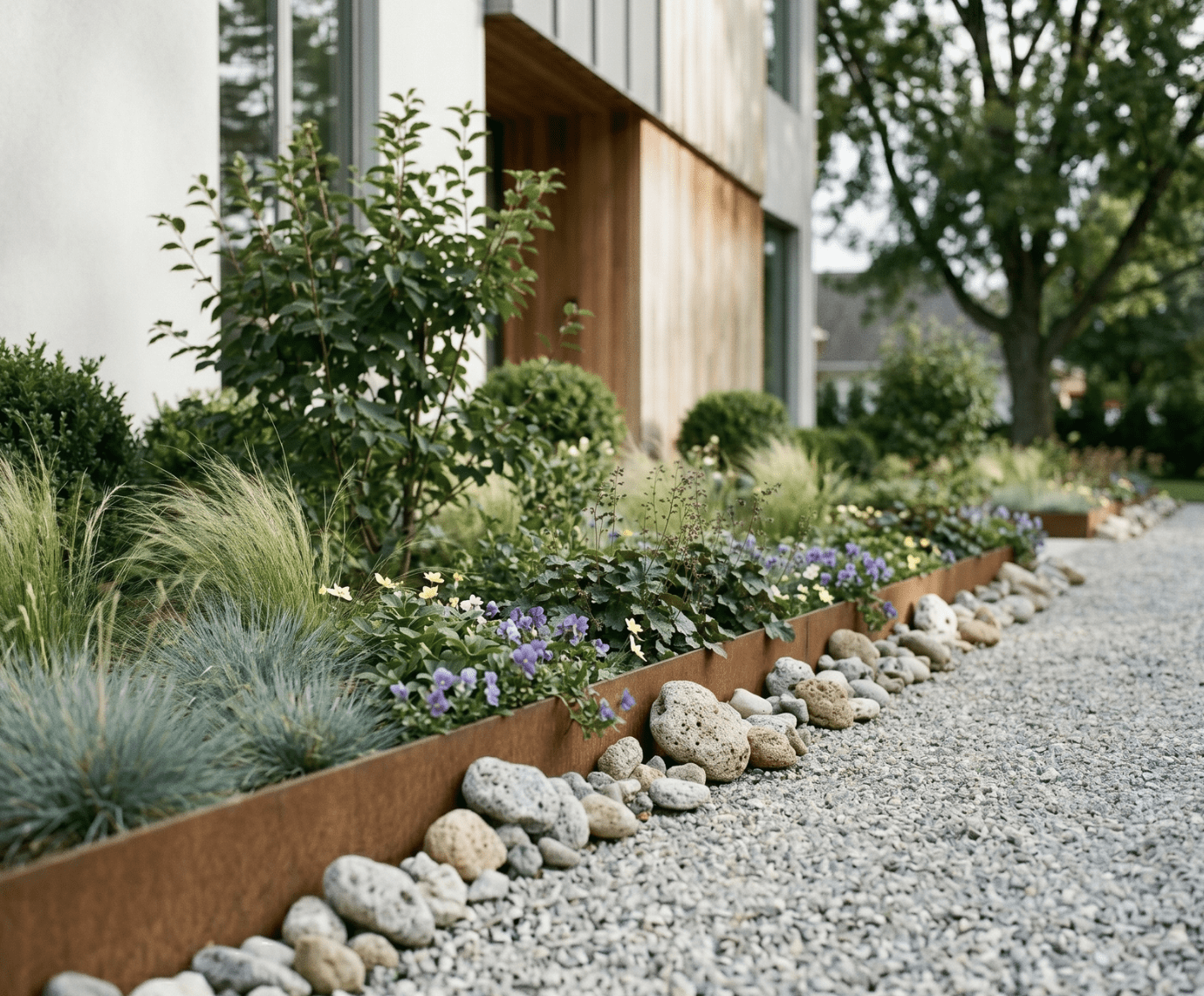
Steel Edging
Steel edging is thin, precise, and nearly invisible once installed.
It is often used in modern or minimalist landscapes where clean lines are essential.
Best for:
- Contemporary gardens
- Strong geometric layouts
- Separation of lawn and gravel or mulch
Why it works:
- Creates razor-sharp transitions
- Virtually disappears visually
- Extremely effective at preventing grass creep
The tradeoff is that it requires precise installation and can feel too stark in highly naturalistic settings if overused.
Wood Edging
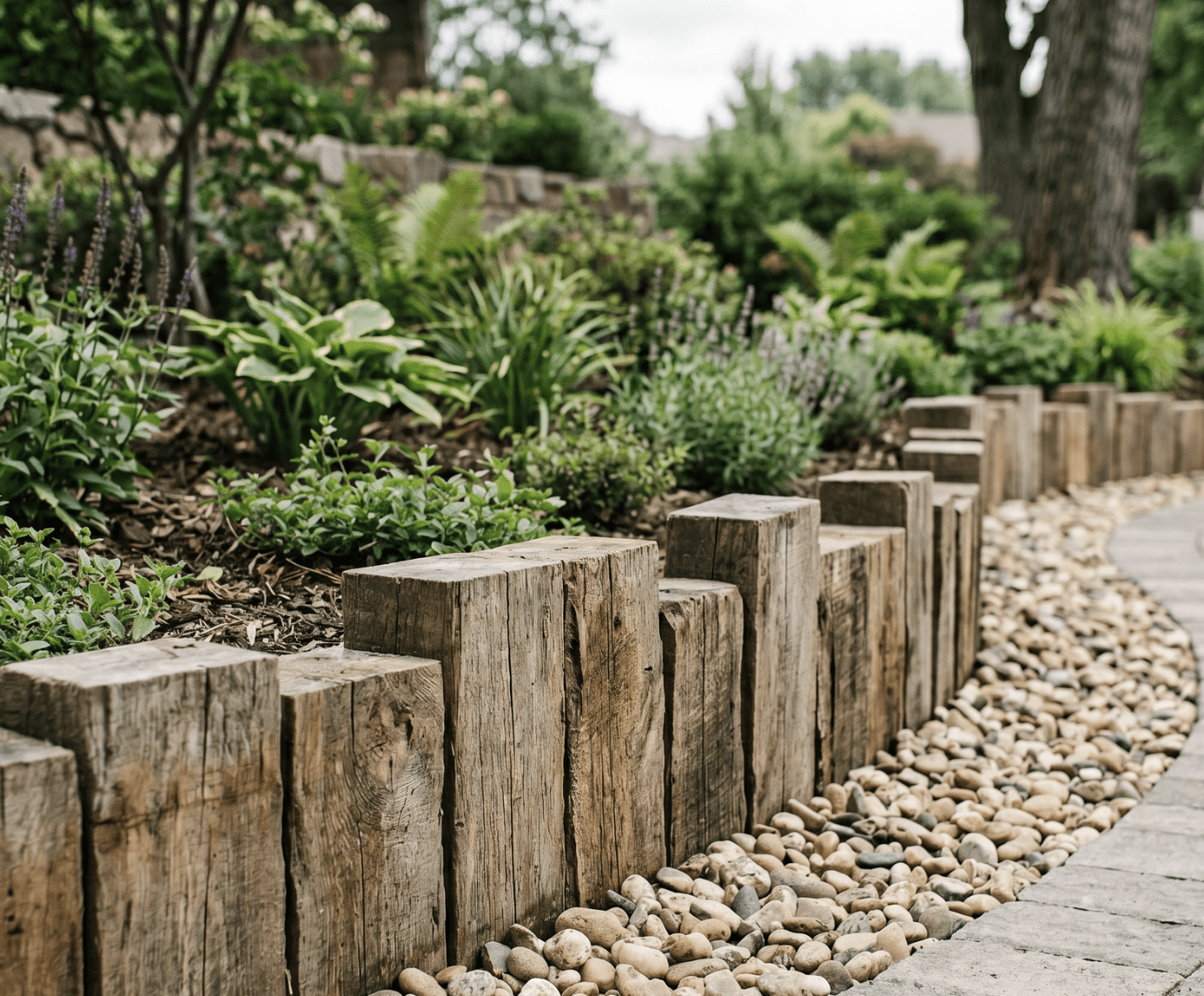
Wood edging has a softer, more rustic character.
However, it is less common in premium long-term installations due to durability concerns.
Best for:
- Cottage-style gardens
- Temporary or transitional edging
- Budget-conscious installations
Consideration:
Requires replacement or maintenance
Will weather and degrade over time
Plant-Based Edging
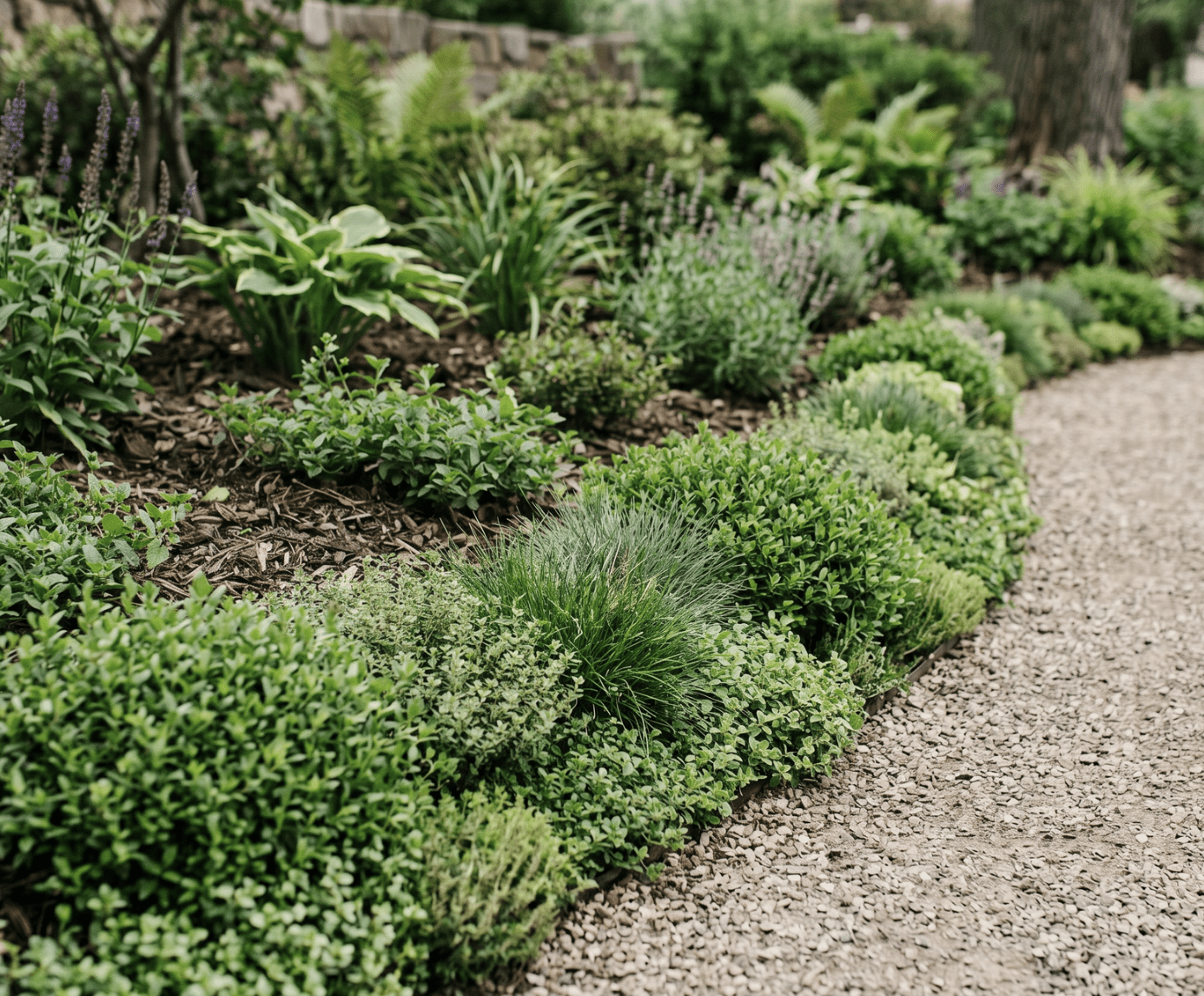
One of the most elegant solutions in naturalistic design is using plants themselves as the edge.
Low-growing perennials, groundcovers, or tightly maintained planting lines can define a boundary without any hard material.
Best for:
- Naturalistic gardens
- Meadow-inspired designs
- Ecological planting schemes
Why it works:
- Soft, organic transitions
- No visual interruption
- Supports biodiversity
This approach requires disciplined maintenance and thoughtful plant selection, but when done well, it feels seamless.
Gravel and Material Transitions
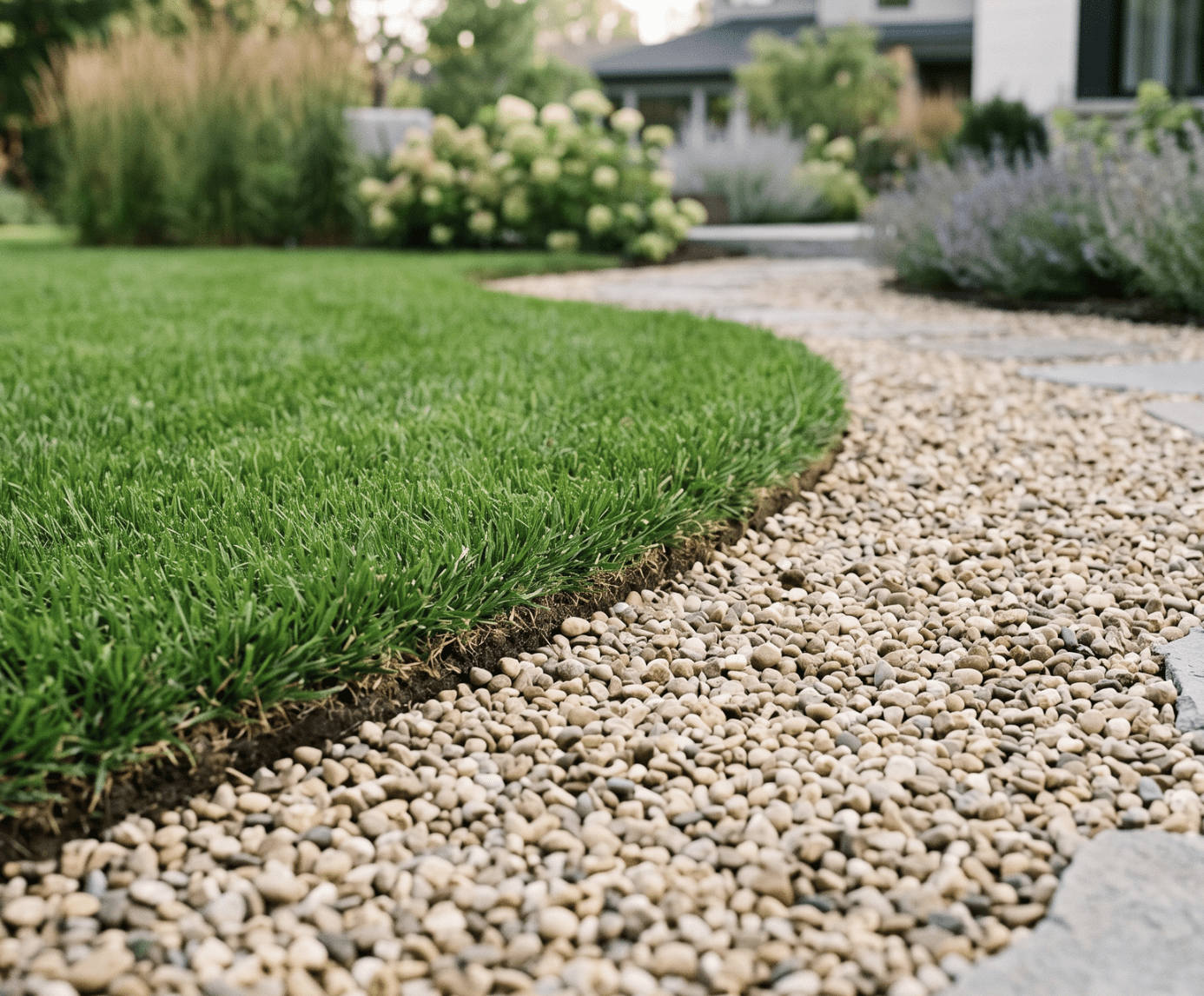
Sometimes edging is less about a physical barrier and more about a deliberate change in material.
For example:
- Lawn to gravel path
- Mulch to crushed stone
- Planting to stepping stone transition
These shifts can act as natural “edges” when properly designed.
How Garden Edging Impacts Maintenance and Longevity
One of the most overlooked benefits of proper edging is how dramatically it reduces long-term maintenance stress.
Without clear edges:
- Mulch migrates into lawns
- Soil washes into paths during rain
- Weeding becomes more difficult
- Lawn equipment damages planting beds
With proper edging:
- Maintenance becomes predictable
- Seasonal cleanup is faster
- The landscape retains its shape over time
- Less corrective work is required
From a design perspective, this aligns with a core principle: a well-designed landscape should be easier to maintain, not harder to enjoy.
Quiet Nature Design Principles in Edging
At Quiet Nature, edging decisions are never made in isolation. They are guided by broader design philosophies that prioritize longevity, simplicity, and natural integration.
Key principles include:
- Simplicity is beautiful: Edges should clarify, not complicate
- Function dictates design: Every edge must serve a purpose
- Emulate natural processes: Transitions should feel believable in nature
- Design for ease of maintenance: Reduced long-term effort is a design success
- Use low-impact materials: Natural stone and locally appropriate materials are preferred
This means edging is never just decorative. It is structural—part of how the landscape performs over time.
Common Garden Edging Mistakes Homeowners Make
Even well-designed properties can fall short when edging is overlooked or poorly executed.
Some of the most common issues include:
- Edges that are too soft or undefined
- Inconsistent edge lines across the property
- Mixing too many edging materials
- Installing edging after planting instead of integrating it into the design
- Using temporary materials in permanent spaces
The result is often a landscape that looks good at installation but loses definition within a few seasons.
Real-World Scenarios: What Edging Changes
Consider two similar properties.
Scenario 1: No Defined Edging
A homeowner invests in a beautiful planting design with layered perennials, ornamental grasses, and a fresh lawn installation.
Within two seasons:
- Grass invades garden beds
- Mulch spills into walkways
- Bed lines become irregular
- The garden starts to feel unmaintained
Even with ongoing care, the landscape appears less refined.
Scenario 2: Thoughtful, Integrated Edging
The same design, but with properly installed natural stone edging separating lawn, beds, and pathways.
Over time:
- Beds remain crisp and readable
- Maintenance is faster and more predictable
- The garden retains its original design intent
- The property feels consistently “finished”
The difference is not effort—it’s structure.
Choosing the Right Edging for Your Property
The best edging solution depends on more than taste. It depends on how the space is used and how it should feel over time.
Ask:
- Do I want this to feel formal or naturalistic?
- How much maintenance am I realistically willing to do?
- Should the edging disappear or become a feature?
- What materials already exist in the architecture of my home?
For many high-end residential properties, a combination approach works best—natural stone in primary garden zones, and subtle steel or plant-based edges in softer, secondary areas.
Conclusion: The Quiet Power of Definition
Garden edging is not dramatic. It does not define a landscape on its own. But it does something just as important—it holds everything in place. It is the difference between a garden that slowly drifts into chaos and one that remains calm, legible, and intentionally composed year after year. In many ways, edging is a reflection of how a landscape is cared for—not just at installation, but over time. It quietly reinforces order, supports maintenance, and preserves design integrity long after the plants have matured.For homeowners seeking a landscape that feels composed, natural, and consistently “kept,” edging is not a detail to overlook. It is one of the foundational decisions that determines how the entire space will live and evolve.
If you are considering a new landscape or refining an existing one, thoughtful edging design is often one of the most effective places to begin.
Quiet Nature designs landscapes where every detail has purpose—and where even the quietest elements, like edging, play a meaningful role in how a space feels every day.