
Fire Features: Gas vs Wood and Where to Place
Them for Real “Linger Factor”
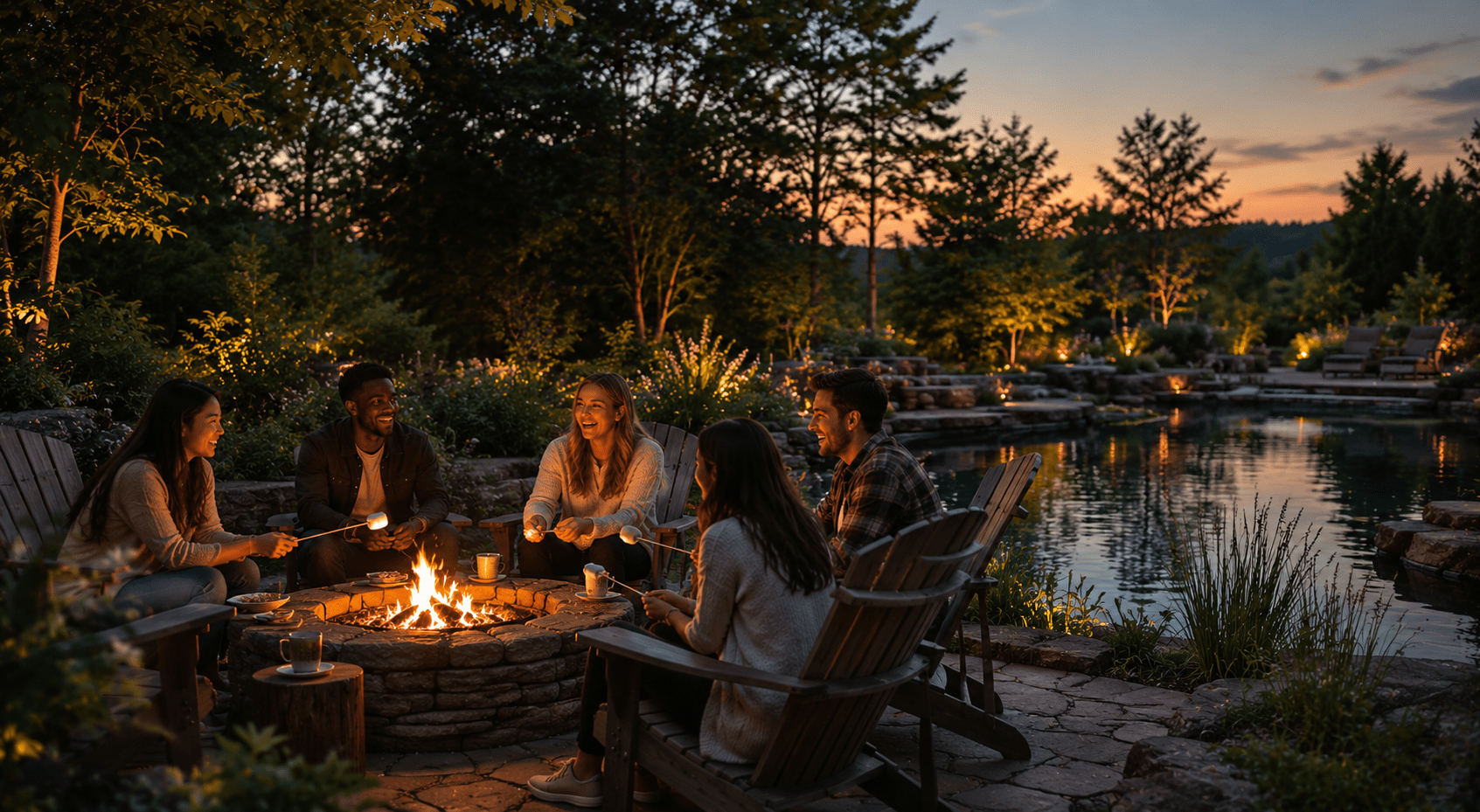
There’s something fascinating about the way people naturally gather around a fire.
Conversations become longer. Phones disappear into pockets. Children roast marshmallows while adults settle into chairs with a drink in hand.
Even on cool spring or autumn evenings, a thoughtfully designed fire feature can transform an outdoor space from somewhere you simply look at into
somewhere you genuinely want to stay.But choosing a fire feature isn’t just about deciding whether you like the look of flames. The type of fire you install—
and more importantly, where you place it—has a significant impact on how your backyard feels, functions, and gets used throughout the year.
At Quiet Nature, we’ve found that the most memorable outdoor living spaces aren’t necessarily the biggest or most expensive.
They’re the ones that encourage people to linger. That’s what great landscape design is really about: creating spaces people don’t want to leave.
If you’re planning a backyard renovation, here’s how to choose between a gas and wood-burning fire feature—and how strategic placement can make all the difference.
What Is the “Linger Factor”?
The linger factor describes how naturally a space invites people to stay longer.
It’s not something you can buy in a catalog or achieve by adding one impressive feature. Instead, it’s created through intentional design that encourages comfort,
conversation, and connection.
A fire feature often becomes the emotional centre of an outdoor living space because it naturally provides:
- Warmth during cooler evenings
- A visual focal point after sunset
- Comfortable gathering space
- Ambient lighting
- A relaxing atmosphere that changes with the seasons
Instead of asking, “Where can we fit a fire pit?” a better question is:
“Where will people naturally gather?”
That subtle shift in thinking often leads to a dramatically better outdoor experience.
Gas vs. Wood Fire Features: Which Is Right for Your Backyard?
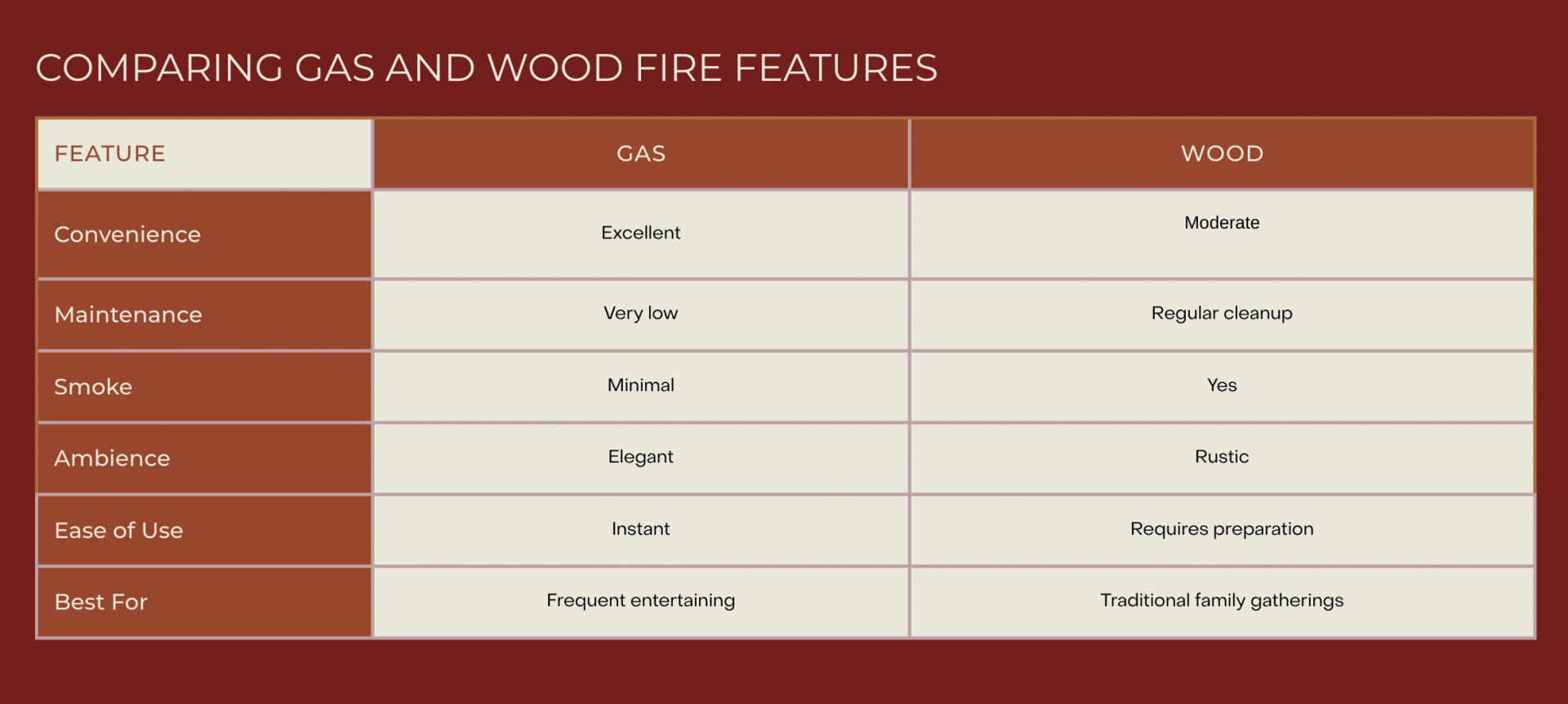
Both options create beautiful outdoor experiences, but they offer very different lifestyles.
The right choice depends less on budget and more on how you actually plan to use your backyard.
Gas Fire Features: Effortless Comfort
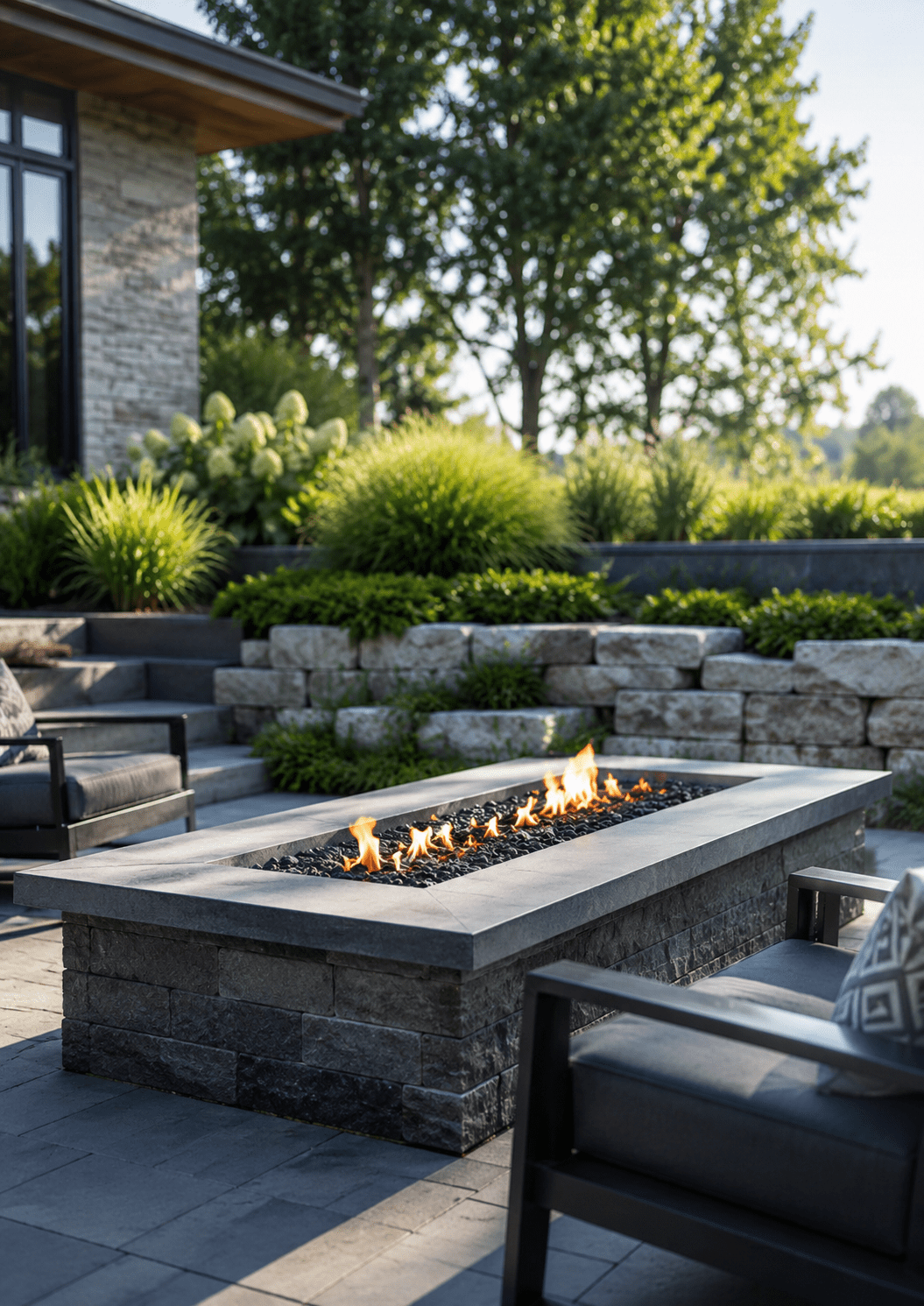
Gas fire features have become increasingly popular in modern outdoor living spaces because they remove nearly all of the work associated with enjoying a fire.
With the push of a button, you have consistent flames, instant warmth, and no smoke lingering in your clothes afterward.
Best for homeowners who:
- Entertain frequently
- Want quick, convenient fires
- Prefer clean contemporary design
- Have nearby seating areas or covered structures
- Want minimal maintenance
Advantages of gas fire features
- Instant ignition
- Adjustable flame height
- No firewood storage
- Minimal cleanup
- Little to no smoke
- Easy integration into patios and outdoor kitchens
Gas fireplaces also pair beautifully with modern materials like natural stone, porcelain pavers, architectural concrete, and premium outdoor furniture.
For homeowners creating a luxury backyard retreat, gas often delivers the most seamless experience.
Wood Fire Features: Authentic Atmosphere
For many families, nothing replaces the crackle of burning logs.
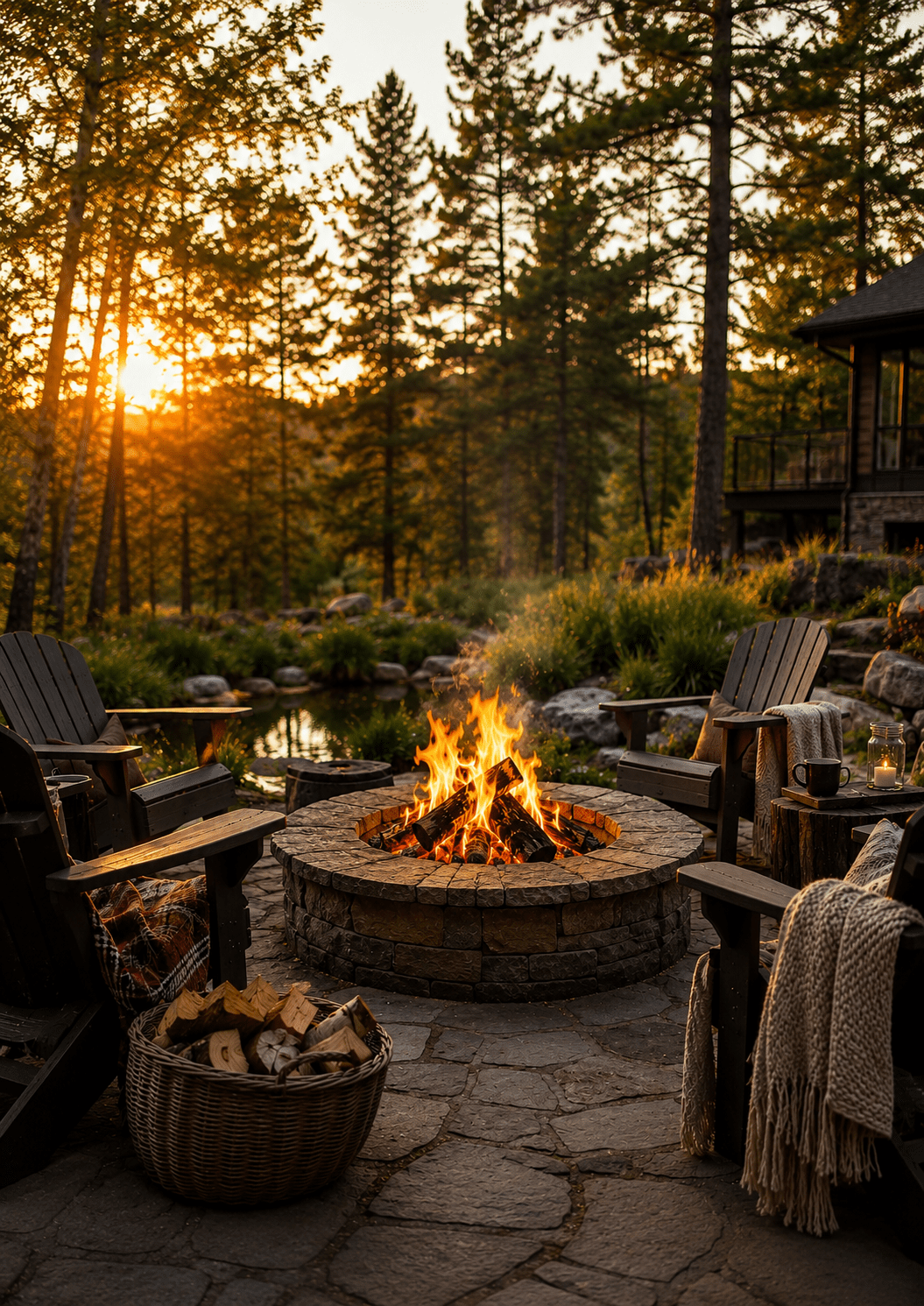
Wood-burning fire pits create an experience that feels nostalgic and deeply connected to nature. The smell of cedar or maple, glowing embers, and the ritual of building a fire all become part of the evening.
Best for homeowners who:
- Love traditional campfires
- Roast marshmallows regularly
- Enjoy rustic or natural landscapes
- Don’t mind occasional maintenance
- Have enough space for safe clearances
Advantages of wood-burning fire pits
- Authentic crackling sounds
- Natural aroma
- Larger flame potential
- Traditional outdoor experience
- Often lower installation costs
For properties surrounded by mature trees, natural ponds, woodland gardens, or meadow-style landscaping, a wood-burning fire pit often feels perfectly at home.
Where Should a Fire Feature Be Placed?
Placement has a bigger impact than many homeowners realize.
An incredible fire feature in the wrong location often becomes underused.
A modest fire pit placed intentionally can become the most popular spot in the backyard.
Here are several design principles we use when planning outdoor living spaces.
1. Keep It Close Enough to the House
If guests have to walk across the entire yard to reach the fire, they’re less likely to use it regularly.
Ideally, the fire feature should feel connected to the primary entertaining space while still offering its own destination.
Think of it as creating a second outdoor room rather than placing an isolated feature in the lawn.
2. Create a Sense of Enclosure
People naturally feel more comfortable in spaces that provide subtle boundaries.
This doesn’t mean building walls.
Instead, consider using:
- Natural stone seat walls
- Garden beds
- Ornamental grasses
- Trees
- Pergolas
- Low retaining walls
- Layered landscape planting
These elements create intimacy without making the space feel closed in.
It’s one reason professionally designed landscapes often feel surprisingly inviting—they balance openness with comfort.
3. Consider the View from Every Seat
Every chair should have something beautiful to look at.
That might include:
- A natural swimming pond
- A waterfall
- Layered gardens
- A specimen tree
- Architectural planting
- Evening landscape lighting
Rather than making the fire the only focal point, successful landscapes create multiple visual experiences that unfold throughout the evening.
4. Think About Wind and Smoke
This becomes especially important with wood-burning fire pits.
Observe how wind typically moves through your property.
Positioning a fire pit where smoke regularly drifts toward seating areas, dining spaces, or neighbouring properties can quickly reduce enjoyment.
Small adjustments in location often make a significant difference.
5. Layer Lighting Around the Fire
Many homeowners assume the fire itself provides enough light.
In reality, subtle landscape lighting dramatically improves the experience.
Consider adding:
- Path lighting leading to the fire
- Soft uplighting on nearby trees
- Accent lighting in surrounding gardens
- Gentle lighting beneath seating walls
- Warm overhead lighting beneath pergolas
The result feels welcoming long before the fire is even lit.
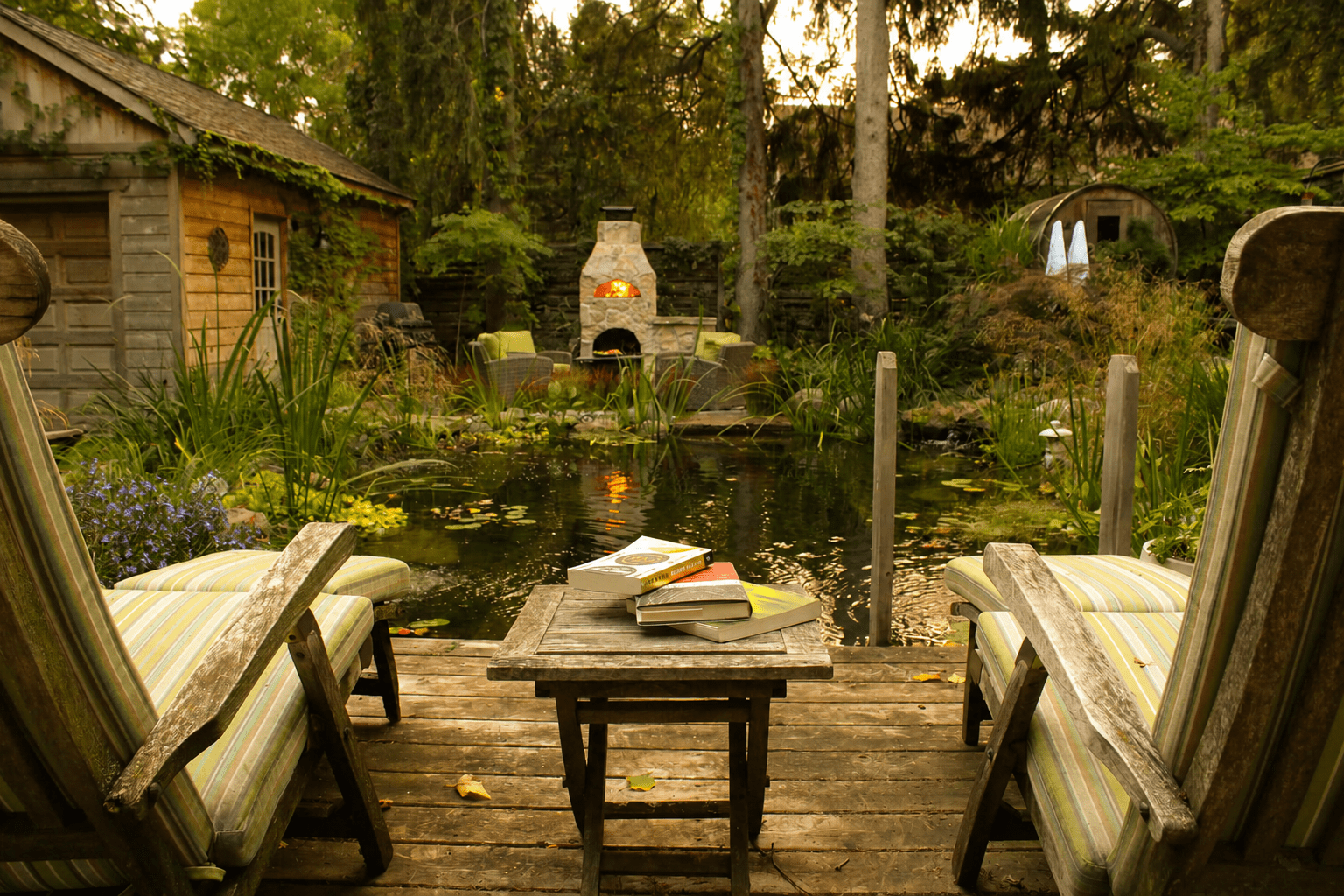
Designing Around the Fire Instead of Adding One Later
One of the biggest mistakes homeowners make is treating the fire feature as an afterthought. Instead, the fire should influence the layout of
the surrounding landscape from the beginning. For example, imagine a backyard transformation where the fire feature
becomes the centrepiece of an interconnected outdoor experience.
Guests step onto a spacious patio that flows naturally toward a circular seating area built with natural stone seat walls. Nearby, ornamental grasses
soften the edges while strategically placed trees provide privacy without blocking views. A gentle waterfall creates background sound,
and low-voltage lighting extends the usability of the space well into the evening.
Nothing feels forced because every element was designed to support the others.
This integrated approach creates a backyard that feels intentional rather than assembled piece by piece.
Common Fire Feature Mistakes to Avoid
Even beautiful fire features can fall short if they’re not thoughtfully planned.
Here are a few common mistakes:
Oversized fire pits
Bigger isn’t always better.
Large fire pits often generate excessive heat, making seating uncomfortable during warmer months.
Too much distance between seats
Conversation becomes difficult when chairs are spread too far apart.
Comfortable gathering spaces encourage natural interaction.
Ignoring local regulations
Municipal bylaws and fire safety requirements vary depending on your location.
Always confirm setback requirements, fuel regulations, and permitting before installation.
Forgetting year-round use
A fire feature shouldn’t only be enjoyable during summer.
Consider how it will function during crisp autumn evenings, early spring gatherings, and even winter landscapes.
Many homeowners discover that their fire feature becomes one of the most-used parts of the backyard outside of peak summer.
Why Fire Features Continue to Grow in Popularity
Outdoor living continues to evolve beyond patios and barbecues.
More homeowners are investing in spaces that support slower evenings, meaningful conversations, and everyday relaxation.
As backyards increasingly become extensions of the home, features that create comfort throughout multiple seasons naturally become more valuable.
A thoughtfully designed fire feature helps extend outdoor enjoyment well beyond the warmest months. It also creates a destination within the landscape—one that encourages family dinners outside, quiet moments after work, and memorable evenings with friends.
Ultimately, the goal isn’t simply to add another backyard feature. It’s to create experiences people remember.
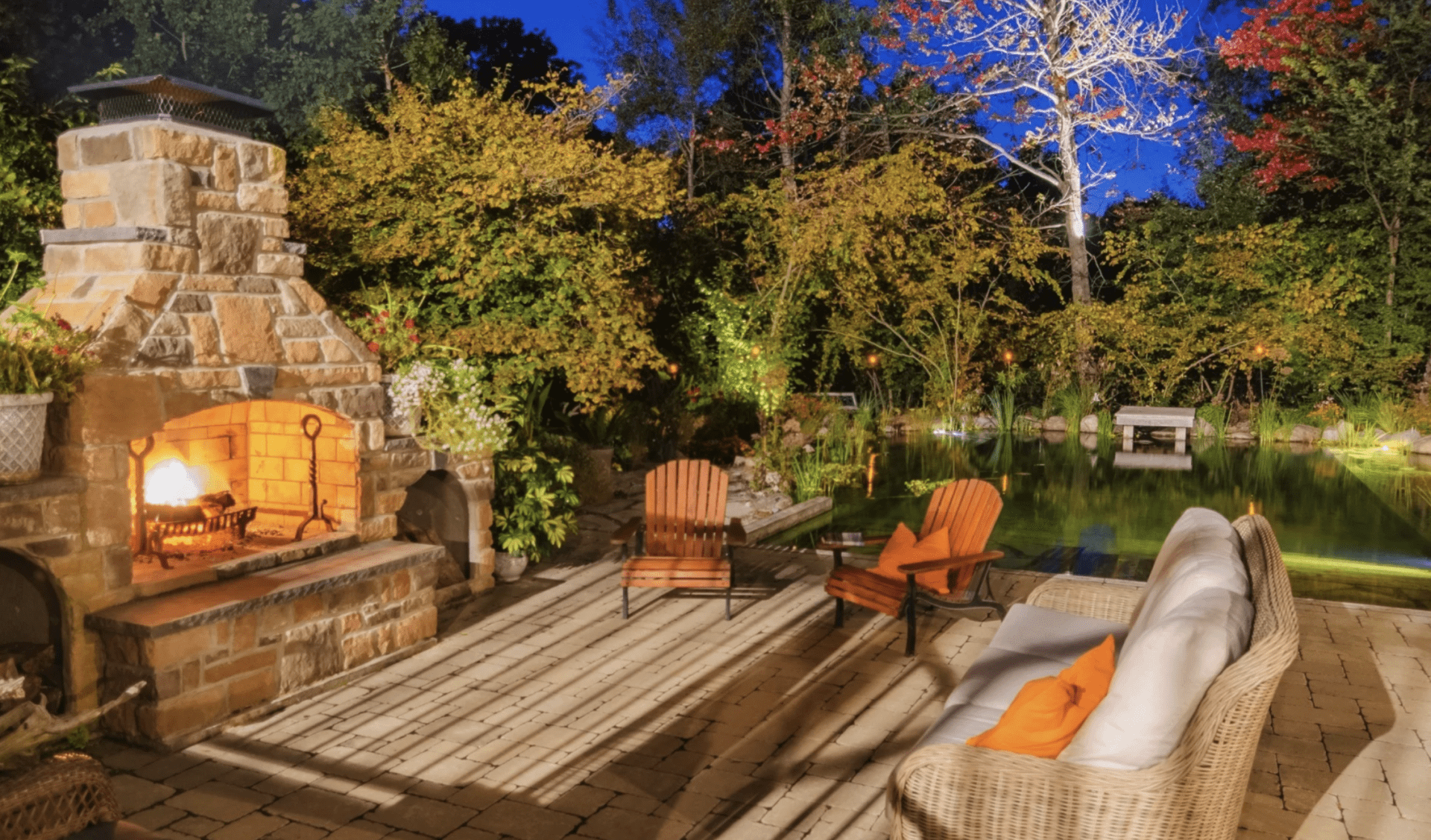
Create a Backyard That People Never Want to Leave
The best outdoor spaces aren’t remembered because they had the biggest patio or the tallest fireplace.
They’re remembered because they made people feel comfortable enough to stay a little longer.
Whether your vision includes a sleek gas fireplace beside a contemporary patio or a rustic wood-burning fire pit nestled within natural stone and gardens,
thoughtful planning is what transforms a backyard into a place people return to again and again.
At Quiet Nature, every landscape is designed around how people actually live—not just how a space looks on installation day. By blending intentional design,
natural materials, and carefully chosen outdoor features, we create landscapes that encourage connection, relaxation, and lasting memories in every season.
If you’re planning a backyard transformation and wondering how a fire feature could fit into the bigger picture, we’d love to help you design an outdoor space
where conversations last longer, evenings stretch a little further, and your backyard becomes your favourite place to be.