
Small Backyard Outdoor Living:
How to Make It Feel Bigger
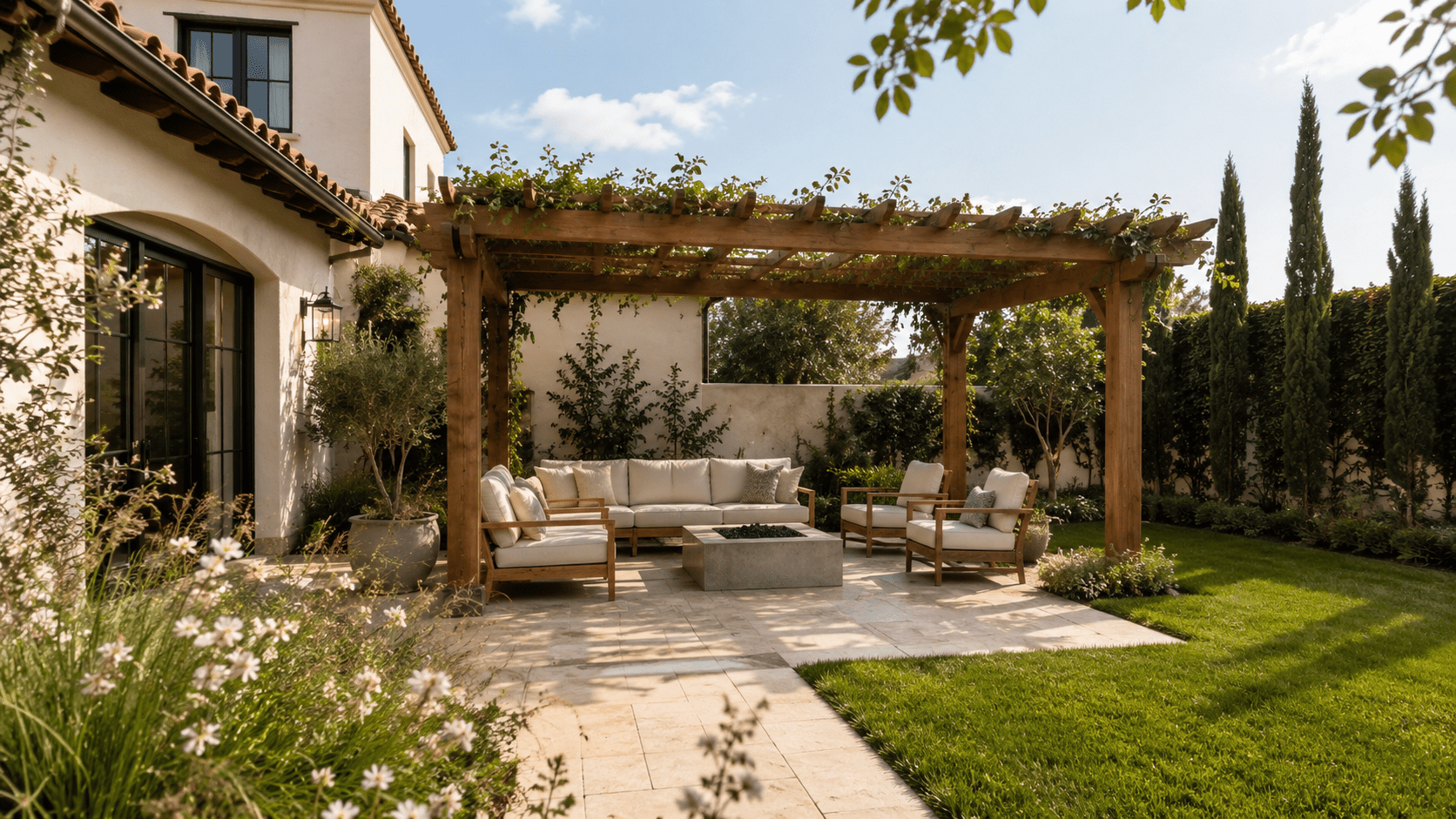
A small backyard does not have to feel like a small backyard.
The difference often comes down to what the eye experiences when you step outside. A crowded patio, oversized furniture, disconnected planting beds, and
too many competing features can make even a generous yard feel cramped. Meanwhile, a thoughtfully designed compact space can feel open, layered, and
surprisingly expansive. That is especially relevant as homeowners continue to treat outdoor areas as extensions of the home.
Recent outdoor design trends have increasingly focused on multifunctional spaces, indoor-outdoor connection, wellness, and making better use of smaller footprints.
The goal, then, is not simply to squeeze more into a small backyard. It is to make every element work harder.
Start With the Flow, Not the Furniture
One of the most important principles in small backyard design is creating a clear sense of movement.
When every part of the yard is filled with something, the space loses visual breathing room. A better approach is to establish a simple circulation path that naturally guides
people through the landscape. Think about how you move from the back door to the patio, from the patio to the garden, or from the seating area toward a water feature.
A well-planned layout might include:
- A defined walkway connecting the house to the main outdoor living area
- One primary gathering space rather than several undersized ones
- Planting beds that frame, rather than interrupt, circulation
- A focal point that draws the eye toward the far end of the yard
- Open areas that provide visual relief
This is where professional landscape design can make a meaningful difference. The objective is not to fill every square metre. It is to create a sequence of spaces that
feels natural to move through.
Penn State Extension identifies proportion, rhythm, balance, and unity as important principles of garden design. In a compact backyard, those
principles become particularly valuable because visual clutter is immediately noticeable
Use One Space for Several Purposes
A small backyard rarely has room for a dedicated dining area, lounge, outdoor kitchen, fire pit, and garden room separately.
Fortunately, it does not need them.
The better question is: How can one space support several ways of living?
A built-in bench, for example, can provide everyday seating, additional space when guests arrive, and hidden storage underneath. A compact outdoor kitchen can incorporate preparation space, cooking, and casual seating into one footprint.
A single patio might become:
- Morning coffee space
- Family dining area
- Evening lounge
- Entertaining space
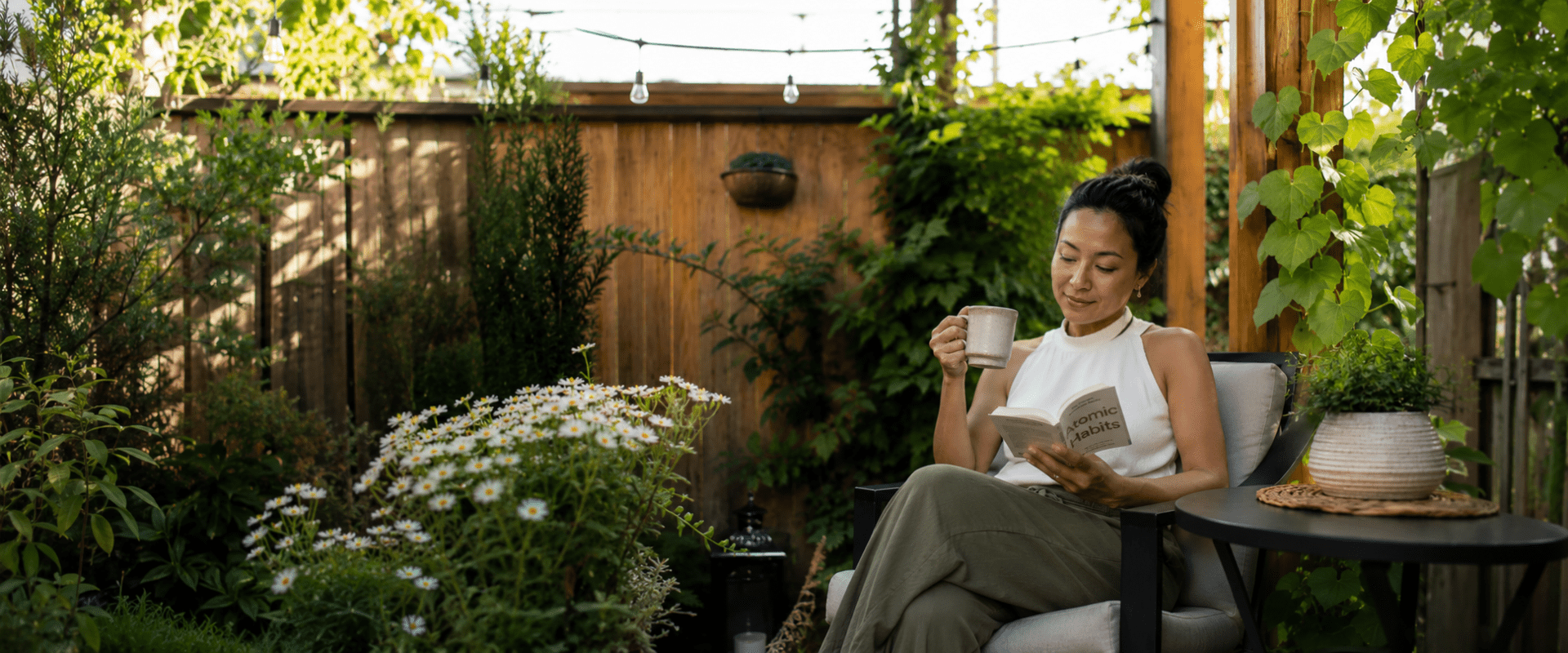
- Quiet reading retreat
This multifunctional approach is increasingly reflected in outdoor design. Industry trend reports have highlighted the rise of “microspaces” designed to extend the home’s living area without requiring a large backyard.
The trick is to design the space around how you actually live, rather than trying to recreate every feature found in a much larger backyard.
Make the Edges Work Harder
In a small yard, the perimeter is valuable real estate.
Instead of allowing the edges to become leftover strips of grass or awkward planting beds, use them intentionally.
A narrow planting border can soften a fence while adding privacy. A built-in seat can turn an otherwise unused corner into a destination. A low retaining wall can double as seating while defining a garden.
Vertical elements are particularly useful.
Consider:
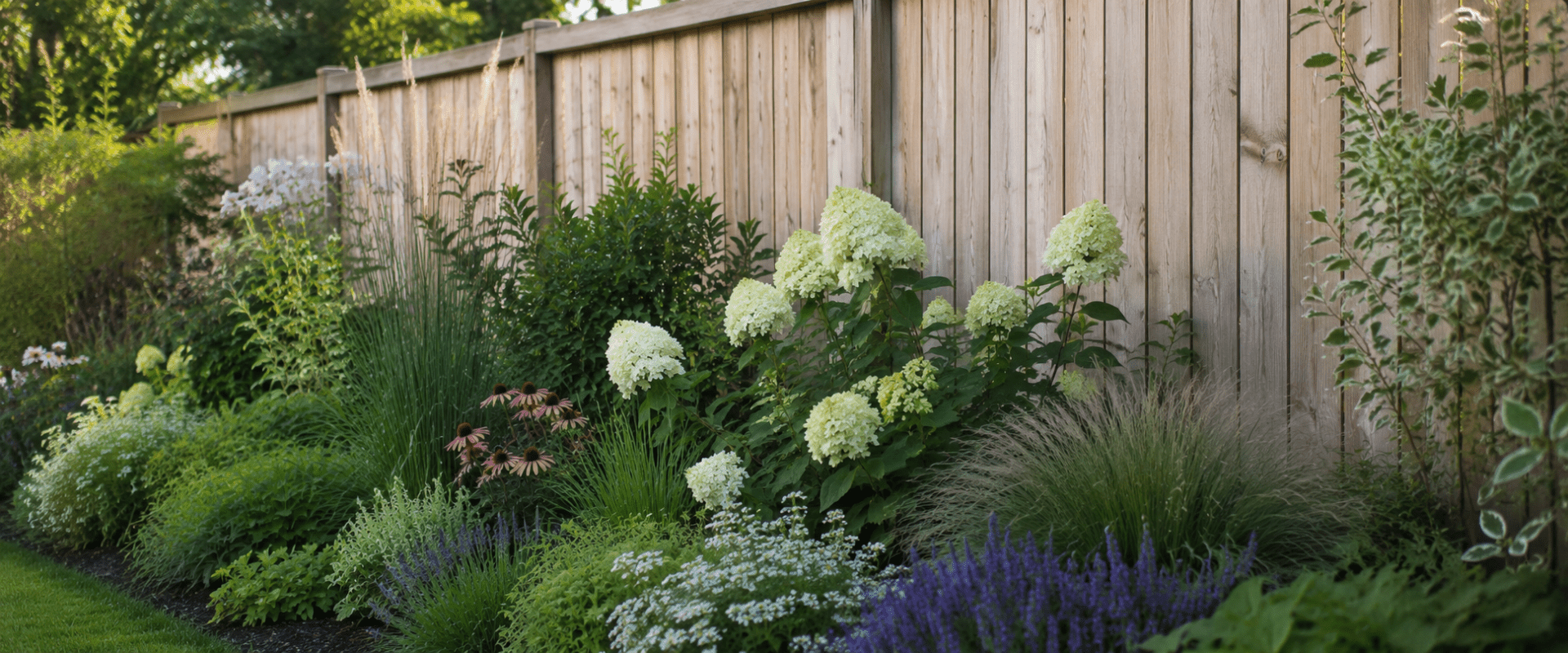
- Layered planting along fences
- Trellises or climbing plants
- Vertical garden structures
- Privacy screens
- Narrow raised beds
- Wall-mounted lighting
- Built-in benches
Vertical design adds interest without consuming much floor space. It also gives the eye somewhere to travel upward, helping the backyard feel more layered rather than compressed.
Create Depth With Planting
One of the most effective ways to make a small garden feel larger is to avoid treating the entire yard as one flat layer.
Instead, create depth.
For example, a compact backyard might use lower-growing plants near the patio, medium-height shrubs farther out, and taller trees or screening plants toward the back.
This creates a visual progression.
You are not necessarily making the yard physically deeper. You are giving the eye multiple distances to explore.
Plant selection matters, too. Repeating a smaller palette of plants can create continuity, while varying textures and heights keeps the landscape from feeling monotonous.
For a more naturalistic garden, different shades of green, foliage textures, grasses, and seasonal planting can provide richness without requiring a huge number of individual species.
The result is a garden that feels cohesive rather than busy.
Draw the Eye Beyond the Property Line
A fence can make a backyard feel like a box. Instead of making the boundary the visual endpoint, soften it.
Layered planting, natural materials, and carefully positioned focal points can make the transition between your property and its surroundings feel less abrupt.
In some situations, a strategically placed tree can partially obscure a fence. In others, a planting bed can create a softer boundary between the garden and neighbouring properties.
Privacy can also be created through planting rather than solid walls. Recent landscape trends have shown growing interest in layered privacy planting, with trees, shrubs, and groundcovers being used to create secluded outdoor spaces while supporting biodiversity.
This is particularly useful in compact neighbourhoods where privacy and openness need to coexist.
Choose Proportional Hardscaping
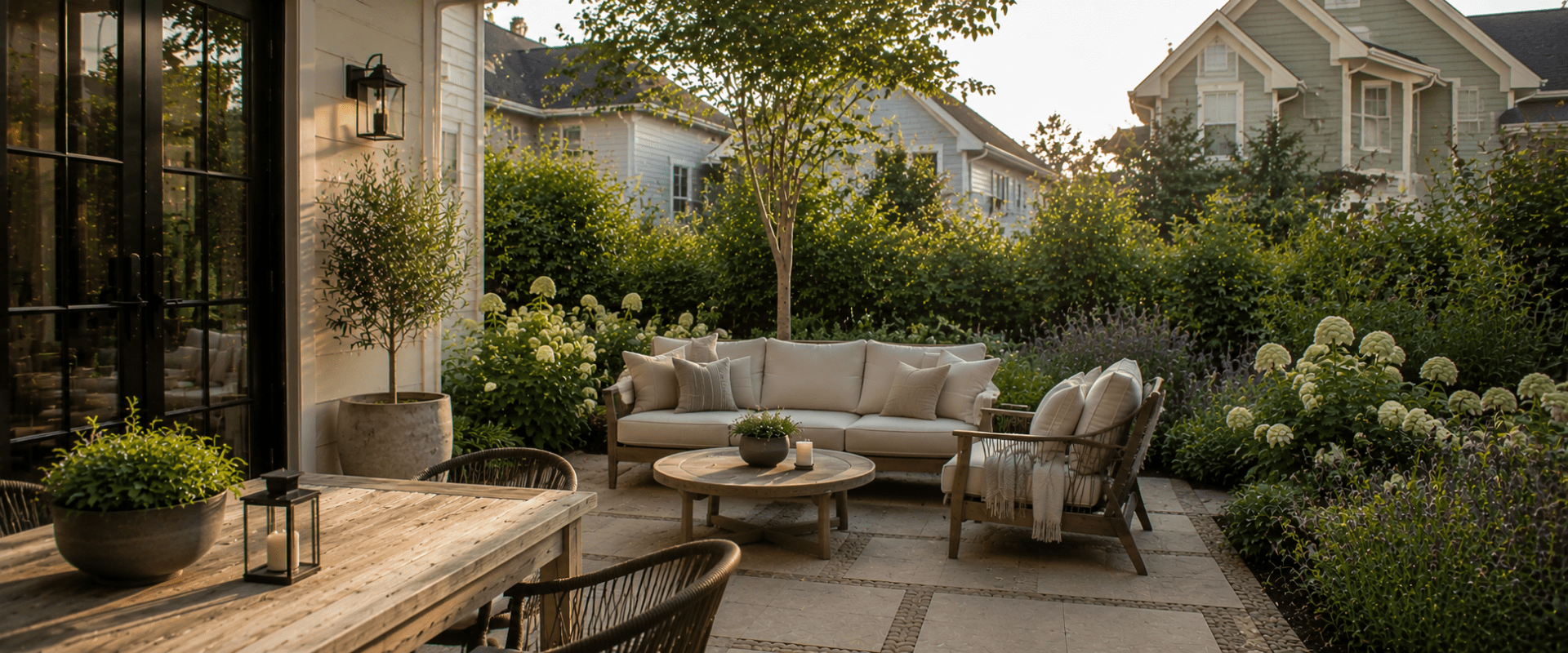
Large-format materials can sometimes make a small patio feel more expansive because fewer visual breaks create a cleaner surface.
But scale still matters. An oversized fireplace, enormous dining table, or overly complicated paving pattern can quickly overwhelm a compact backyard.
Instead, consider:
Simple paving patterns
A restrained pattern helps create visual continuity.
Fewer material changes
Using the same or complementary materials across the patio, steps, retaining walls, and garden edges can make the landscape feel more unified.
Built-in features
Built-in seating, planters, and compact outdoor kitchens can reduce the amount of freestanding furniture competing for space.
The objective is not minimalism for its own sake. It is visual clarity.
Connect the Backyard to the House
One of the easiest ways to make an outdoor space feel larger is to make it feel connected to the indoor space.
When flooring, colours, materials, and sightlines transition naturally from the house into the backyard, the boundary between the two becomes less visually dominant.
For example, if your kitchen opens onto a small patio, positioning the outdoor dining area directly beyond it can make both spaces feel connected.
Large openings, aligned sightlines, consistent materials, and carefully positioned landscaping can reinforce that relationship.
This indoor-outdoor cohesion has become a major focus in contemporary outdoor design, with homeowners increasingly looking for exterior spaces
that function as genuine extensions of their homes.
Use Lighting to Expand the Evening Experience
A backyard can feel considerably smaller after sunset if the only illuminated area is the patio immediately beside the house.
Instead, use lighting to reveal the entire landscape.
A layered approach might include:
- Soft pathway lighting
- Low garden lighting
- Accent lighting on trees or architectural features
- Warm lighting around seating areas
- Subtle illumination near steps and changes in elevation
Lighting the far edge of the garden is particularly effective because it gives the eye something beyond the immediate patio to discover.
The goal is not to flood the yard with brightness. It is to create depth and atmosphere.
A small garden with thoughtfully placed lighting can feel much more expansive at night because the landscape continues beyond the main living area.
Give the Eye One Destination
Every successful small backyard needs somewhere for the eye to land.
It might be a sculptural tree.
A natural stone wall.
A small pond.
A fire feature.
A beautifully framed garden bed.
Or, for a more ambitious transformation, a compact natural swimming pond.
The focal point should not compete with everything else. It should organize the landscape around it.
For example, imagine a narrow backyard where the patio sits immediately outside the house. Rather than filling the patio with furniture and decorative objects, the design could leave a clear sightline toward a small naturalistic garden at the back.
Suddenly, the yard has a destination.
That sense of distance is valuable.
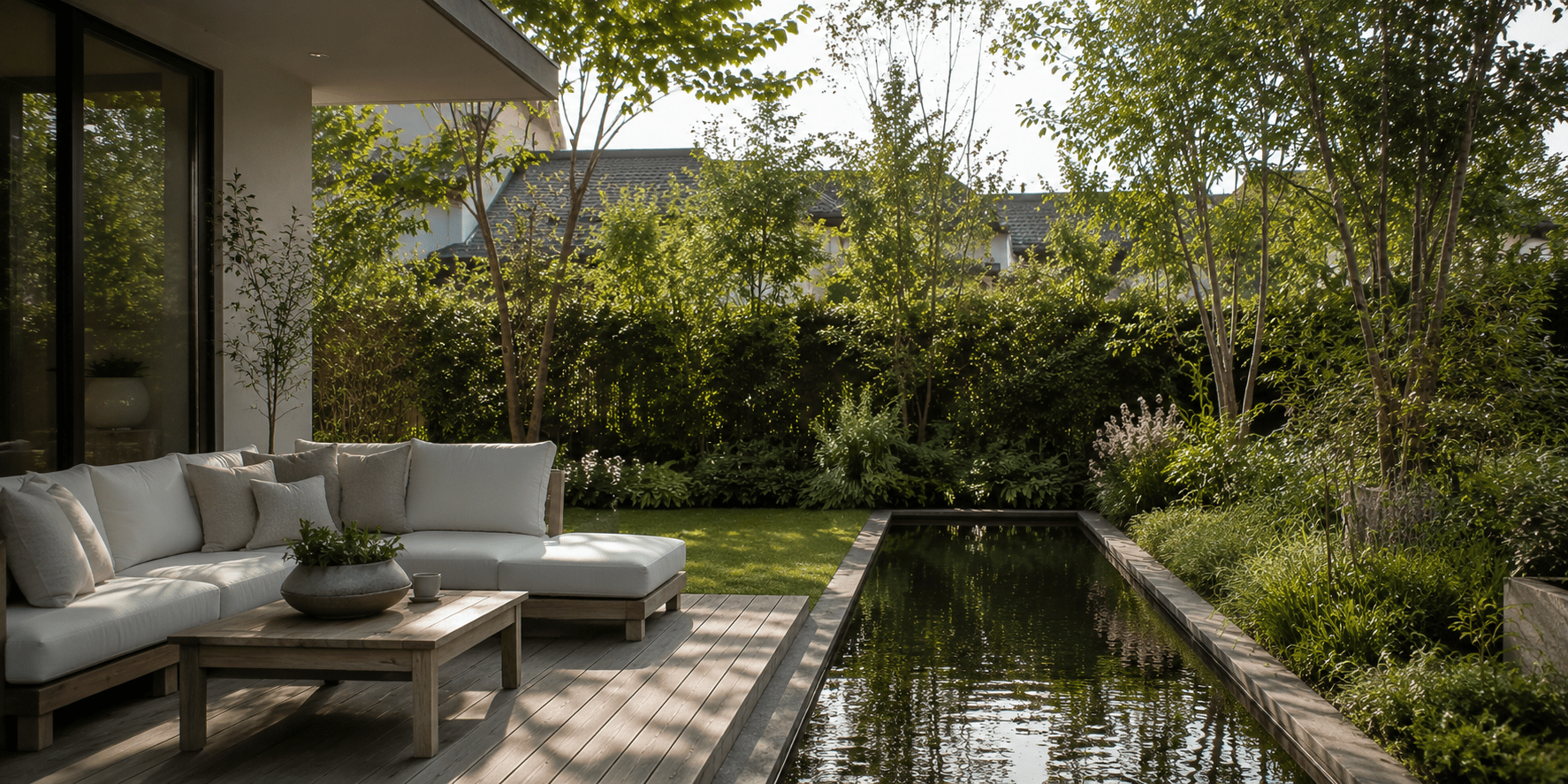
Consider Water as a Spatial Tool
Water features can be particularly effective in small outdoor living spaces when they are designed as part of the landscape rather than added as an afterthought.
A narrow pond, reflective basin, or compact natural water feature can introduce movement, sound, and reflection without requiring a massive footprint.
For homeowners interested in natural swimming ponds, scale does not necessarily eliminate the possibility. The design simply needs to respond carefully to the available space, circulation, planting, filtration, and intended use.
Water can also help connect different parts of the landscape. A planting bed might visually flow toward a pond, while stonework around the water can echo materials used elsewhere in the yard.
The result feels like one landscape rather than a collection of separate features.
A Small Backyard Case Study
Imagine a typical suburban backyard: narrow dimensions, a deck immediately outside the kitchen, a tall fence on three sides, and barely enough room for a dining set and a few planters.
The instinct might be to add more furniture, more plants, and perhaps a small fire pit. Instead, imagine approaching the space differently.
The existing deck becomes a compact dining and lounge area. A built-in bench replaces several chairs and provides storage.
A narrow planting bed softens the fence line. Taller planting at the far end creates privacy and depth. Large, consistent
paving elements extend the visual line outward. A small water feature becomes the focal point, while subtle lighting continues along the garden edge.
Nothing about the yard has physically expanded.
But the experience has.
There are fewer competing objects, clearer sightlines, more purposeful planting, and several ways to use the same space.
That is the difference between fitting things into a backyard and designing a backyard around the way you want to live.
What to Avoid in a Small Backyard
Making a compact outdoor space feel larger is often just as much about knowing what to leave out.
Avoid:
- Too many small furniture pieces
- Multiple competing focal points
- Excessively complicated paving patterns
- Planting every available edge
- Oversized outdoor structures
- Strong visual barriers between the house and garden
- Too many unrelated materials
- Poorly planned circulation
A small backyard does not need to look empty.
It needs to look intentional.
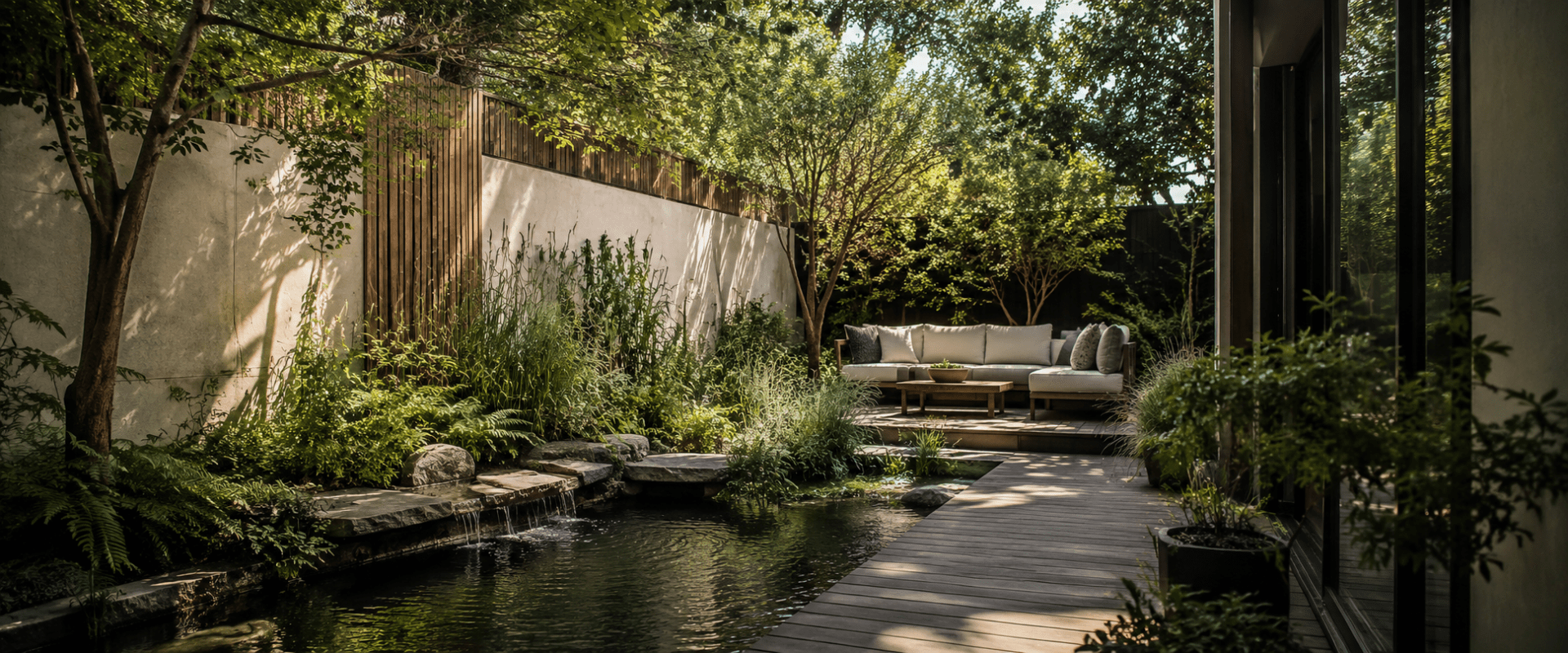
Make the Space Feel Like More Than Its Square Footage
The best small backyard designs do not try to disguise their size.They make the size feel irrelevant.A compact garden can still
have somewhere to gather after dinner, a quiet corner to read, plants that change with the seasons, the sound of moving water,
warm evening lighting, and a place that feels unmistakably your own.
That is what thoughtful landscape design can accomplish.
At Quiet Nature, we approach outdoor spaces as complete environments rather than collections of individual features.
Whether you are looking to redesign a compact backyard, create a more functional outdoor living area, introduce natural stone and
planting, or explore a natural swimming pond, the design should begin with how you want to experience the space.
Because sometimes the most successful backyard transformation is not the one that gives you more space.
It is the one that helps you experience the space you already have in an entirely different way.