

Weeding Done Right: Why Some Gardens Always Come Back
(And How to Stop It)
A beautiful garden has a quiet kind of magic.
You step outside with a cup of coffee, sunlight touches the leaves, and the whole space feels alive — calm, balanced, and effortless.
But for many homeowners, that feeling doesn’t last long. Within weeks of pulling weeds, they’re back again. Thicker. Faster.
More aggressive. It can feel like the garden is fighting you. And in a way, it is. The truth is that weeds rarely win because
homeowners are lazy or inattentive. They win because the system of the garden allows them to. Once you understand why
weeds keep returning — and how healthy landscapes prevent them naturally — everything about garden maintenance starts to change.
Let’s look at what’s really happening beneath the surface.
Why Some Gardens Always Have Weeds
Weeds are not random.
They’re opportunists. They move into landscapes where the conditions allow them to thrive. When those conditions exist year after year, the garden becomes a revolving door for unwanted plants.
Most persistent weed problems come from a few common root causes.

1. Bare Soil Invites Weed Seeds
Nature doesn’t like empty space.
Whenever soil is exposed, seeds begin to colonize it. Wind, birds, animals, and even shoes carry weed seeds into open ground.
A single square foot of exposed soil can receive hundreds of seeds over a growing season.
If your garden beds have gaps between plants or thin mulch coverage, weeds see an open invitation.
Healthy landscapes work differently. Plants grow densely enough to shade the soil, limiting opportunities for weeds to germinate.
2. Weed Seeds Already Live in the Soil
Many homeowners don’t realize that soil already contains a seed bank — thousands of dormant seeds waiting for the right conditions.
Some weed seeds can remain viable for decades.
When soil is disturbed through digging, rototilling, or heavy weeding, those seeds are brought to the surface where sunlight triggers germination.
This is why aggressive clearing can sometimes make weed problems worse the following season.
3. Weak Plant Communities Leave Gaps
A thriving garden behaves like a living ecosystem.
When plants are healthy, mature, and properly spaced, they compete effectively for sunlight, water, and nutrients.
Weeds struggle to establish in these conditions.
But when gardens contain:
- struggling plants
- mismatched species
- poor soil conditions
- overcrowding or underplanting
The system becomes unstable.
Weeds move in as the ecological “repair crew.”
4. Improper Mulching
Mulch is one of the most powerful weed-control tools available — but only when applied correctly.
Common mistakes include:
- mulch layers that are too thin
- mulch that decomposes too quickly
- mulch piled against plant stems
- poor-quality materials containing weed seeds
Effective mulch layers typically need to be 2–3 inches deep to block sunlight and suppress germination.
Anything less simply feeds weeds without stopping them.
5. Edges That Invite Invasion
Garden edges are one of the biggest sources of weed infiltration.
Without defined borders, aggressive lawn grasses and creeping weeds slowly migrate into planting beds.
Over time, they spread underground through rhizomes and runners.
Once established, they become far harder to remove.
Well-designed landscapes use physical edges, grade changes, or plant transitions to slow this process.
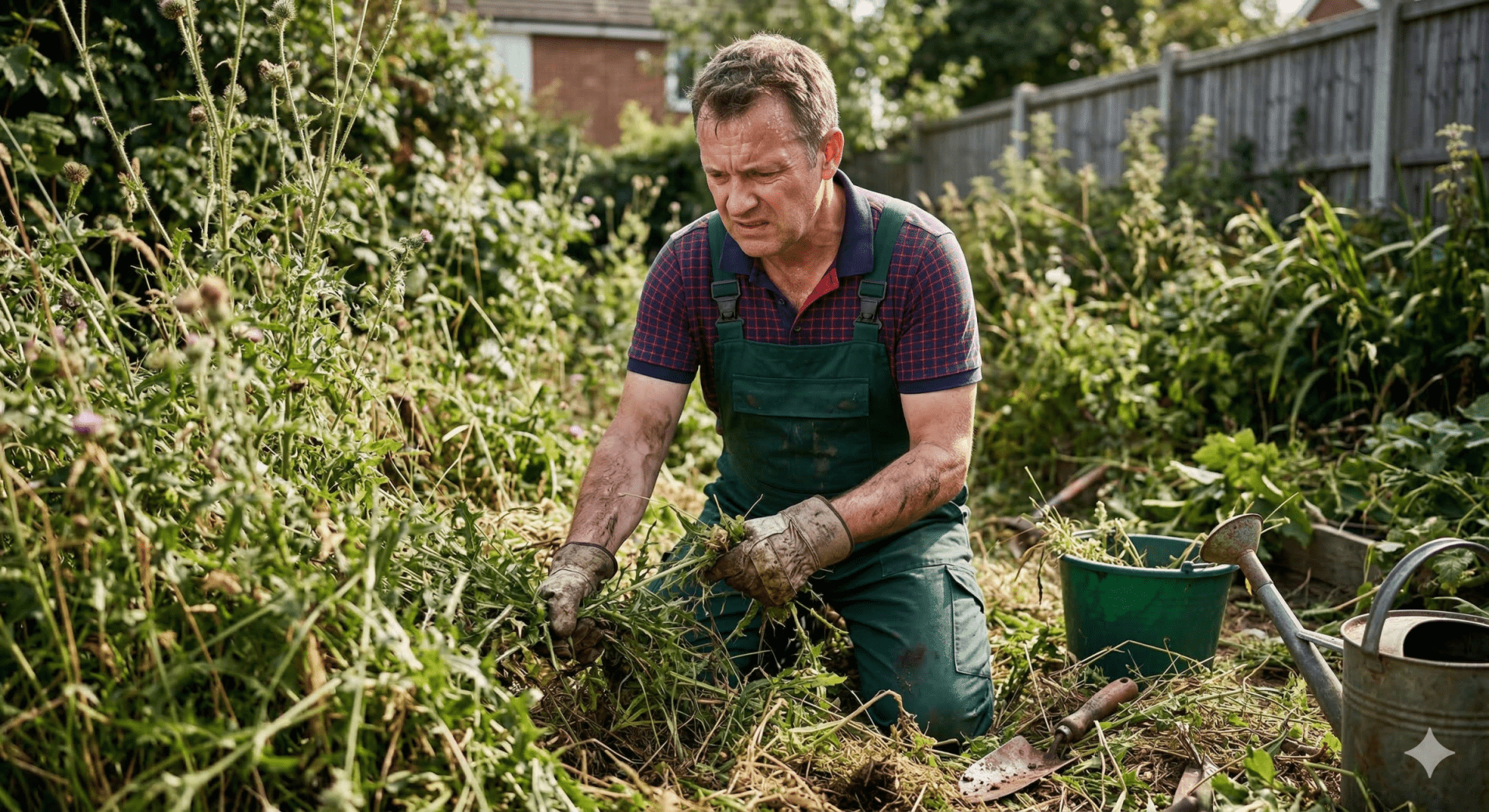
The Difference Between Pulling Weeds and Solving the Problem
Many people approach weed control like a never-ending chore. Pull weeds. Wait. Pull weeds again.
But this method treats symptoms rather than causes. Professional garden maintenance focuses on ecological balance, not just removal.
Instead of fighting weeds constantly, the goal is to design a landscape where weeds struggle to establish in the first place.
This shift dramatically reduces long-term maintenance.
The Four Principles of Low-Weed Gardens
When gardens are built around these core principles, weed pressure drops dramatically.
1. Dense, Intentional Planting
One of the most effective weed-control strategies is simply planting more strategically.
Layered plant communities create natural shade and root competition.
Examples include:
- groundcovers beneath shrubs
- perennial layers beneath ornamental trees
- ornamental grasses filling transition spaces
- dense pollinator plantings
When plants occupy most available space, weeds lose their opportunity.
2. Healthy Soil That Supports Strong Plants
Weak soil produces weak plants.
Weak plants lose competition.
Healthy soil encourages vigorous root systems that outcompete weeds.
Key factors include:
- organic matter content
- balanced drainage
- microbial activity
- proper soil structure
Instead of repeatedly disturbing soil, sustainable gardens focus on feeding it.
Compost, natural amendments, and minimal disturbance allow soil ecosystems to stabilize over time.
3. Smart Mulch Strategy
Mulch serves several functions beyond aesthetics.
Proper mulch layers:
- block sunlight from weed seeds
- retain soil moisture
- moderate soil temperature
- improve soil biology as they decompose
Natural hardwood mulch or shredded bark tends to perform best for long-term weed suppression.
Mulch also needs occasional replenishment as it slowly breaks down.
4. Long-Term Garden Stewardship
Gardens evolve.
Plants grow, shade patterns shift, and soil changes over time.
Regular professional care helps landscapes adapt as they mature.
Maintenance isn’t just about tidying beds — it includes:
- selective thinning
- soil feeding
- plant division
- identifying emerging problems early
Over time, well-managed gardens often require less weeding each year because the ecosystem stabilizes.
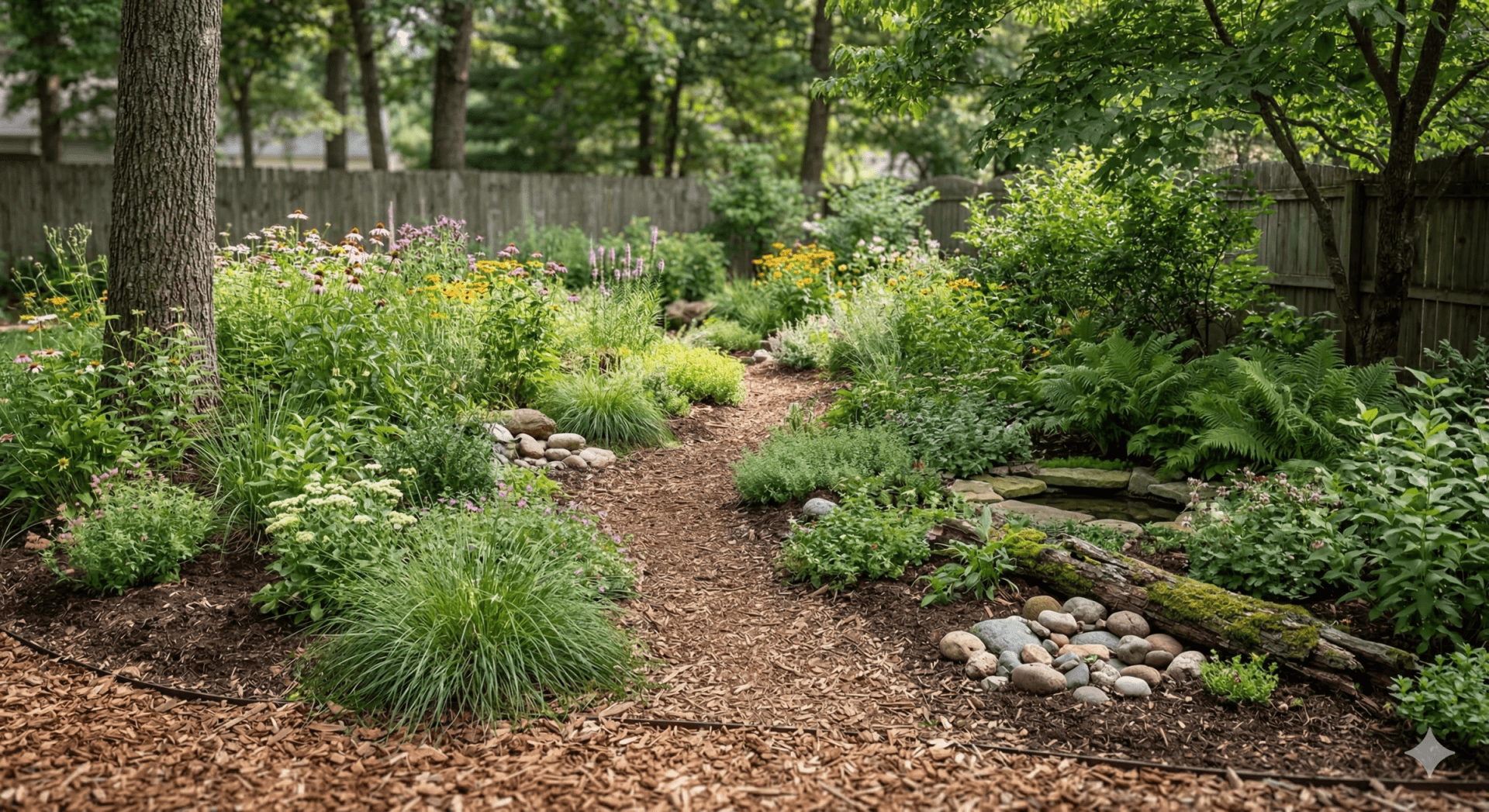
Why Naturalistic Landscapes Often Have Fewer Weeds
Interestingly, many of the lowest-maintenance gardens are those designed to resemble natural ecosystems.
Naturalistic planting styles rely on plant communities rather than isolated specimens.
This approach mirrors how plants grow in nature — layered, diverse, and interconnected.
Benefits include:
- improved weed resistance
- better moisture retention
- greater biodiversity
- stronger ecological balance
It’s one reason many modern landscape designs prioritize flowing plant masses instead of sparse decorative beds.
A Real-World Garden Scenario
Imagine two backyard gardens built in the same neighborhood.
Garden A
- widely spaced plants
- thin mulch layer
- frequent soil disturbance
- basic lawn edging
Every spring the homeowner spends weekends pulling weeds.
By mid-summer, they’ve returned.
Garden B
- layered plant communities
- deep organic mulch
- minimal soil disturbance
- defined garden borders
The first year requires some attention.
By the third year, weeds appear occasionally — but rarely dominate.
The difference isn’t effort.
It’s design and ecology working together.
The Role of Thoughtful Landscape Design
When landscapes are designed intentionally from the beginning, maintenance becomes far easier.
At Quiet Nature, gardens are approached as living systems, not decorative installations.
Every project considers:
- how plants will mature over time
- how soil health will evolve
- how spaces will be used and enjoyed
- how the garden can thrive naturally
The goal isn’t simply a beautiful landscape on day one — it’s a landscape that continues improving year after year.
Thoughtful craftsmanship, proper plant selection, and ecological awareness allow outdoor spaces to age gracefully.
As many homeowners discover, when a landscape is built with care, nature begins to cooperate instead of resisting.
Frequently Asked Questions
Why do weeds keep coming back even after I remove them?
Many weeds grow from deep roots or dormant seeds already present in the soil. Pulling visible plants doesn’t remove the entire seed bank or root systems beneath the surface.
Does landscape fabric stop weeds?
Landscape fabric can reduce weeds temporarily, but over time organic matter builds on top of it and weeds grow in that layer. In many gardens, dense planting and mulch perform better long-term.
Is it better to pull weeds or spray them?
Hand removal is generally safer for surrounding plants and soil health. Herbicides can sometimes create long-term ecological imbalances if overused.
How thick should mulch be to prevent weeds?
Most gardens benefit from a mulch depth of 2–3 inches. Thinner layers allow sunlight to reach weed seeds, while excessively deep mulch can harm plant roots.
Will weeds ever completely disappear?
A completely weed-free garden isn’t realistic in a living landscape. The goal is dramatically reducing weed pressure, making occasional maintenance manageable rather than overwhelming.
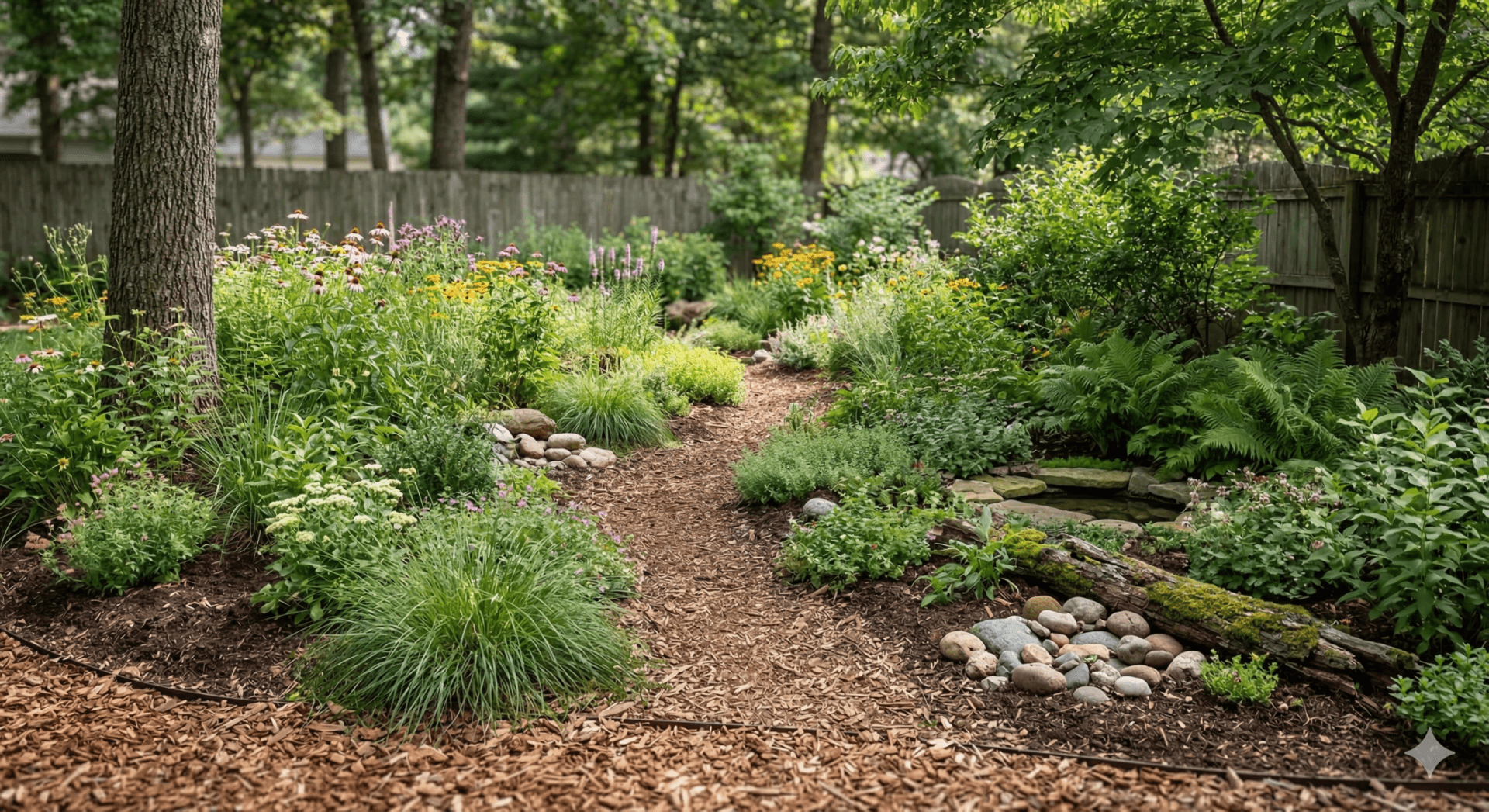
A Garden That Works With Nature
Weeds are often a signal. They tell us that something in the garden system isn’t working yet — soil health, plant density, or ecological balance. When those elements are corrected, the landscape begins to regulate itself. The result is a garden that feels calmer to care for. One that rewards attention instead of demanding constant labor. At Quiet Nature, every outdoor space is designed with this long-term vision in mind. A landscape should feel like a natural extension of your home — a place to relax, gather, and reconnect with nature.And when the system is built properly, even something as frustrating as weeds becomes far less of a battle. If you’re dreaming about a backyard that feels intentional, peaceful, and easier to maintain, thoughtful landscape design can make all the difference.A Garden That Works With Nature Weeds are often a signal. They tell us that something in the garden system isn’t working yet — soil health, plant density, or ecological balance.When those elements are corrected, the landscape begins to regulate itself.The result is a garden that feels calmer to care for. One that rewards attention instead of demanding constant labor. At Quiet Nature, every outdoor space is designed with this long-term vision in mind.A landscape should feel like a natural extension of your home — a place to relax, gather, and reconnect with nature. And when the system is built properly, even something as frustrating as weeds becomes far less of a battle. If you’re dreaming about a backyard that feels intentional, peaceful, and easier to maintain, thoughtful landscape design can make all the difference.