Backyard Landscape Design for a Newly Built Custom Home:
Flagstone Patios, Cedar Pergola,
Garden Pond + Naturalistic Planting
A brand-new custom home is the perfect blank canvas—and also one of the most challenging moments to build an outdoor space. Around a new build,
the yard typically starts as raw subgrade: compacted soil, construction traffic, minimal topsoil, and a landscape that needs structure, drainage planning,
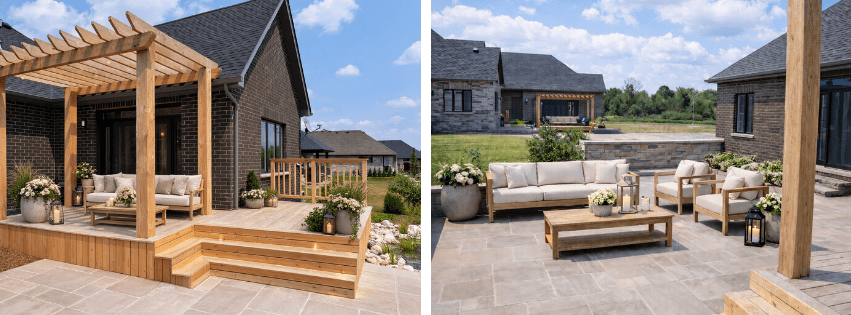
This project transformed a newly built custom home’s backyard into a complete outdoor living environment with multiple patio zones, architectural stone walls,
a cedar deck + pergola, a naturalistic pond and stream, layered planting, landscape lighting, and perimeter tree planting—all designed to feel calm,
timeless, and “like it belongs” to the home.
Project goals
Primary objectives for this outdoor living space:
- Create a backyard that feels “finished” around a new custom home (no builder-basic feel)
- Add functional outdoor zones for dining, lounging, and circulation
- Blend hardscape and softscape in a way that feels natural, not busy
- Include a water feature that adds movement, sound, and a focal point
- Built with durable materials and a layout that will age well over time
Scope of work at a glance
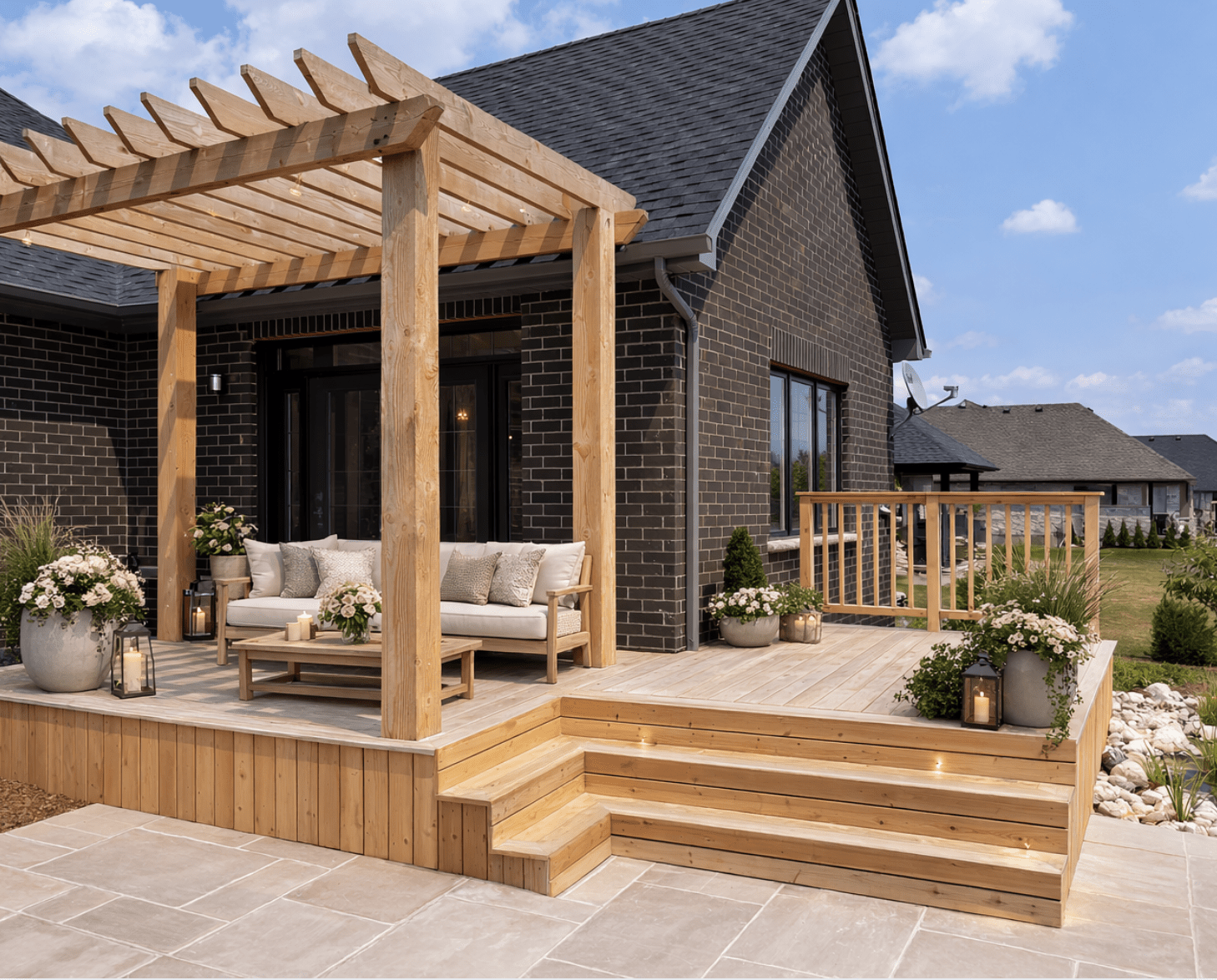
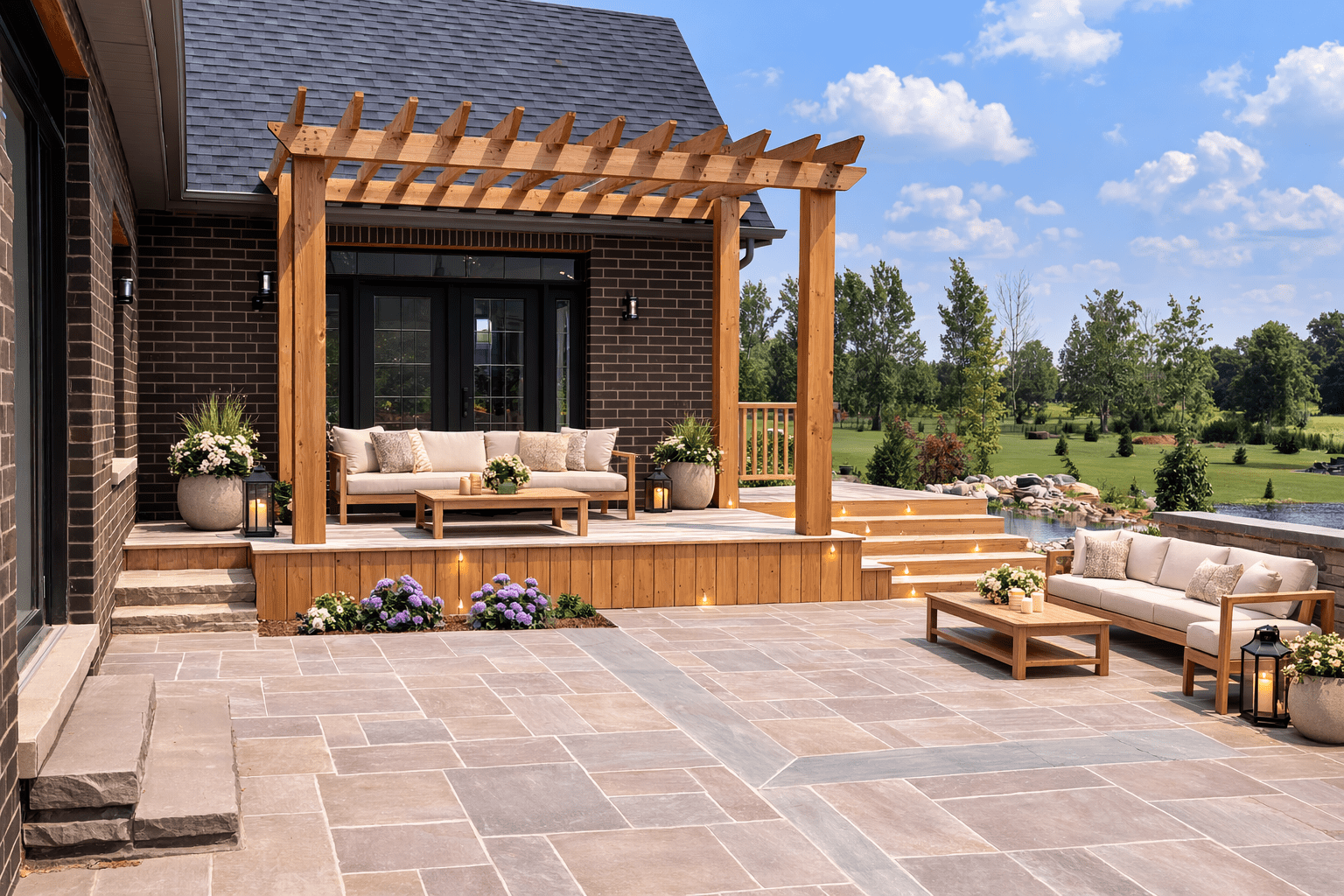
1) Cedar deck + pergola (warm, natural extension off the house)
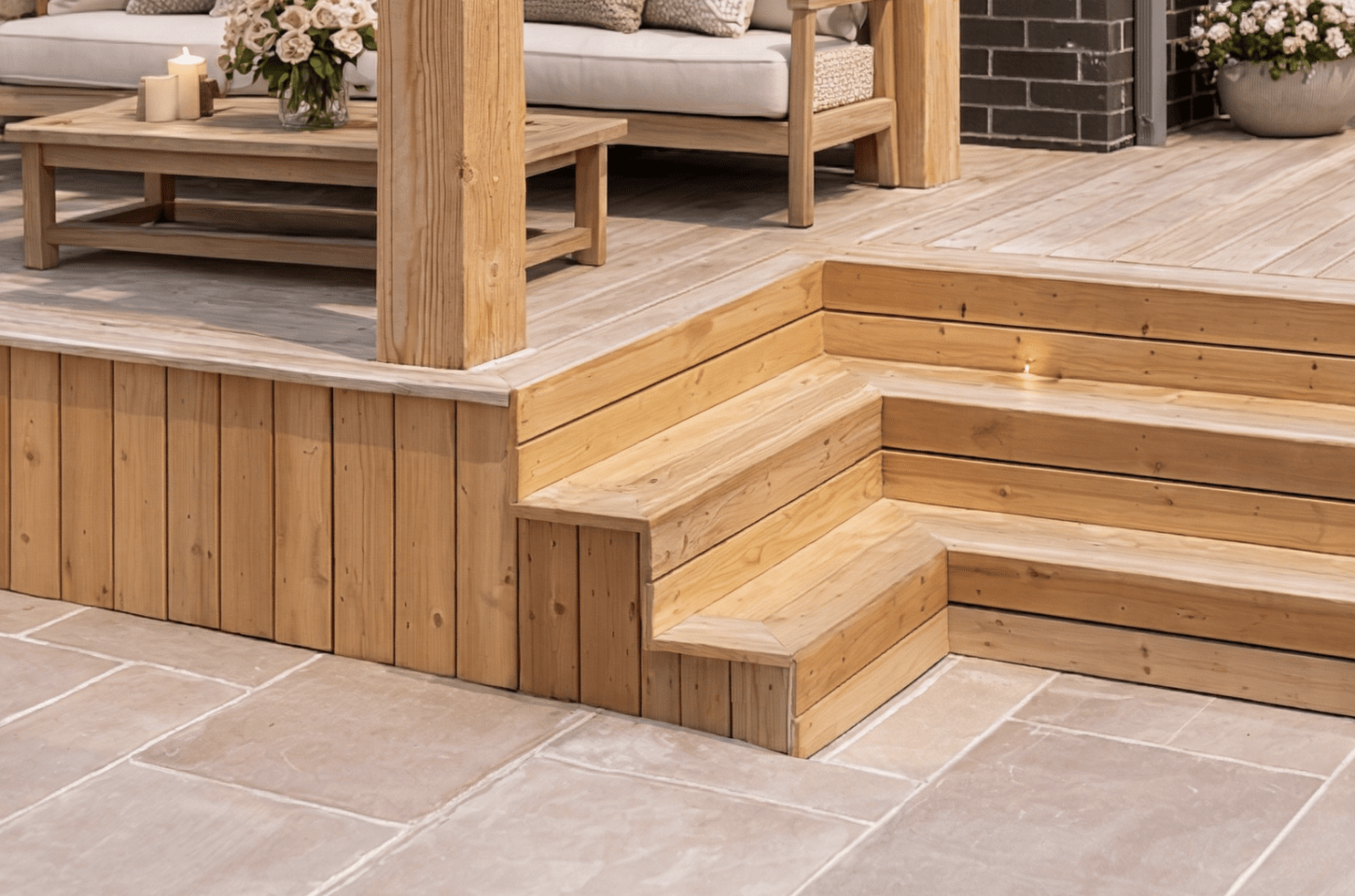
A cedar deck and pergola were constructed as a direct extension of the home, creating a sheltered transition zone and an inviting “step out” moment. The structure included:
- Pressure-treated substructure on concrete piers with 6”x6” posts
- Cedar decking boards (5/4”)
- Cedar pergola posts/beams with built-out trim details for a more substantial look
- An intentionally open feel (no railing and no skirting in the concept)
Why it works for new builds: wood softens the hard edges of masonry and creates instant warmth—even before gardens fully establish.
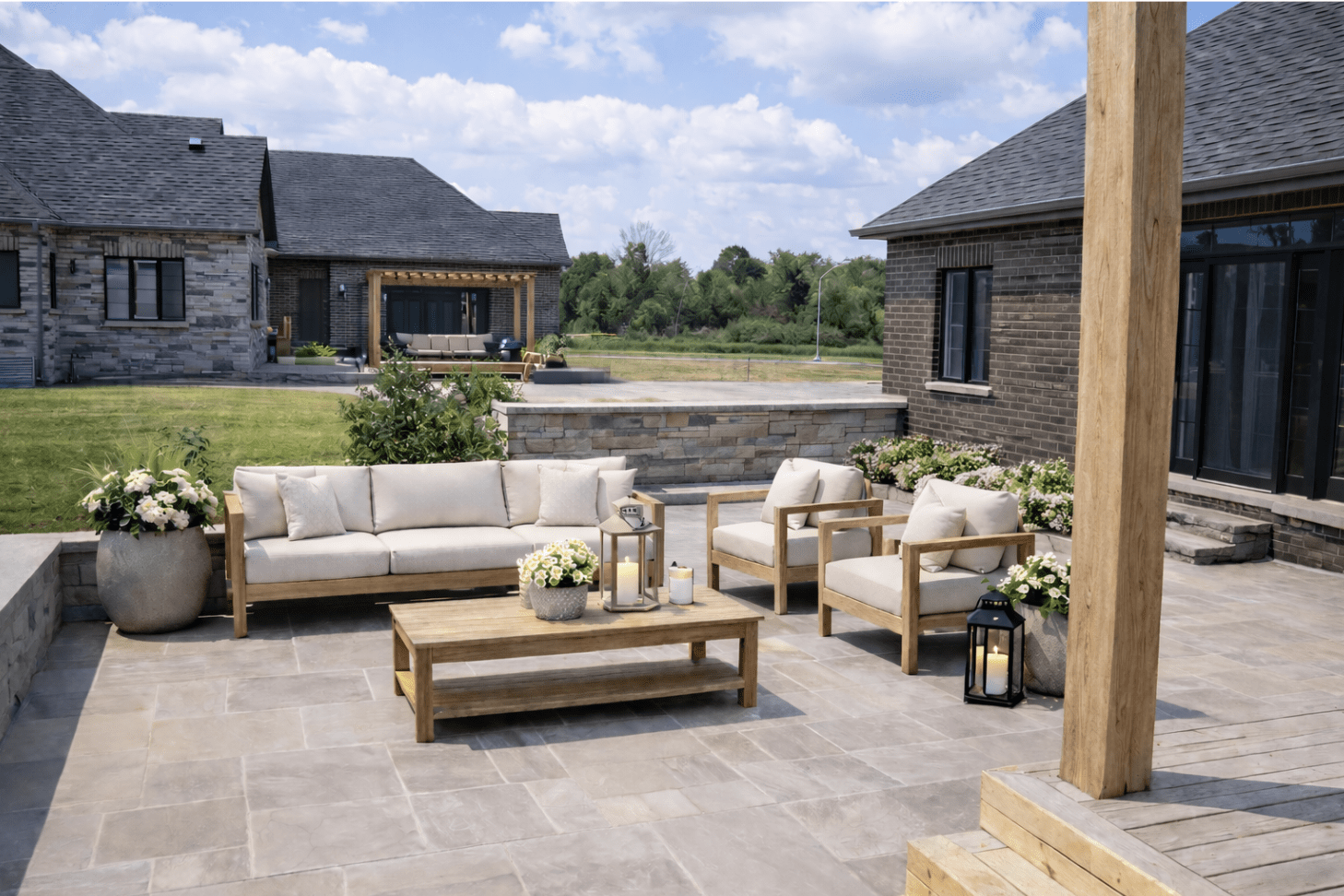
2) Dining + lounge patios in square-cut natural stone
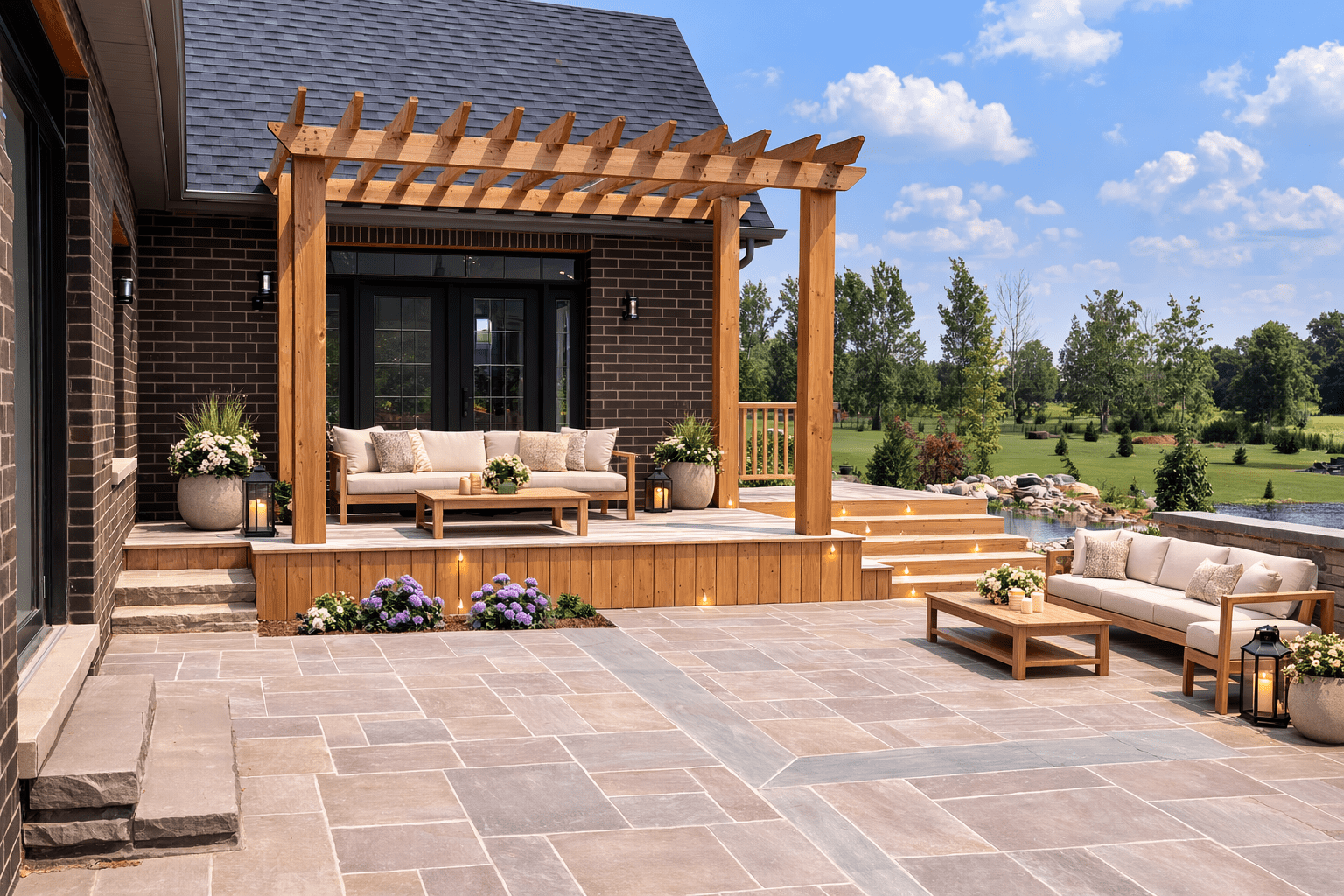
The backyard was organized into dedicated patio “rooms” using square-cut natural stone installed on a robust base:
- Compacted granular base + concrete pad
- Mortar-set stone with mortared joints to reduce weeds and minimize water infiltration
- Grading designed for positive drainage away from the home
This style of patio delivers a high-end, architectural look that suits custom homes—especially when paired with natural materials and restrained patterning.
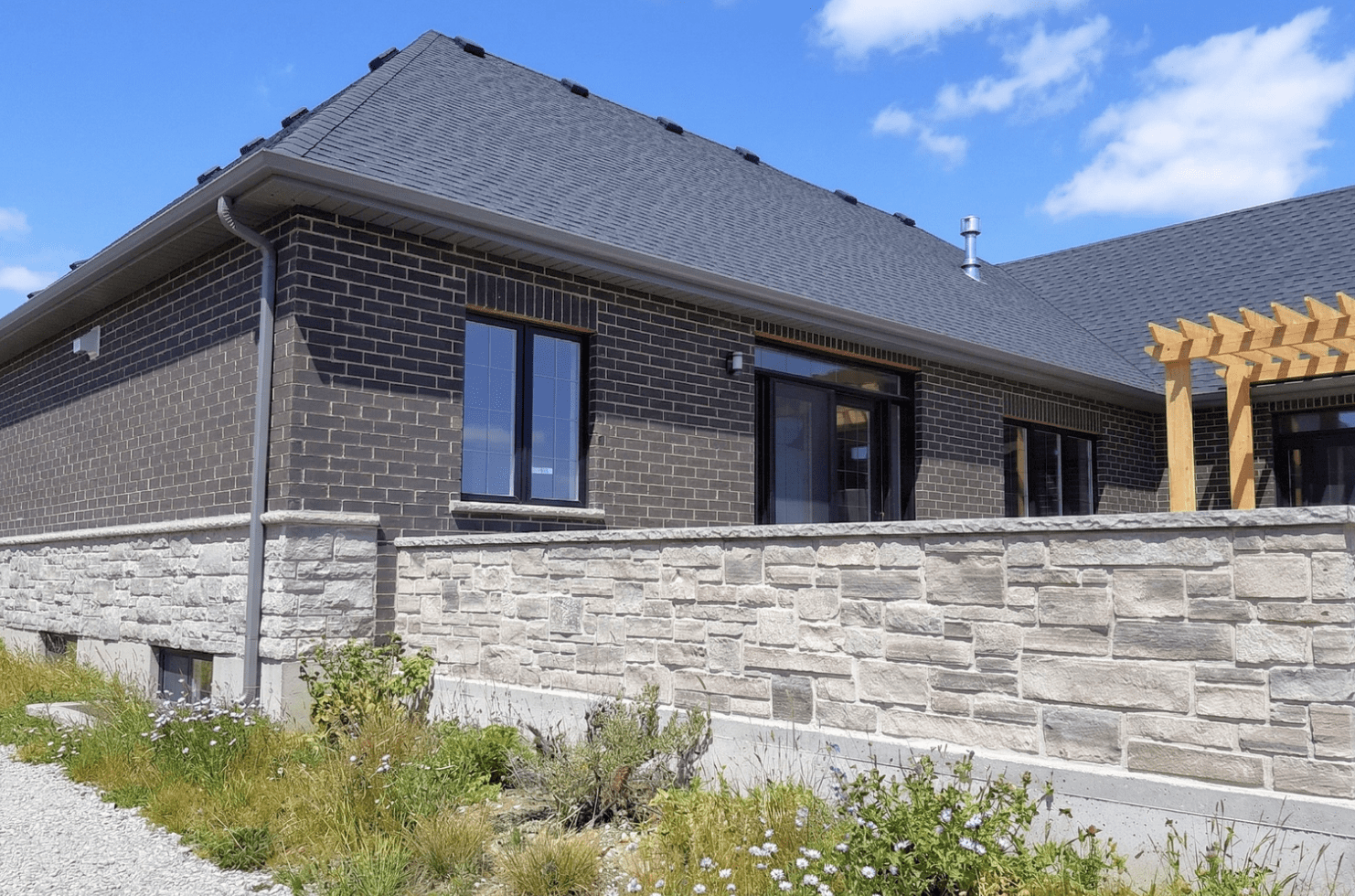
3) Veneer accent walls with coping to match the home
Low walls were added to define edges, create privacy, and build that “destination” feeling:
- Concrete footing with block core
- Veneer selected to coordinate with the home’s exterior stone
- Natural stone coping for a clean top finish
Design benefit: walls create a sense of enclosure and structure—key for large, open new-build backyards that can otherwise feel exposed or unfinished.
4) Garden pond + stream/waterfall focal feature
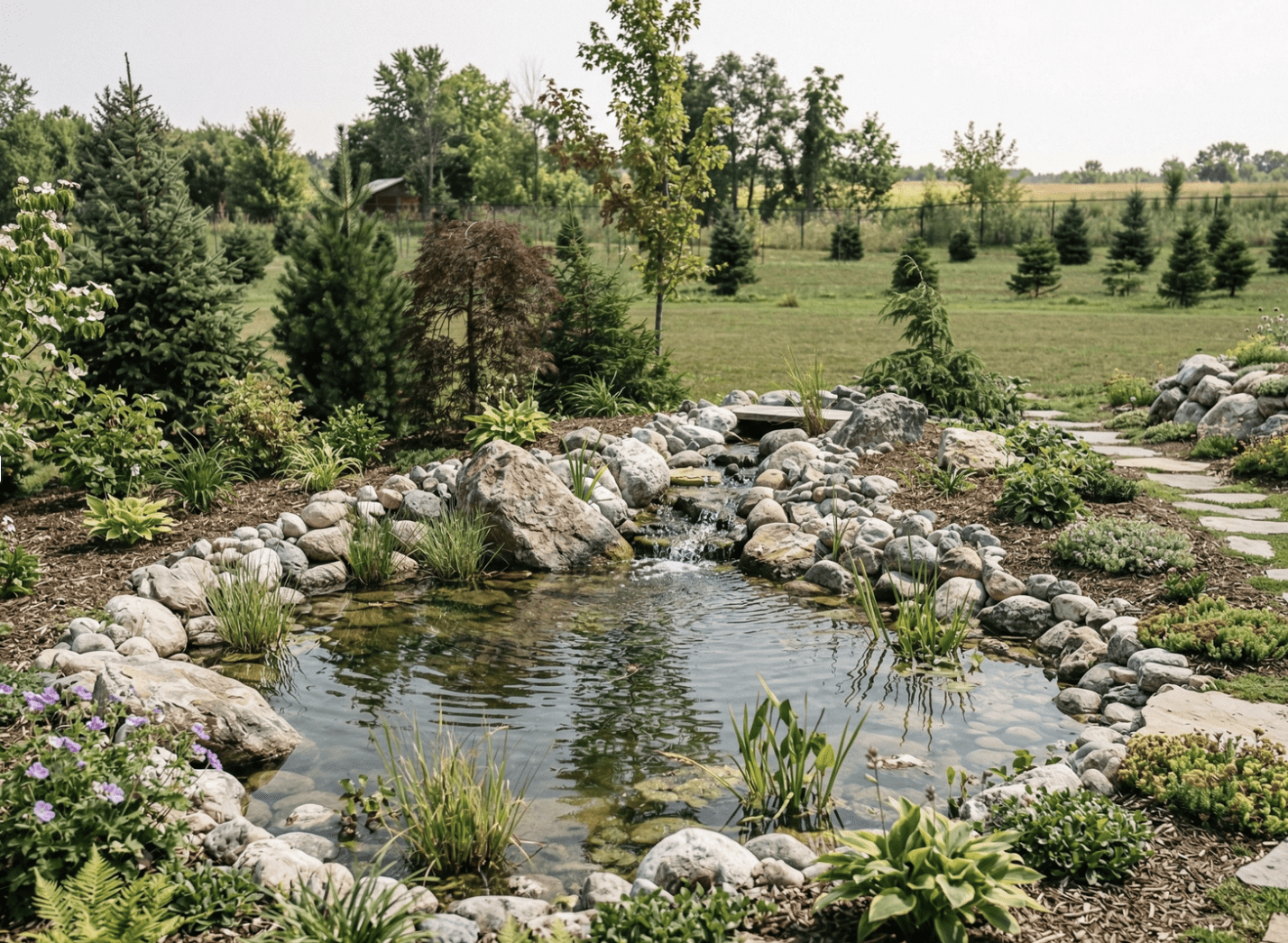
A naturalistic pond was designed as a visual anchor near the lounge zone—intentionally positioned so the deck could slightly overhang the pond edge for a subtle “dock-like” experience. Features included:
- Pond sized for depth and function (including fish-friendly overwintering depth noted in the build spec)
- Pressure filter system with UV mrock throughout the pond and stream
- Allowances for seasonal maintenance support elements (like netting and beneficial bacteria starter)
Note: electrical supply for pumps/lights is often handled separately (and was specifically excluded in this estimate), which is common in landscape projects.
5) Intentional planting + perimeter trees for a timeless, established look
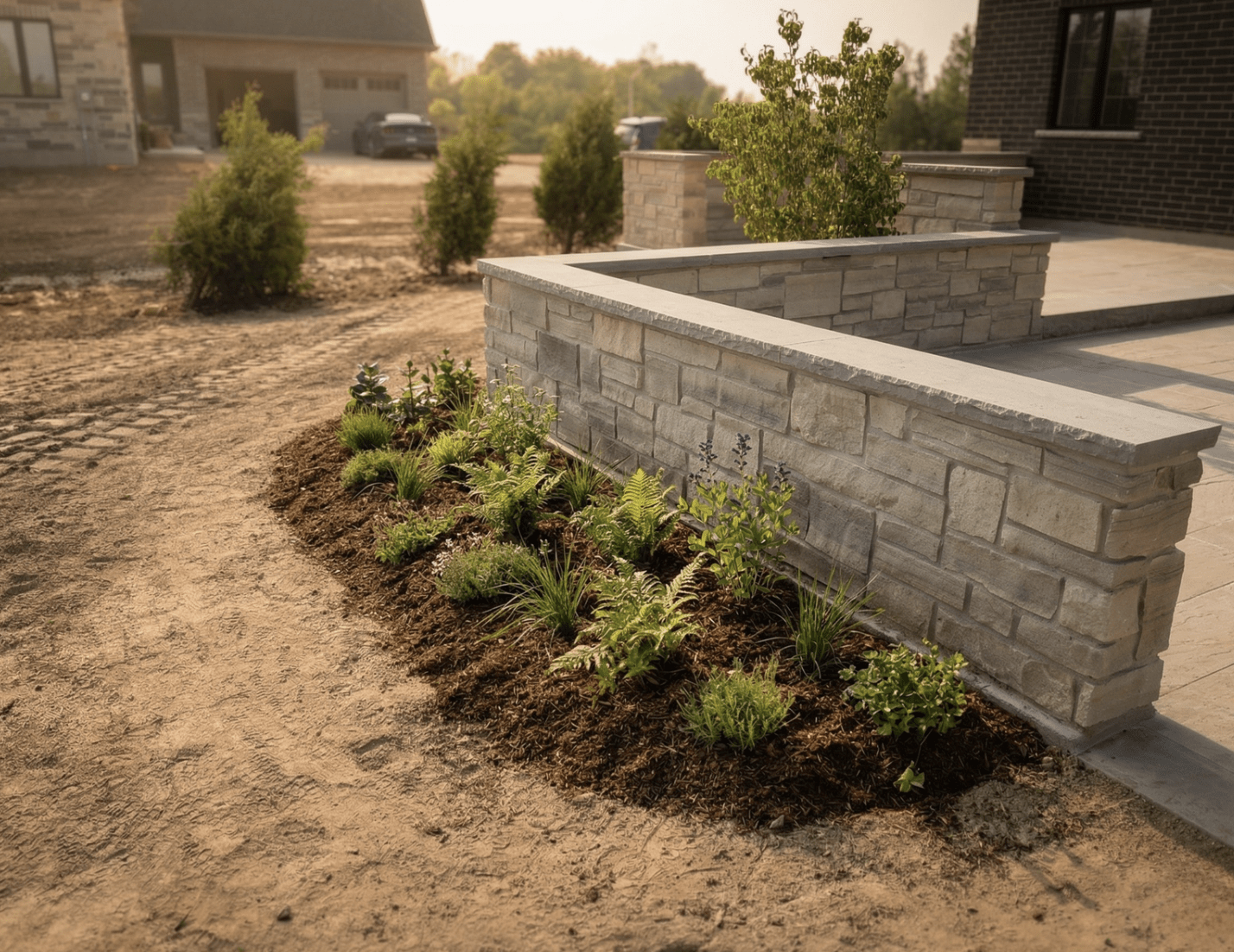
Planting beds were designed to feel intentional—not “new”—and were installed around the patios, deck, and water feature to soften edges and create layered, cohesive views. The scope included:
- Turf removal where garden beds were introduced
- Soil improvement and bed preparation
- Mulch layer for moisture retention and weed suppression
- Accent boulders/rocks for structure and seasonal interest
Large perimeter trees were also installed to enhance privacy, frame views, and quickly give the property a more established, mature feel—especially on a newer lot. Together, this approach reflects a “timeless + naturalistic” design philosophy: keep lines clean, use fewer—but stronger—moves, and allow both planting beds and trees to grow into the space over time.
6) Landscape lighting for evening use and visual depth
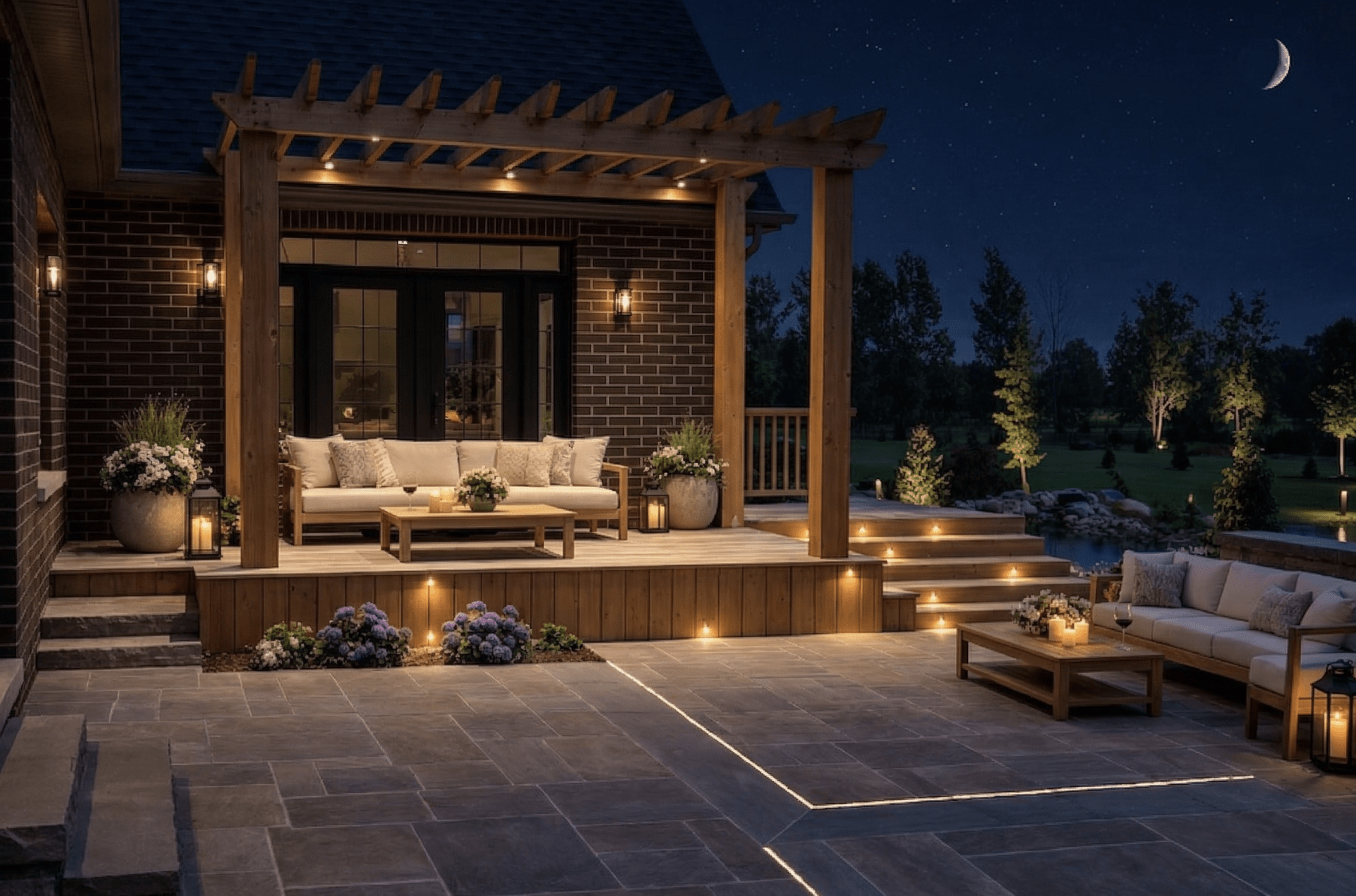
Low-voltage lighting was used to highlight key features and improve nighttime circulation, with a timer/control system for convenience.
7) Site restoration and clean-up
New builds get messy. Final restoration included top-dressing and overseeding of disturbed areas (with the note that sod can be an upgrade depending on desired speed and finish).
How a project like this typically gets built (sequence matters)
A multi-element backyard around a new build succeeds when the install is sequenced properly:
- Layout + grading confirmation (protect slopes away from the house)
- Footings, foundations, and structural carpentry (deck/pergola)
- Hardscape base + concrete + stone install (patios/steps)
- Wall construction + coping
- Water feature excavation + liner/filtration + stone placement
- Soil prep + planting + mulch
- Lighting
- Final restoration and cleanup
This is the difference between a yard that looks “added on” and one that feels like it was always meant to be there.
Budget overview: what an outdoor living space like this costs
Real-world project budget
For this project, the construction subtotal landed around $115K (before tax), with the total around $130K (with tax) for the full backyard build described
(deck + pergola, stone patios, veneer walls, pond/stream, planting, trees, lighting, and restoration).
Generalized budget ranges
If you’re trying to ballpark a similar “complete backyard” around a newly built custom home, here are realistic 2026-style planning ranges for projects
- Design + project management: ~$3K–$10K (varies by design depth, revisions, and project complexity)
- Cedar deck + pergola: ~$18K–$45K (size, detailing, foundations, and material grade swing this)
- Premium natural stone patios (multiple zones): ~$25K–$70K (base build, concrete, stone type, pattern, steps)
- Stone veneer walls + coping: ~$15K–$50K (length/height, footings, veneer complexity)
- Pond + stream/waterfall feature: ~$12K–$60K+ (size, rock selection, filtration, access, detailing)
- Planting + soil prep + mulch: ~$10K–$40K (bed size, plant sizes, soil conditions)
- Large trees (privacy + structure): ~$5K–$30K+ (species, caliper, quantity, access)
- Landscape lighting: ~$3K–$15K
- Restoration (seed/sod, finishing): ~$2K–$20K
Typical “complete backyard” total: $90K–$200K+, with many high-end custom-home projects clustering in the $120K–$170K range when
multiple major elements (stone + structure + water + planting) are included.
(These are generalized ranges for planning purposes—site access, soil conditions, material selection, and design complexity can move numbers significantly.)
Materials + design choices that make this feel “high-end” (without being trendy)
A few decisions that consistently elevate projects like this:
- Natural stone over manufactured look-alikes where it matters most (patios, coping)
- Simple, defendable layout (every area has a purpose—dining, lounging, transition, focal point)
- One strong water feature instead of several small “busy” elements
- Layered planting + negative space so the landscape can mature gracefully
- Lighting used to highlight focal points (not “runway lights everywhere”)
- Clean finishing details: edges, coping lines, consistent grades, and intentional bed shapes
Closing thought: a new home deserves a “finished” landscape
A newly built custom home looks its best when the landscape matches the same level of intention—clean layout, strong materials,
and a calm, well-managed execution from concept to completion. That’s how you end up with a space that doesn’t just
photograph well the day it’s finished, but gets better every season.