Clay Soil in Waterloo Region:
How We Plant So Gardens Thrive (Not Struggle)
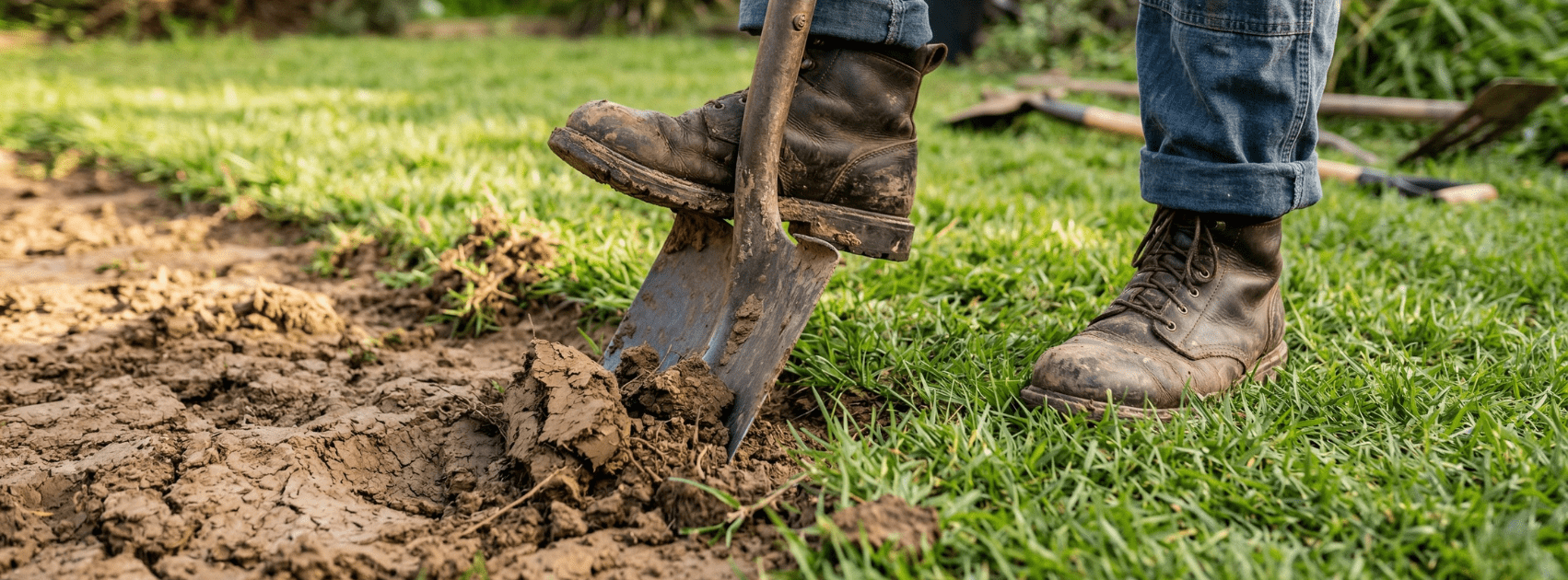
There’s a quiet frustration many homeowners in Waterloo Region share. You plant something new, carefully chosen and beautifully arranged,
and for a while, it looks promising. Then the leaves begin to yellow, growth stalls, roots struggle, and slowly that initial excitement fades into disappointment.
More often than not, the issue isn’t the plant- it’s the soil.
Clay soil is one of the defining characteristics of landscapes across Kitchener-Waterloo, Cambridge, and the surrounding areas,
and while it’s often blamed for failed gardens, the truth is far more nuanced—and far more hopeful. When you begin to understand clay soil and design with
it instead of against it, something remarkable happens: gardens don’t just survive, they begin to truly thrive.
Understanding Clay Soil in Waterloo Region
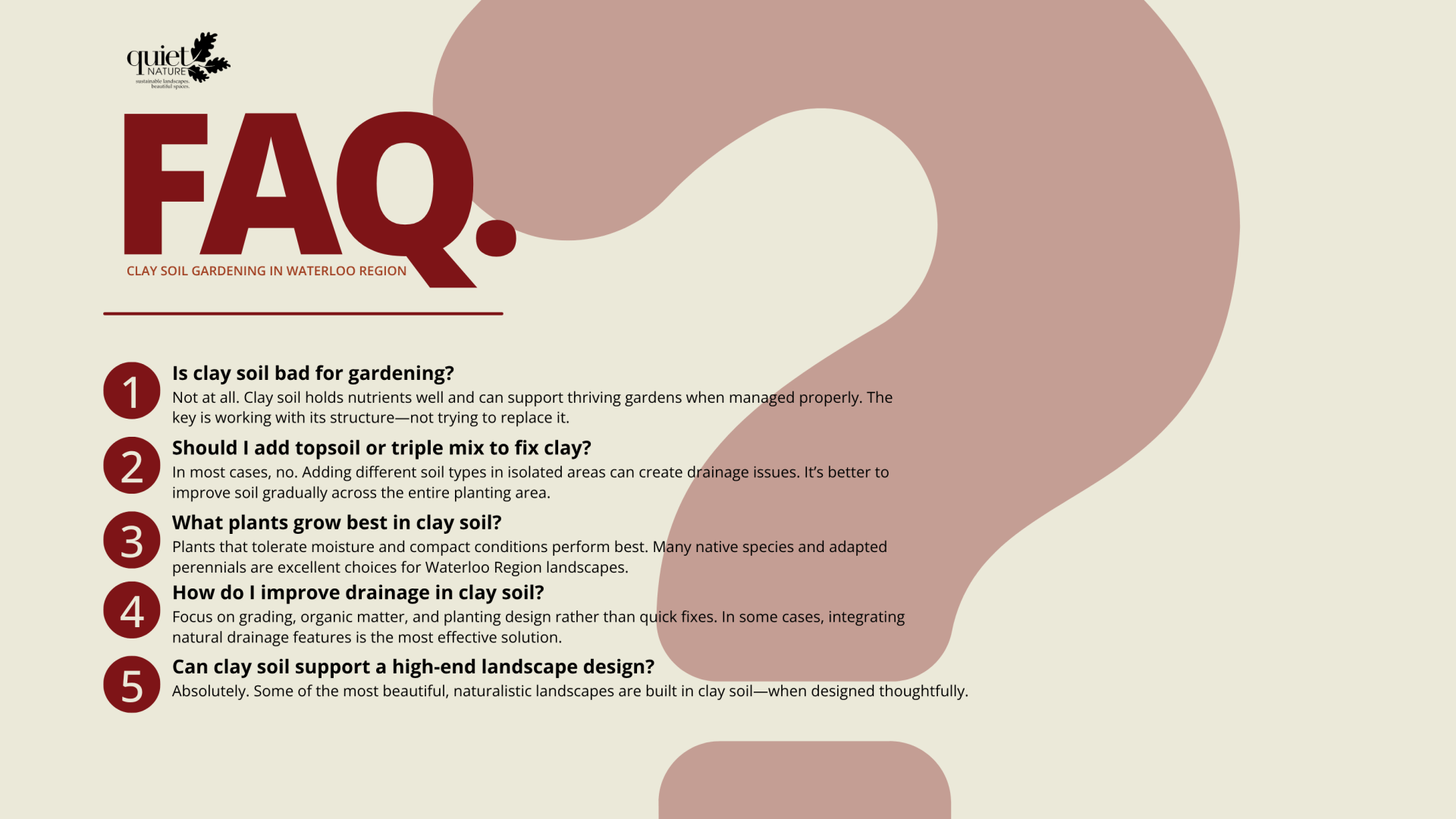
Clay soil gets a bad reputation, but it’s not inherently “bad.” In fact, it has some unique advantages—if handled properly.
What makes clay soil different?
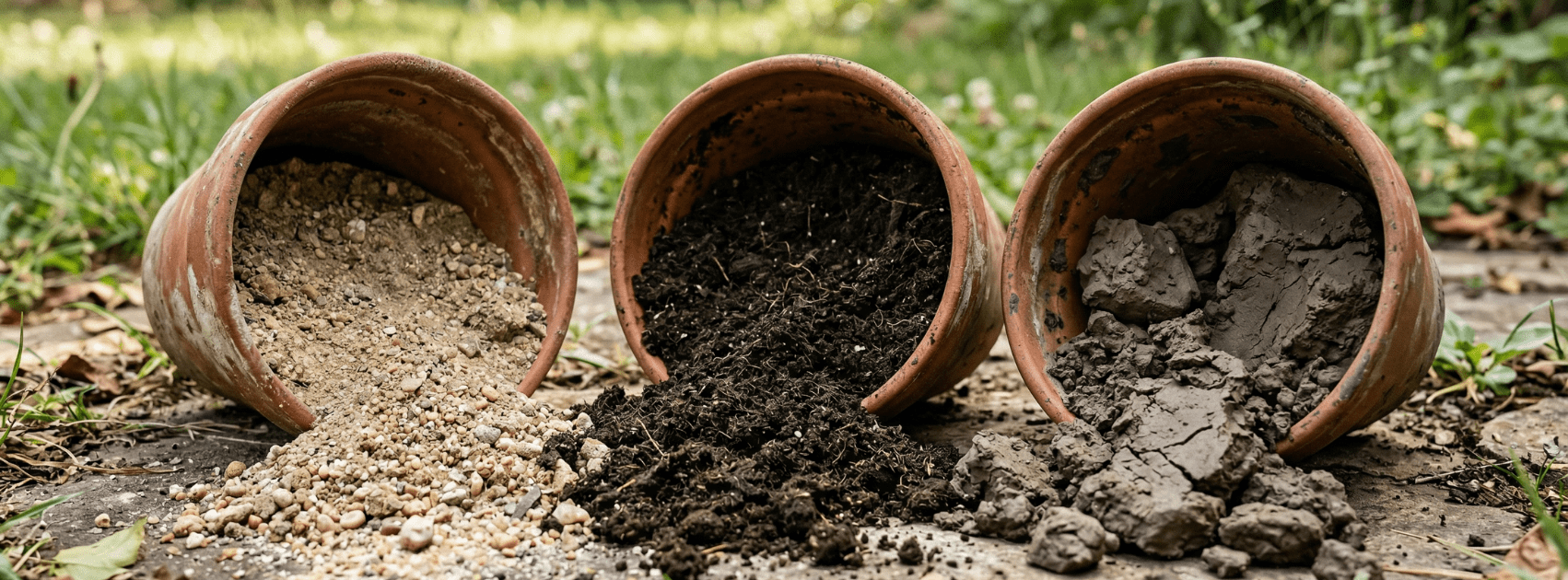
Clay soil is made up of extremely fine particles that pack tightly together. This creates a few defining traits:
- Poor drainage – Water moves slowly, often leading to soggy conditions
- Compaction – Soil becomes dense, making it difficult for roots to expand
- High nutrient retention – Clay actually holds nutrients well (a hidden benefit)
- Slow warming in spring – It takes longer to become plant-ready after winter
In Waterloo Region, this often shows up as:
- Standing water after heavy rain
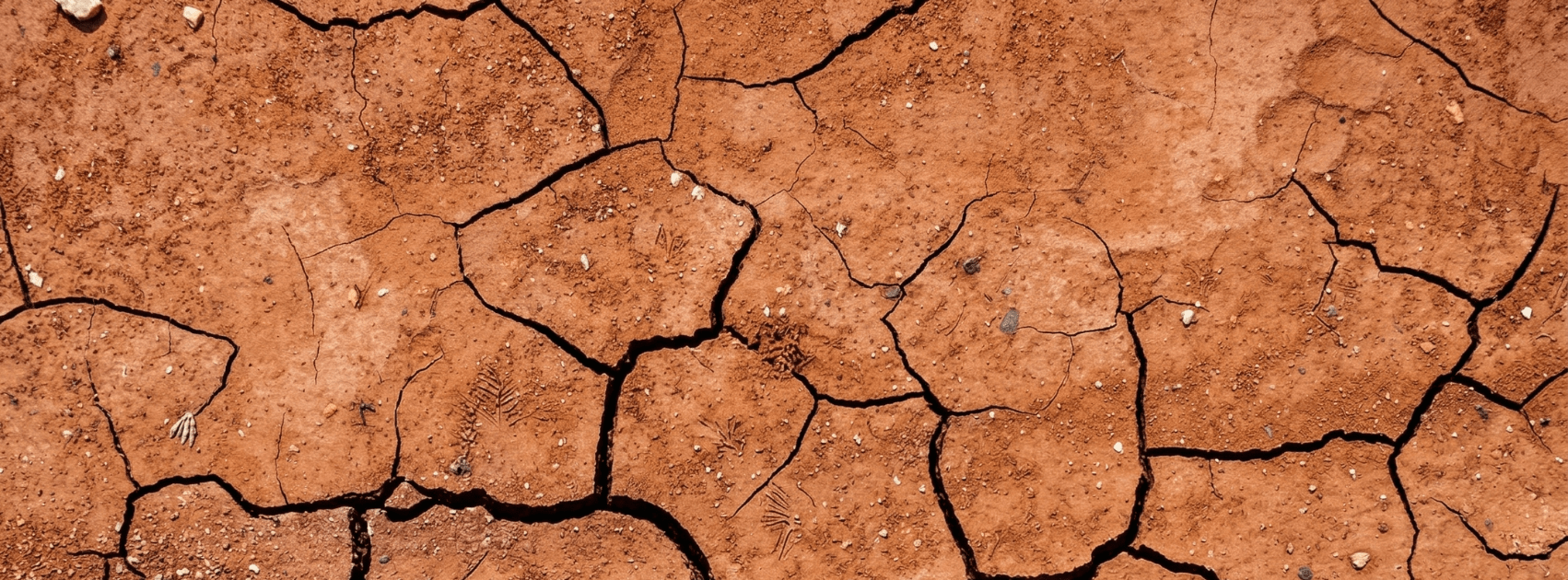
- Cracked, hard soil in dry summer periods
- Plants that seem to “stall” after planting
The instinct is to fight these conditions—bringing in new soil, over-amending, or forcing plants to adapt.
But that approach rarely works long-term.
Why Most Gardens Struggle in Clay Soil
The most common issue we see isn’t clay soil itself—it’s how people try to fix it.
1. Over-amending planting holes
A typical approach is to dig a hole and fill it with rich, loose soil or triple mix. It feels like giving the plant a “better start.”
But in clay, this creates a problem:
- Water collects in the softer soil like a bowl
- Roots hesitate to move into the dense clay surrounding it
- The plant becomes dependent on that isolated pocket
The result? A plant that looks good initially, then declines.
2. Choosing the wrong plants
Many nursery plants are grown in ideal conditions—light, well-draining soil with consistent irrigation. When placed into heavy clay, they struggle to adapt.
3. Ignoring natural water patterns
Clay soil amplifies drainage issues. Without proper grading or water management, planting becomes a losing battle.
Our Philosophy: Work With the Soil, Not Against It
At Quiet Nature, we approach clay soil differently.
Instead of trying to replace it, we design systems that respect it.
This approach is rooted in a simple principle:
Right plant, right place—always.
From our design philosophy, we prioritize:
- Selecting plants suited to existing soil and moisture conditions
- Using on-site soil wherever possible
- Designing planting systems that mimic natural environments
- Avoiding unnecessary soil replacement
This isn’t about taking shortcuts.
It’s about building landscapes that are stable, resilient, and long-lasting.
How We Plant in Clay Soil (So It Actually Works)
1. We Plant High—Not Deep
One of the most important techniques we use is slightly elevating plant root zones.
Instead of burying plants flush with grade, we:
- Set root balls slightly above the surrounding soil
- Gently taper the soil up to meet the plant
- Ensure water sheds away rather than pooling
This small adjustment dramatically improves survival rates.
2. We Improve Soil Gradually (Not Artificially)
Rather than replacing soil entirely, we focus on incremental improvement:
- Adding organic matter across entire beds (not just holes)
- Encouraging natural soil biology
- Allowing time and seasons to do their work
This builds healthier soil structure over time—without creating harsh transitions.
3. We Design for Water Movement
In clay soil, water is everything.
We carefully study how water moves across a property and incorporate:
- Subtle grading adjustments
- Swales and infiltration zones
- Strategic planting in moisture gradients
In some cases, water becomes an asset rather than a problem—supporting lush, thriving plant communities.
4. We Use Layered Planting Systems
In nature, plants don’t grow in isolation—and neither should your garden.
We design layered plantings that include:
- Groundcovers to protect soil
- Mid-height perennials and shrubs
- Canopy elements for structure and shade
This creates:
- Better moisture regulation
- Reduced weed pressure
- More resilient ecosystems
5. We Choose Plants That Actually Belong Here
This is where many landscapes go wrong.
We prioritize plants that:
- Tolerate heavy or variable moisture
- Thrive in compacted or clay-based soils
- Are naturally suited to Southern Ontario conditions
Often, this includes a mix of native and adapted species that don’t just survive—but flourish.
A Real-World Example: From Struggle to Stability
A homeowner in Cambridge came to us after multiple failed planting attempts.
Their backyard had:
- Heavy clay soil
- Poor drainage near the house
- Repeated plant losses over three seasons
Previous efforts included adding triple mix and replanting with similar species.
Instead of repeating that cycle, we took a different approach:
- Regraded subtle low points to redirect water
- Built planting areas slightly above grade
- Introduced layered planting with moisture-tolerant species
- Amended soil across the entire bed—not just planting holes
The result wasn’t immediate perfection—but something better:
Steady, visible improvement season after season.
By year two, the garden looked fuller, healthier, and more natural than it ever had.
And most importantly—it required less intervention, not more.
Clay Soil and Natural Pools: A Hidden Opportunity
Interestingly, clay soil can be a major advantage—especially when designing natural water features.
Because of its density, clay can:
- Help retain water
- Reduce reliance on synthetic liners in certain conditions
- Support natural filtration systems
When designed properly, this allows for features like:
- Natural swimming ponds
- Reflective water gardens
- Wetland-inspired planting zones
Instead of fighting the land, we lean into what it offers.
Long-Term Thinking: Why This Approach Matters
One of the biggest differences in how we approach clay soil is time horizon.
Many landscapes are built for immediate appearance.
We design for how the space will feel in 3, 5, even 10 years.
That means:
- Plants that grow into their space—not out of it
- Soil that improves naturally over time
- Systems that require less correction and maintenance
This aligns with what many homeowners truly want:
Not just a beautiful yard today—but one that continues to get better.

A Different Way to Think About Your Landscape
Clay soil isn’t a limitation. It’s a starting point. When you stop trying to force the land into something it’s not
and begin designing in response to it—the entire experience changes.
Gardens feel more natural. Plants become more resilient. Maintenance becomes more intuitive. And over time, your outdoor space
begins to feel less like something you manage—and more like something you live within.
A Thoughtful Next Step
If you’re dealing with clay soil and wondering why your garden isn’t performing the way it should, it may not be about trying harder—
It may be about approaching it differently. At Quiet Nature, we design and build landscapes that are rooted in how the land actually works.
From soil conditions to water movement to long-term plant health, every decision is made with intention.
If you’re considering a new garden, a backyard transformation, or simply want clarity on what’s possible for your property, we’d be happy to start with a conversation.
No pressure—just thoughtful guidance and a clearer path forward.