
Fall Garden Cleanup in Ontario:
What Matters Before Freeze/Thaw

There’s a particular stillness that settles over Ontario in late October.
The air sharpens. Maples let go. Perennials bow. And beneath the beauty, your landscape is quietly preparing for one of the most demanding transitions of the year: the freeze/thaw cycle.
If you’ve invested in a custom backyard, natural pool, or thoughtfully designed outdoor living space, fall garden cleanup isn’t just seasonal tidying. It’s preventative care. It’s protection. It’s the difference between a smooth spring awakening and costly repairs.
In Ontario’s climate—where temperatures swing above and below zero repeatedly—what you do before winter sets in matters more than most homeowners realize.
Below, we’ll walk through what truly matters in fall garden cleanup in Ontario, why freeze/thaw is so hard on landscapes, and how to prepare your outdoor space with intention.

Why Freeze/Thaw Is So Hard on Ontario Landscapes
Ontario’s winters aren’t just cold. They fluctuate.
When water seeps into soil, stone joints, natural pool basins, or hardscape foundations and then freezes, it expands. When it thaws, it contracts. Repeated cycles of expansion and contraction create pressure that can:
- Shift patio pavers
- Crack natural stone
- Heave retaining walls
- Damage plant roots
- Disrupt drainage systems
- Compromise natural pool edges and plumbing
This is why fall garden cleanup in Ontario isn’t just about aesthetics—it’s structural protection.
The Core Priorities Before the Ground Freezes
Let’s focus on what truly matters.

1. Drainage, Drainage, Drainage
If there’s one principle that underpins everything else, it’s this: water must move properly before winter.
Standing water is your landscape’s biggest enemy during freeze/thaw.
What to check:
- Downspouts directing water away from foundations and patios
- French drains free of debris
- Swales and grading still functioning properly
- Catch basins cleared of leaves
- Natural pool overflow systems are unobstructed
Real-world scenario:
A homeowner in Southern Ontario invested in a custom limestone patio. The surface was beautifully installed—but a clogged catch basin nearby allowed water to pool along one edge. After a winter of freeze/thaw cycles, several stones shifted and required lifting and re-leveling in spring.
The patio wasn’t the problem. Water management was.

2. Perennial Strategy: What to Cut Back (and What to Leave)
Modern fall garden cleanup isn’t about cutting everything down.
In fact, overly aggressive fall pruning can harm plant health and reduce biodiversity.
Cut Back:
- Diseased foliage
- Spent annuals
- Hostas (after frost)
- Peonies (to prevent disease carryover)
- Any plant material showing fungal issues
Leave Standing:
- Ornamental grasses
- Echinacea
- Sedum
- Structural perennials that provide winter habitat
Leaving certain plants intact supports pollinators and adds winter interest—especially in intentional outdoor living designs.
Ontario gardeners increasingly adopt a “tidy but ecological” approach, aligning with broader sustainability trends across Canada.

3. Protecting Root Systems from Frost Heave
Freeze/thaw doesn’t just impact stone—it affects soil.
When soil repeatedly freezes and thaws, shallow-rooted plants can literally be pushed upward (frost heave), exposing roots to drying winter air.
Prevention Strategies:
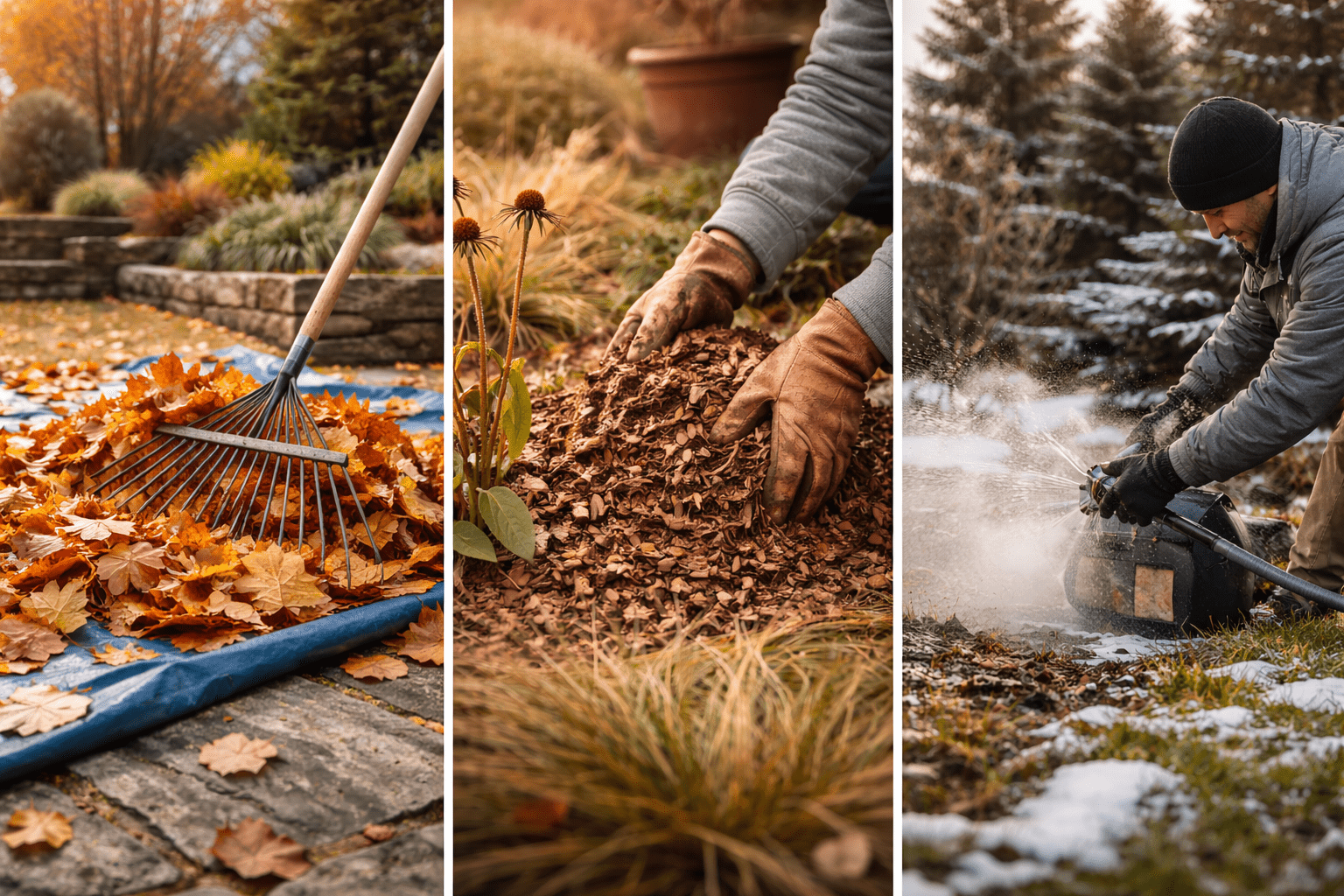
- Apply 2–3 inches of shredded mulch after the ground cools but before it freezes solid
- Avoid piling mulch against trunks (prevent rot)
- Ensure newly planted shrubs are well watered before freeze
This is especially critical for:
- Newly installed landscapes
- Fall plantings
- Naturalized planting beds
For clients who’ve recently completed a full backyard transformation, this step protects that investment.
QUIET NATURE
Fall Cleanup for Natural Pools
in Ontario
Natural pools require specialized winter preparation.
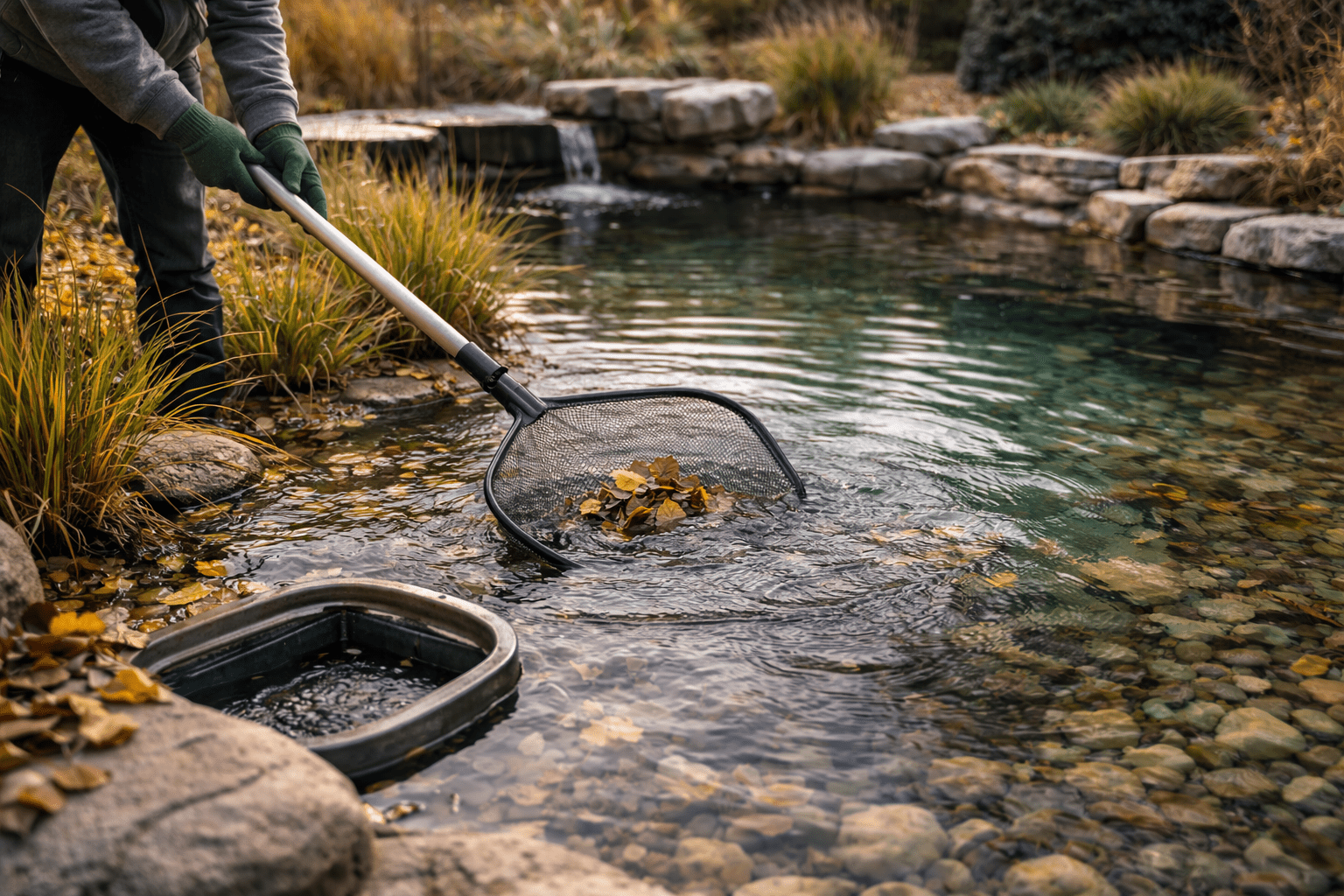
Unlike traditional chlorinated pools, natural swimming ponds rely on biological systems and balanced ecosystems. Improper fall prep can disrupt water clarity and plant health next season.Key Considerations:
- Remove excess organic debris (leaves are the primary threat)
- Trim aquatic plants appropriately
- Protect circulation systems and pumps
- Lower water levels if required by design
- Ensure skimmers are clean and functioning
The goal is simple: minimize organic load before ice forms.
A well-prepared natural pool enters winter stable. A neglected one enters spring with algae pressure.

Hardscape: What to Inspect Before Snowfall
In Ontario, hardscape longevity depends on fall vigilance.
Before freeze:
- Inspect polymeric sand joints
- Refill gaps between pavers
- Check for settling or edge movement
- Seal natural stone if recommended
- Confirm retaining wall drainage is functioning
Even high-end installations can suffer if small maintenance items are ignored.
When we design custom outdoor living spaces, we build for Canadian winters. But maintenance still plays a role.

Irrigation System Winterization
If your property includes irrigation, this step is non-negotiable.
Water left inside irrigation lines can freeze and crack pipes underground.
Professional blow-outs ensure:
- Lines are cleared
- Backflow preventers are protected
- Control systems are shut down properly
In Ontario, irrigation winterization typically happens before sustained freezing temperatures—often mid-to-late October, depending on the region.

Trees and Structural Pruning
Fall isn’t the time for major structural pruning—but it is a good time to:
- Remove dead or hazardous limbs
- Address branches overhanging roofs
- Inspect for storm damage
- Stake young trees if necessary
Heavy snow and ice accumulation can snap weakened limbs.
A quick fall assessment prevents mid-winter emergencies.
The Emotional Side of Fall Garden Cleanup
There’s something deeply reflective about preparing your landscape for winter.
It’s not about shutting down.
It’s about stewardship.
When you walk through your backyard in late fall—clearing leaves from a natural stone path, protecting a newly planted tree, securing a natural pool for the season—you’re participating in the rhythm of this climate.
Ontario winters are demanding. But they’re predictable.
And landscapes that are prepared intentionally emerge stronger in spring.

What NOT to Do During Fall Cleanup
Equally important is knowing what to avoid:
- Don’t fertilize late in the season (it can stimulate vulnerable new growth)
- Don’t prune spring-flowering shrubs aggressively (you’ll lose next year’s blooms)
- Don’t wrap trees too tightly (it can trap moisture and cause damage)
- Don’t ignore minor drainage issues
Fall isn’t about drastic change. It’s about stabilization.

A Case-Style Example: Intentional Preparation
One of our clients in Central Ontario completed a full backyard transformation including:
- A custom patio
- Integrated garden beds
- A natural swimming pool
- A fire feature area
In their first fall, we focused on:
- Fine-tuning drainage along patio edges
- Strategic mulching of new plantings
- Aquatic plant trimming
- Irrigation winterization
- Leaf management around the pool basin
Spring arrived with minimal adjustments needed. No heaving. No algae spike. No hardscape shifting.
That’s the quiet power of proper fall garden cleanup in Ontario.

Frequently Asked Questions
When should fall garden cleanup happen in Ontario?
Typically late October through early November—after the first frost but before consistent hard freezing. Timing varies slightly by region.
Should I remove all leaves from garden beds?
Not necessarily. Leaves can be mulched into beds in thin layers to support soil health. Thick, wet mats of leaves should be removed to prevent rot and mold.
Is fall a good time to plant in Ontario?
Yes—early fall is excellent for planting trees and shrubs because roots can establish before winter. However, late-season plantings require proper mulching and watering.
Do natural pools need to be fully drained?
No. Natural pools are designed to overwinter with water. However, debris removal and system preparation are critical.
What’s the biggest mistake homeowners make before winter?
Ignoring drainage. Most freeze/thaw damage begins with unmanaged water.
Preparing for a Beautiful Spring Starts Now
It’s easy to treat fall cleanup as the end of something.
In reality, it’s the beginning of next year’s success.
Ontario’s freeze/thaw cycles will test your landscape. But thoughtful preparation—drainage management, plant protection, structural inspection, and natural pool care—ensures your outdoor space weathers winter with resilience.
At Quiet Nature, we see fall as a design season in its own right.
A season of refinement. Of care. Of quiet preparation.
If you’d like expert guidance preparing your custom backyard, natural pool, or intentional outdoor living space for winter, we’d be honoured to help you protect what you’ve built.
Because landscapes designed with intention deserve to be maintained with intention.