
Garden Maintenance FAQ: Weeds, Mulch, Bugs,
Pruning & Watering — What Actually Matters
There’s a moment every homeowner experiences. You step outside, coffee in hand, ready to enjoy your garden… and something feels off. The weeds are creeping back.
The mulch looks tired. A plant that thrived last year isn’t anymore. Leaves are curling. Something is eating your hostas. And now you’re wondering: Am I doing this right?
Garden maintenance isn’t just about keeping things tidy — it’s about understanding how a landscape actually works. When done well, it feels effortless.
When done poorly, it becomes a constant battle.
This guide answers the most common garden maintenance questions — but more importantly, it explains why these issues happen,
So you can care for your landscape with clarity and confidence.
Why Garden Maintenance Feels Overwhelming (and What to Do About It)
Most gardens struggle not because of neglect, but because they weren’t designed with maintenance in mind.
A well-designed landscape:
- Uses the right plant in the right place
- Mimics natural systems (layered planting, covered soil, biodiversity)
- Reduces the need for constant intervention
When those principles are missing, maintenance becomes reactive — constant weeding, watering, fixing, replacing.
The goal isn’t perfection.
It’s balance.
Weeds: Why They Keep Coming Back (and How to Actually Control Them)
The Real Reason You Have Weeds
Weeds aren’t random. They’re responding to opportunity:
- Bare soil
- Disturbed soil
- Weak or sparse plant coverage
- Poor soil health
In nature, exposed soil is rare. Plants fill every available space — and weeds are simply nature’s way of doing that quickly.
What Actually Works for Weed Control
Forget quick fixes. Sustainable weed control comes down to three strategies:
1. Cover the soil
- Dense planting reduces sunlight reaching weed seeds
- Groundcovers and layered plantings are key
2. Use mulch properly (more on this below)
- Suppresses germination
- Protects soil structure
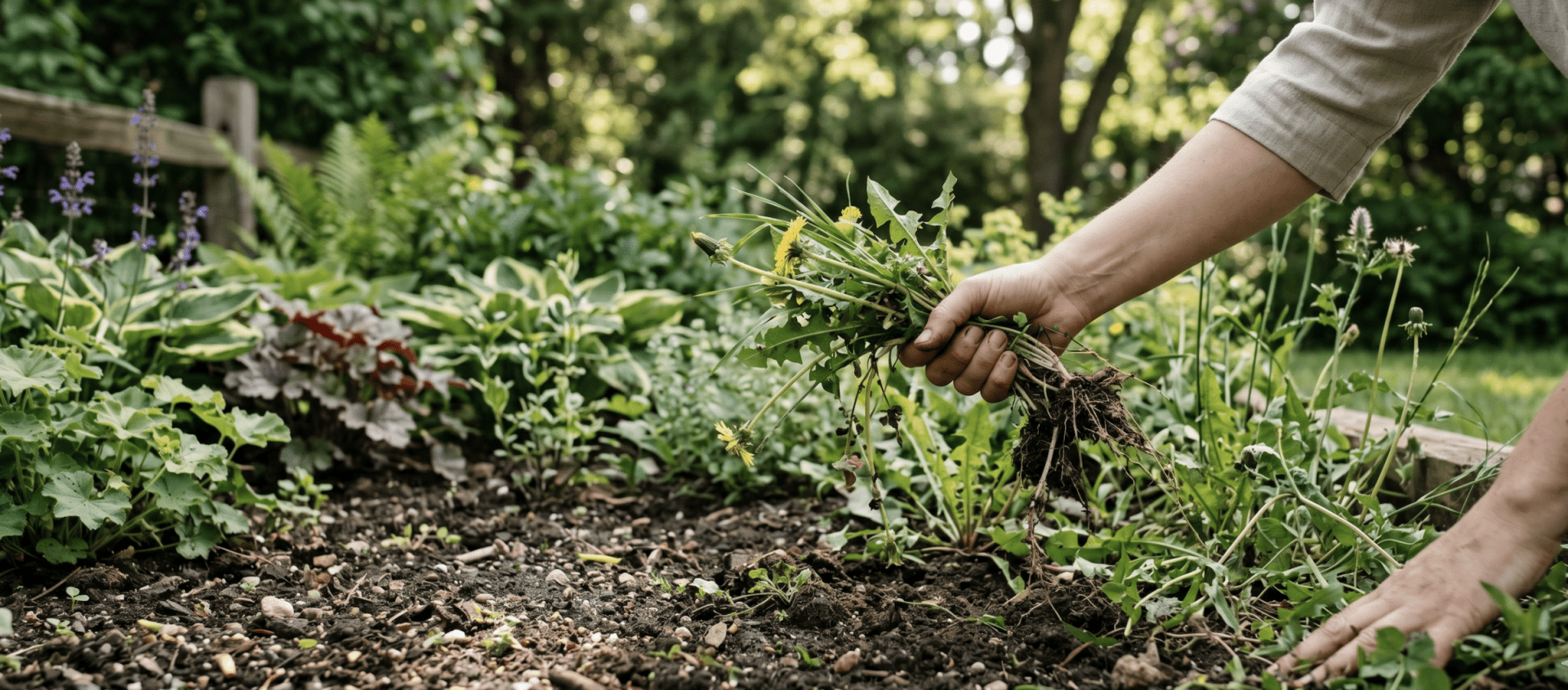
3. Weed early, not late
- Removing young weeds prevents seed spread
- A few minutes weekly beats hours monthly
A Real Scenario
We often see clients who spend hours weeding every weekend.
After redesigning their garden with tighter plant spacing and proper mulch coverage, weed pressure drops dramatically — not because they’re working harder, but because the system is working with them.
Mulch: How Much, What Type, and When to Replace It
Why Mulch Matters More Than You Think
Mulch isn’t decorative — it’s functional.
Done right, it:
- Retains moisture
- Regulates soil temperature
- Suppresses weeds
- Builds soil health over time
Done wrong, it can suffocate plants and create shallow root systems.
The Right Way to Mulch
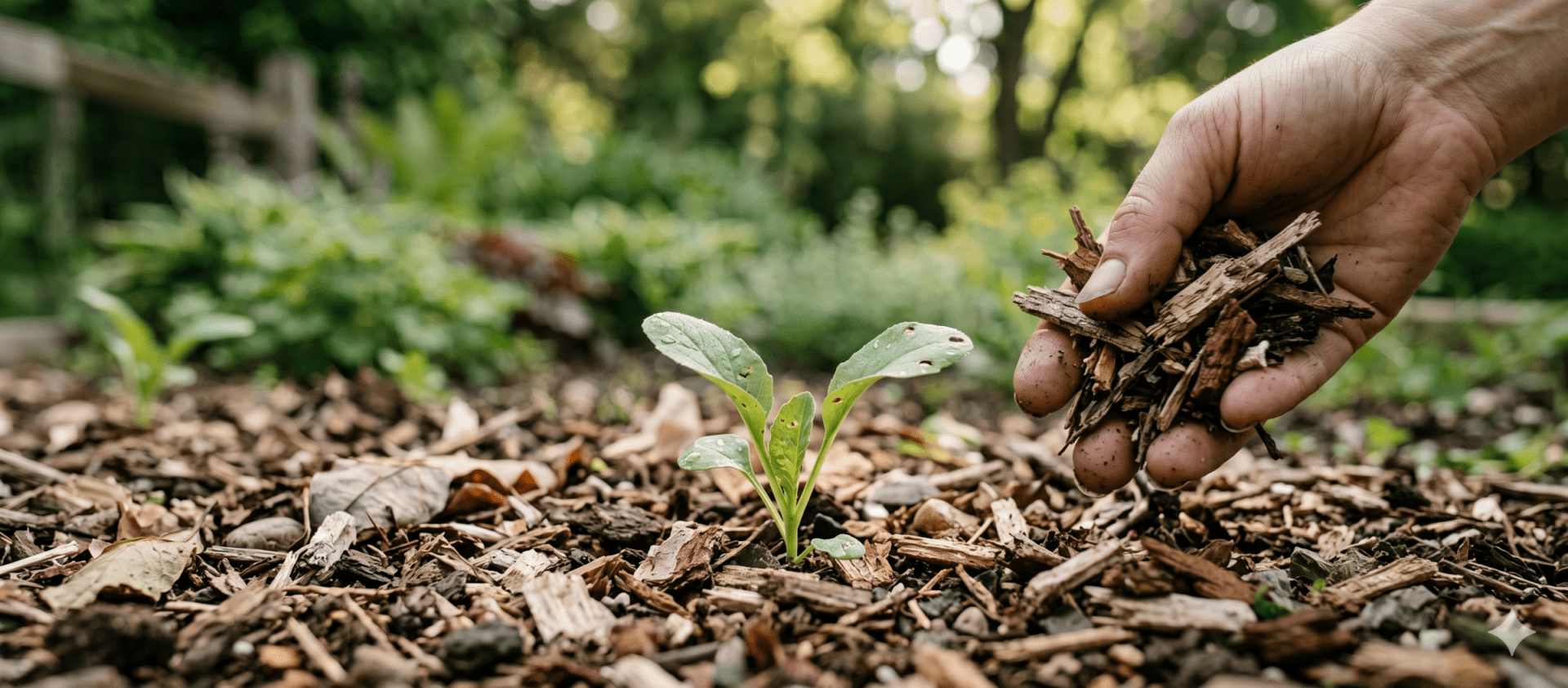
Depth matters most:
- Ideal depth: 2–3 inches
- Too thin: weeds break through
- Too thick: roots struggle to breathe
Keep it away from stems and trunks:
- Avoid “mulch volcanoes”
- Leave a small gap around plants
Organic vs. Inorganic Mulch
- Organic (wood chips, shredded bark):
- Improves soil over time
- Best for most gardens
- Inorganic (stone, gravel):
- Better for drainage areas or modern designs
- Doesn’t improve soil
When Should You Refresh Mulch?
- Typically once per year (spring or early summer)
- More often in high-sun or high-traffic areas
But here’s the nuance: if your soil is improving and plant coverage is increasing, you’ll need less mulch over time — not more.
Bugs: When to Worry (and When to Let Nature Handle It)
Not All Bugs Are Bad
One of the biggest misconceptions in garden maintenance is that insects = problem.
In reality:
- Most insects are harmless or beneficial
- A healthy garden includes biodiversity
- Predatory insects naturally control pests
When You Should Act
Take action when:
- Damage is widespread or increasing
- A specific pest is clearly identified
- Plant health is declining significantly
Smart, Modern Pest Management
Instead of spraying everything, focus on:
- Plant health first (strong plants resist pests)
- Diversity (monocultures attract outbreaks)
- Manual removal when possible
- Targeted treatments, not blanket solutions
A Case Insight
A client once struggled with constant aphid infestations.
Instead of chemical sprays, we adjusted:
- Plant selection (more resilient species)
- Spacing (better airflow)
- Introduced companion plants
Within a season, natural predators returned — and the issue largely resolved itself.
Pruning: When, How, and Why It Matters
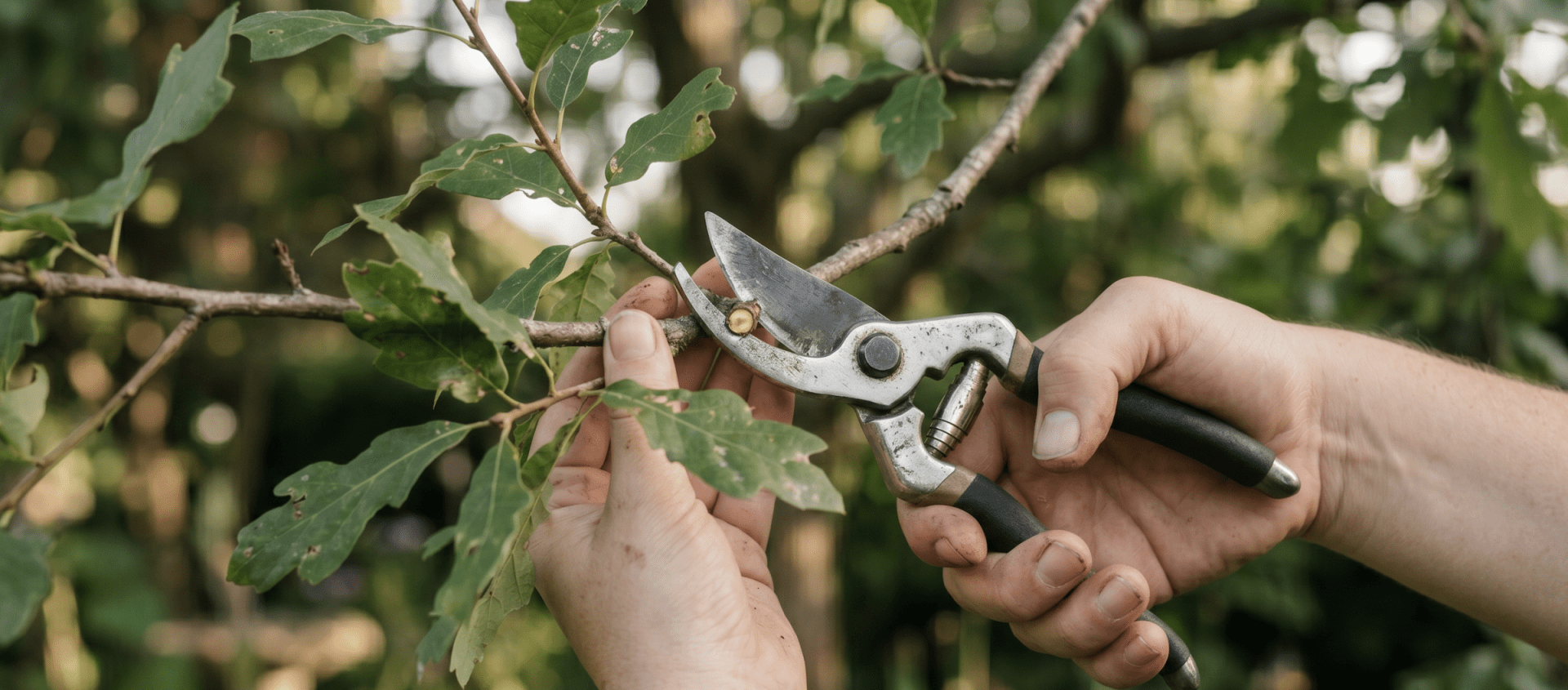
Pruning is one of the most misunderstood parts of garden maintenance — and one of the most important.
Why Pruning Matters
- Encourages healthy growth
- Improves plant structure
- Enhances flowering and density
- Prevents disease
The Biggest Mistake: Pruning at the Wrong Time
Timing depends on the plant type:
Spring-flowering shrubs (e.g., lilac, forsythia):
- Prune after flowering
Summer-flowering shrubs (e.g., hydrangea paniculata, spirea):
- Prune in early spring
Perennials:
- Cut back in fall or early spring, depending on winter interest
How Much Should You Prune?
A good rule:
- Remove no more than 25–30% of the plant at once
Over-pruning stresses plants and can lead to weak, excessive growth.
The Quiet Nature Approach
We don’t prune just to “tidy.”
We prune with intention — shaping plants to look natural, structured, and mature over time.
Watering: How Often, How Much, and When
Watering seems simple — until it isn’t.
Too little, and plants struggle. Too much, and roots weaken.
The Truth About Watering Frequency
The most common mistake is watering too frequently, but too shallowly.
This creates:
- Weak root systems
- Dependency on constant watering
- Increased stress during dry periods
The Right Approach
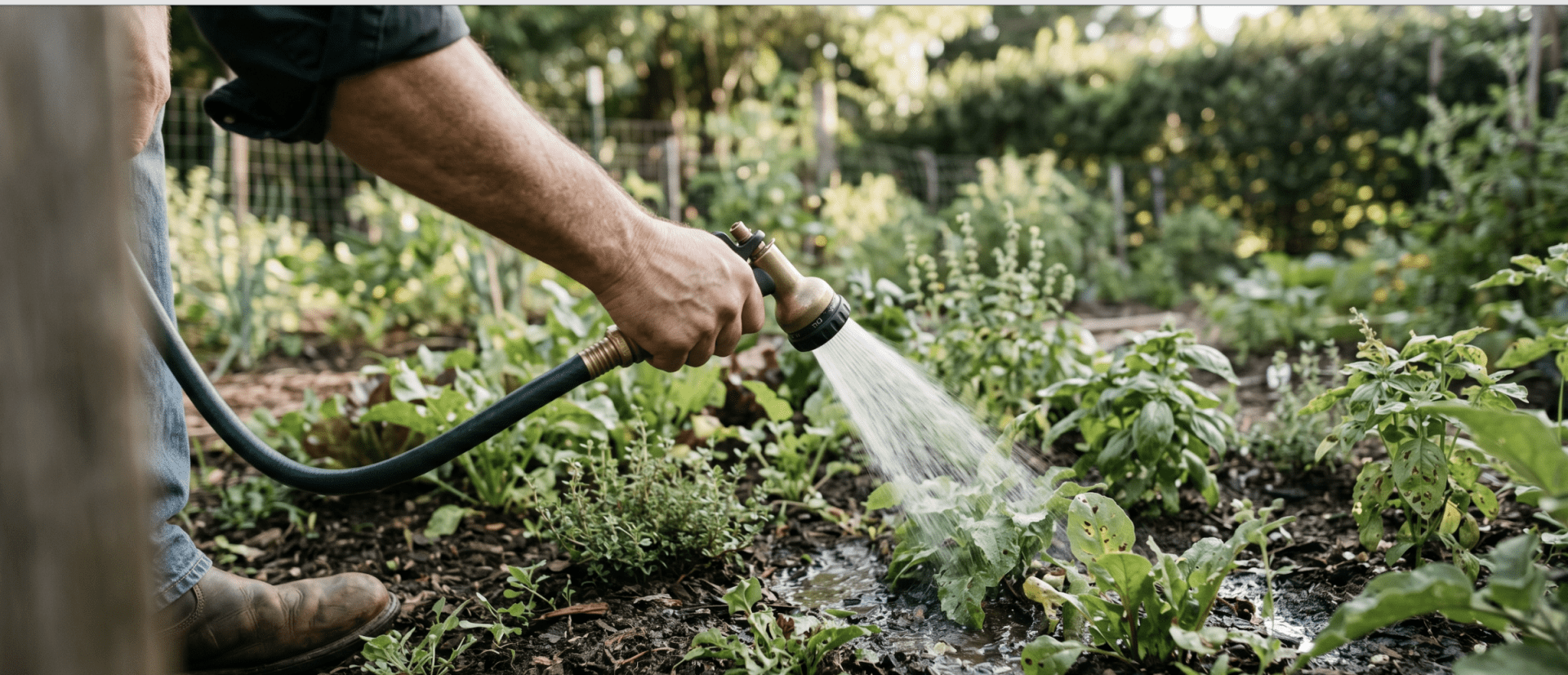
Water deeply, less often:
- Encourages roots to grow downward
- Builds drought resilience
Best times to water:
- Early morning (ideal)
- Evening (acceptable, but less ideal)
Avoid midday watering:
- Water evaporates quickly
- Less effective overall
How to Know If You’re Watering Enough
Instead of following a strict schedule, check the soil:
- Stick your finger 2–3 inches down
- If it’s dry → water
- If it’s moist → wait
Irrigation Systems: Worth It?
For many homeowners, yes.
Smart irrigation systems:
- Adjust based on the weather
- Reduce water waste
- Maintain consistent plant health
But even the best system needs seasonal adjustments and oversight.
Bringing It All Together: A Smarter Way to Maintain Your Garden
If there’s one takeaway from all of this, it’s this:
Garden maintenance shouldn’t feel like constant correction.
When your landscape is designed properly:
- Weeds decrease naturally
- Plants support each other
- Watering becomes intuitive
- Maintenance becomes lighter, not heavier
At Quiet Nature, we design gardens that evolve — not just survive.
Spaces that feel intentional, established, and calm.
And just as importantly, spaces that don’t demand your time every weekend to stay that way.
A Final Thought: Your Garden Should Give Back More Than It Takes
A well-crafted landscape isn’t just something you maintain. It’s something that supports you. A place where the details are handled, the plants feel settled, and the space invites you in — rather than reminding you of what needs to be done next. If your garden feels like work instead of a retreat, it may not be a maintenance issue.
It may be a design one.
A Simple Next Step
If you’re starting to feel like your garden needs more than quick fixes — whether that’s ongoing care, a refresh, or a complete transformation,
we’re always happy to have a conversation. No pressure. Just clarity. Because the right landscape doesn’t just look better. It feels better to live in.