Natural Swim Pond Cost in Ontario:
Real Ranges + What Drives Them
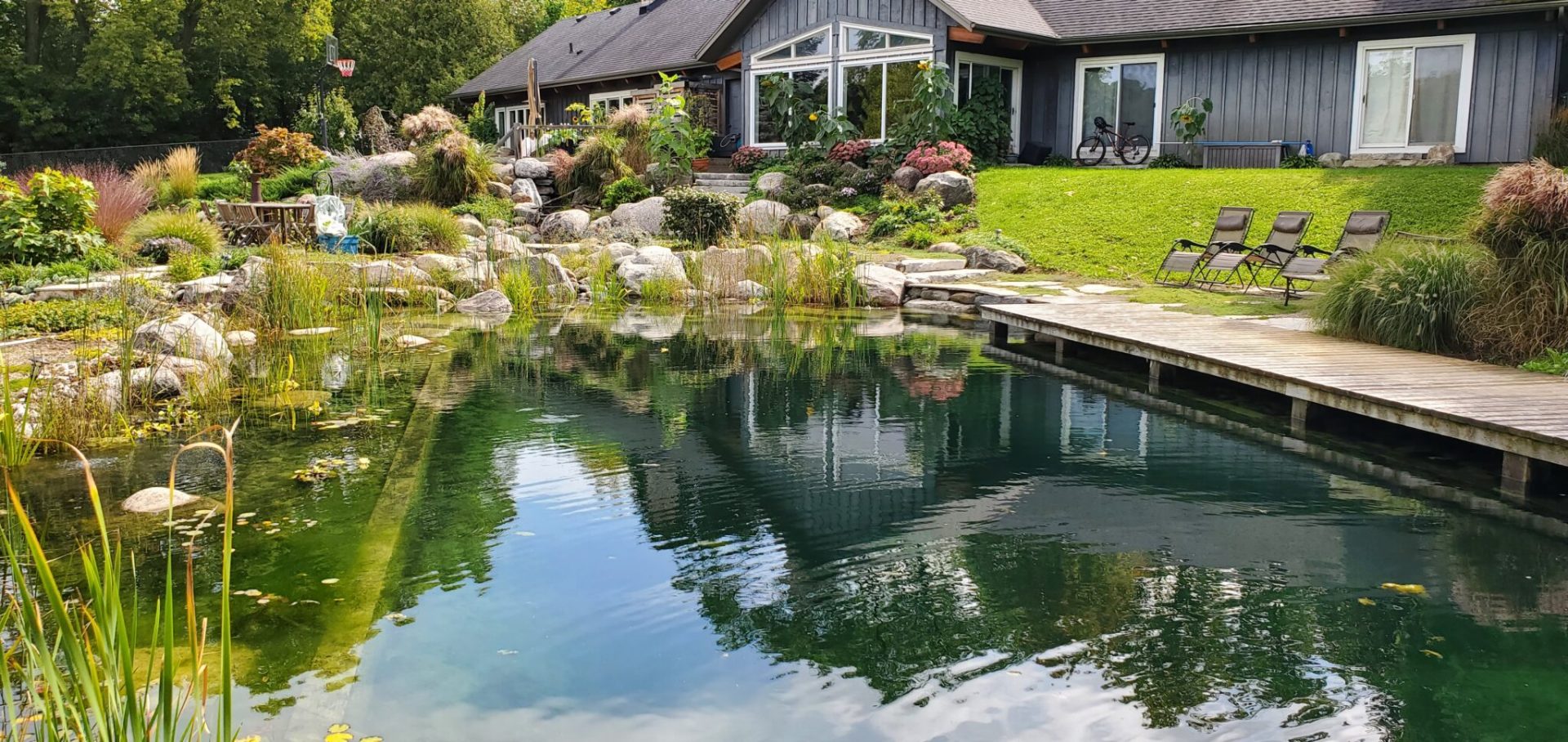
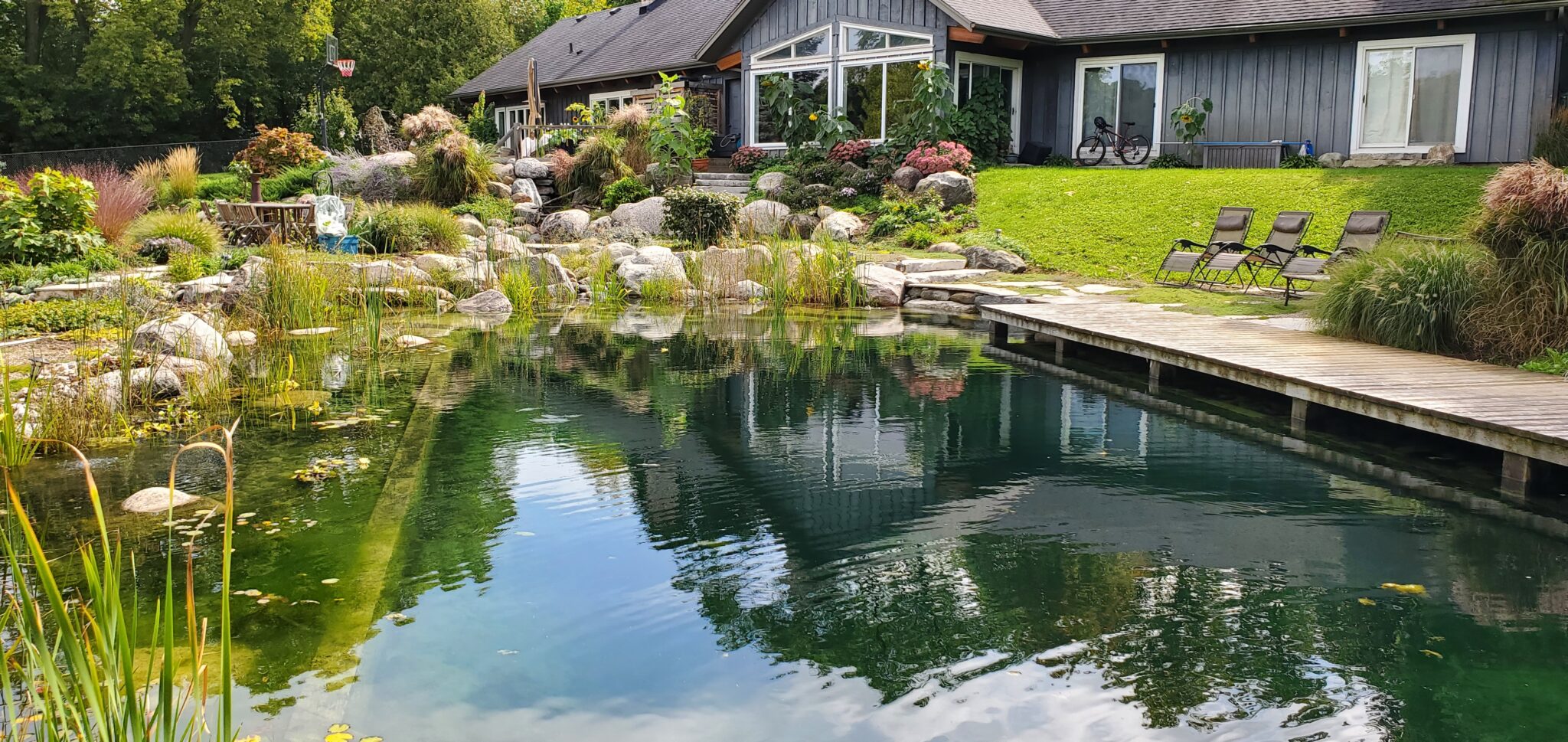
Imagine stepping outside on a warm Ontario afternoon, walking through your garden, and slipping into a natural swimming pond surrounded by stone, greenery,
and the sound of moving water. It’s an appealing idea. But before homeowners start planning the perfect backyard retreat, there’s usually one important question:
How much does a natural swimming pond actually cost in Ontario?
The answer depends on much more than the size of the water feature. Unlike a traditional swimming pool, a natural swim pond is an integrated landscape project.
Its cost reflects the swimming area, water circulation and filtration systems, excavation, stonework, aquatic planting, and the surrounding outdoor environment.
For Ontario homeowners considering this type of investment, understanding the numbers early can make the entire design process more enjoyable and predictable.
Let’s break down realistic natural swimming pond costs, what influences the final price, and what to consider before building one.
How Much Does a Natural Swimming Pond Cost in Ontario?
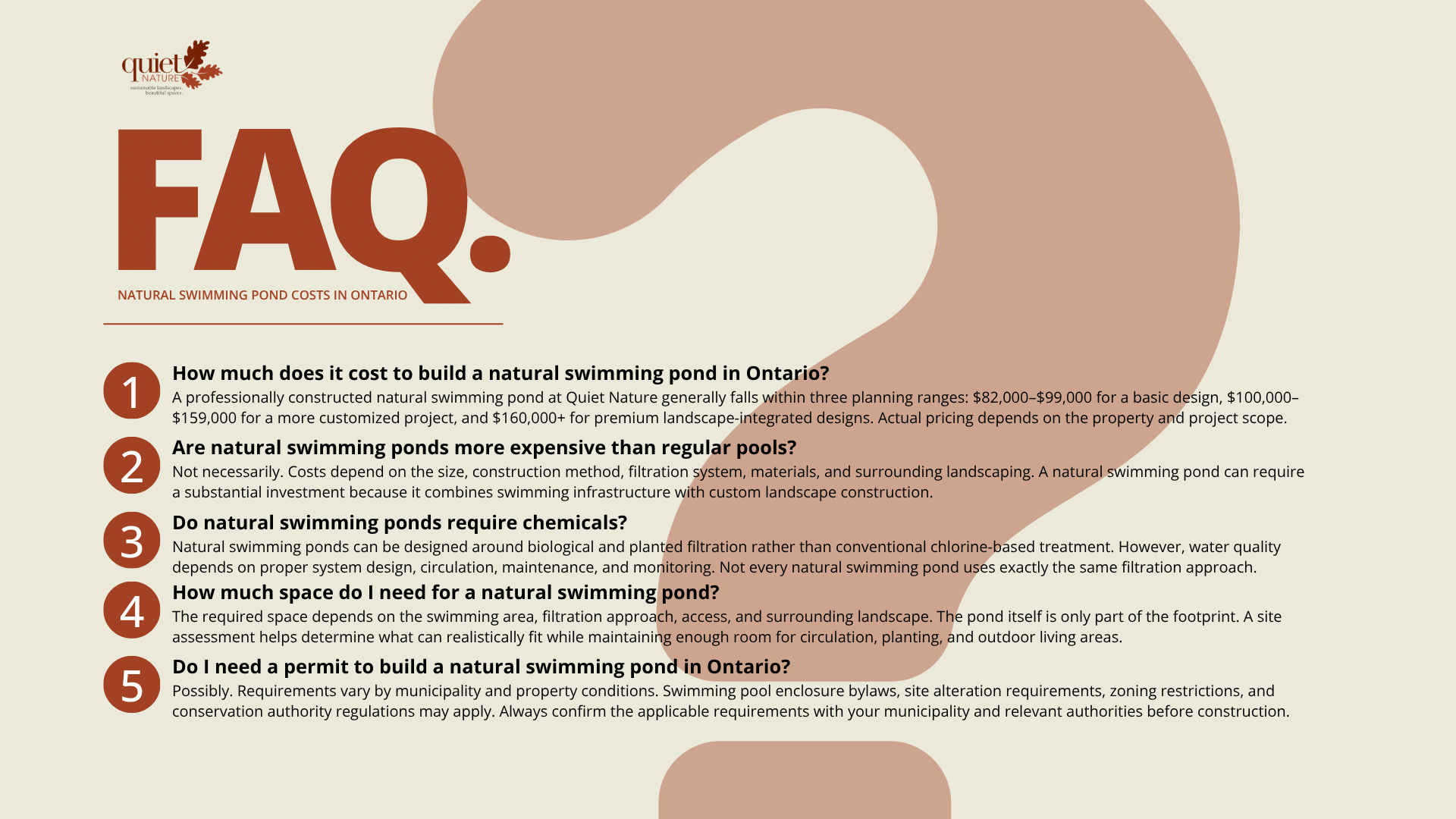
A professionally designed and constructed natural swimming pond in Ontario generally starts around $82,000 and can exceed $160,000,
depending on its size, features, site conditions, and level of customization.
At Quiet Nature, our published project pricing provides three useful starting ranges:
| Project level | Estimated investment |
| Basic natural swimming pond | $82,000–$99,000 |
| Mid-range custom swimming pond | $100,000–$159,000 |
| Premium, fully customized swim pond | $160,000+ |
These figures are planning ranges rather than fixed packages. Every property has different requirements, and the final investment depends on the design and construction scope.
1. Basic Natural Swimming Pond: $82,000–$99,000
A basic natural swimming pond offers the essential experience without an extensive collection of additional landscape features.
A project in this range may include:
- An approximately 15 × 25-foot swimming zone
- Natural cobblestone edging
- Aquatic plants and naturalized planting
- An entry ladder
- A simple waterfall
- Basic surrounding lawn integration
This option is ideal for homeowners who want the experience of swimming in a natural environment without turning the entire backyard into an elaborate outdoor resort.
The important distinction is that a basic project does not mean an unfinished or purely functional pond. Thoughtful proportions, carefully selected materials, and proper water management still matter.
2. Mid-Range Natural Swimming Pond: $100,000–$159,000
This range allows for greater customization and a more immersive outdoor experience.
Depending on the property, enhancements may include:
- A larger swimming area
- Larger natural boulders and stone formations
- A dedicated swimming deck
- Expanded streams and waterfalls
- More extensive pond-side planting
- Additional seating and relaxation areas
For example, a homeowner might begin with a straightforward swimming pond but decide to incorporate a timber deck overlooking the water,
larger stone features, and a more developed planting scheme.
The result is no longer simply a place to swim. It becomes a central part of how the backyard is experienced.
3. Premium Natural Swimming Pond: $160,000+
For homeowners looking for something highly personalized, the possibilities become considerably broader.
A premium natural swimming pond can incorporate:
- Sunken stone lounge areas
- Extensive boulder arrangements
- Pebble beaches and shallow-entry areas
- Custom streams and multiple waterfalls
- Diving rocks
- Grottos and integrated stone features
- Extensive planting beds
- Additional outdoor living spaces
At this level, the pond is designed as part of a larger landscape vision.
The investment reflects the complexity of the construction, the materials involved, and the craftsmanship required to make every element feel naturally connected.
What Factors Affect the Cost of a Natural Swimming Pond?
Two homeowners can request swimming ponds with similar dimensions and receive significantly different estimates.
Why? Because the visible water area is only one part of the project.
Here are the major factors that influence the cost.
1. Size, Depth, and Overall Design
The dimensions of a swimming pond influence excavation, construction materials, liner requirements, circulation, and filtration capacity.
However, size alone does not determine the price.
A relatively compact pond with intricate stonework, a deep swimming zone, and multiple water features may require more specialized construction than a larger but simpler design.
Depth also matters. A deeper swimming area requires additional excavation and careful consideration of the pond’s structural and water-management requirements.
The key is to design around how the space will actually be used.
Will the family primarily relax in shallow water? Is there a desire for uninterrupted swimming space? Would a gradual entry be more practical?
These decisions should happen before construction begins.
2. Excavation and Existing Site Conditions
What lies beneath the backyard can have a substantial effect on construction costs.
Some Ontario properties have relatively straightforward soil conditions and generous equipment access. Others may contain dense clay, large rocks,
difficult slopes, buried obstacles, or limited access between buildings.
Consider two hypothetical properties:
- Property A: A relatively level backyard with open access for excavation equipment and suitable soil conditions.
- Property B: A sloped backyard with restricted equipment access, substantial rock removal, and additional grading requirements.
Even if both homeowners want the same swimming pond, Property B may require considerably more preparation and labour.
This is why an initial site assessment is so important. A price based on dimensions alone cannot accurately account for everything involved in preparing the property.
3. Natural Stone, Boulders, and Finishing Materials
Stonework is one of the defining visual elements of a natural swimming pond.
Cobblestones, natural boulders, gravel, and carefully positioned rock formations help create the transition between the water and the surrounding landscape.
The type, quantity, size, and placement of these materials all affect the budget.
A simple stone edge requires a different level of investment than a pond featuring oversized specimen boulders, layered rock formations,
and a natural-looking waterfall. The difference is not simply decorative.
Well-executed stonework helps the pond feel like it belongs within the landscape rather than appearing as an isolated structure placed in the backyard.
4. Filtration and Water Circulation Systems
A natural swimming pond needs more than water and aquatic plants to function properly.
Its water-management system must be designed around the pond’s volume, intended use, circulation requirements, and chosen filtration approach.
Depending on the design, this may involve:
- Pumps and circulation equipment
- Biological filtration components
- Planted regeneration or filtration zones
- Skimmers and intake systems
- Plumbing and water-return features
The goal is to establish a properly functioning aquatic environment that supports suitable swimming conditions.
It is important to understand that natural does not mean maintenance-free. A well-designed system still requires appropriate equipment,
monitoring, seasonal care, and ongoing maintenance.
Cutting corners on the water-management system to reduce the initial construction price can create bigger problems later.
5. Waterfalls, Streams, and Additional Features
Water features can dramatically change the atmosphere of a swimming pond.
A simple waterfall introduces movement and sound. A larger cascading waterfall or connecting stream creates a more elaborate visual experience.
However, every additional feature introduces construction considerations.
These can include:
- Additional excavation
- More stone and gravel
- Plumbing and circulation adjustments
- Additional pumps or equipment, depending on the design
- Increased installation time
A homeowner may initially want a simple swimming pond but later decide that a stream flowing into the main body of water would make the space feel more complete.
Planning these features during the original design phase is generally more efficient than adding them after construction.
6. Surrounding Landscaping and Outdoor Living Areas
One of the biggest differences between a swimming pond and a conventional pool project is how naturally the water feature can integrate with the rest of the property.
The surrounding landscape is part of the experience.
Depending on the design, the project may incorporate:
- Native and naturalized planting
- Timber decks
- Stone patios
- Walking paths
- Seating areas
- Landscape lighting
- Privacy planting
- Natural shoreline transitions
For example, a swimming pond surrounded by a simple lawn will have a different budget from one connected to a stone patio, layered garden beds, and a dedicated outdoor lounge.
Neither approach is inherently better. The right solution depends on the property, lifestyle, and overall vision.
Are There Additional Costs Beyond the Pond Construction?
Yes. One of the most important parts of budgeting is understanding what may sit outside the initial pond construction estimate.
Depending on the property and project agreement, additional expenses may include:
Site preparation: Tree removal, demolition, difficult access, grading, and disposal of excavated materials.
Electrical work: Connections for pumps, lighting, and other equipment.
Safety and regulatory requirements: Municipal approvals, enclosure requirements, and any applicable conservation authority permits.
Surrounding construction: Patios, decks, walkways, retaining structures, and additional landscaping.
Ongoing maintenance: Seasonal opening and closing, equipment servicing, debris removal, and aquatic plant management.
Ontario regulations deserve particular attention. Requirements for swimming pool enclosures and permits can differ between municipalities. A natural-looking pond should not automatically be assumed to qualify for an exemption.
Properties located near wetlands, shorelines, watercourses, or other regulated areas may also require conservation authority approval before development proceeds.
It is worth investigating these requirements before finalizing the design.
Natural Swimming Pond vs. Traditional Swimming Pool: Is the Investment Different?
A natural swimming pond and a traditional swimming pool serve a similar purpose, but they create very different backyard experiences.
A conventional pool is typically designed around a defined swimming structure, with a focus on water treatment, circulation, and recreational use.
A natural swimming pond combines a swimming environment with naturalistic landscaping and an integrated water-management approach.
Here is how they differ:
| Consideration | Traditional pool | Natural swimming pond |
| Appearance | Structured and defined | Organic and naturalistic |
| Water treatment | Typically chemical-based | May use biological and planted filtration |
| Landscape integration | Often a separate pool surround | Designed as part of the landscape |
| Customization | Shape, finishes, and surrounding features | Water, stone, plants, and landscape elements |
| Visual experience | Primarily seasonal swimming feature | Can function as a landscape focal point year-round |
Neither option is universally more affordable.
The final cost of either project depends on its specifications, construction requirements, and surrounding improvements.
The more useful question is not simply which costs less, but which environment better supports the way you want to use your property.
How to Plan a Realistic Budget for Your Natural Swimming Pond
Before committing to a design, take time to establish what matters most.
A few thoughtful decisions can help keep the project aligned with your expectations.
Start With the Experience, Not the Features
Instead of immediately choosing waterfalls, boulders, or decking, consider how you want to spend time in the space.
Do you imagine swimming with your children? Relaxing beside the water? Entertaining guests? Having a quiet outdoor retreat?
The answers will influence the layout, swimming area, entry points, and surrounding landscape.
Prioritize Essential Construction
Separate the essential elements from optional enhancements.
Your initial priorities should include:
- Appropriate pond dimensions and depth
- Reliable water circulation and filtration
- Suitable construction materials
- Safe access and entry
- Proper site preparation
Once these elements are established, additional features can be incorporated according to the available budget.
Consider a Phased Landscape Approach
Not every outdoor living project needs to be completed all at once.
For suitable properties, homeowners can prioritize the essential swimming pond and its immediate surroundings, then consider additional landscape enhancements in a later phase.
For example, a project might begin with the pond, essential stonework, and functional access. A larger outdoor lounge, additional planting beds, or an expanded patio could follow.
The important part is designing the overall layout from the beginning so future additions feel intentional rather than disconnected.
Get a Site-Specific Estimate
Online price ranges are useful for understanding the general investment, but they cannot replace an assessment of the actual property.
A meaningful estimate should consider:
- Available backyard space
- Soil and grading conditions
- Equipment access
- Desired pond dimensions and depth
- Filtration requirements
- Stone and planting selections
- Additional landscape features
- Applicable approvals and project exclusions
The more clearly these elements are established, the easier it becomes to compare proposals and make informed decisions.
A Natural Swimming Pond Is an Investment in How You Live Outdoors
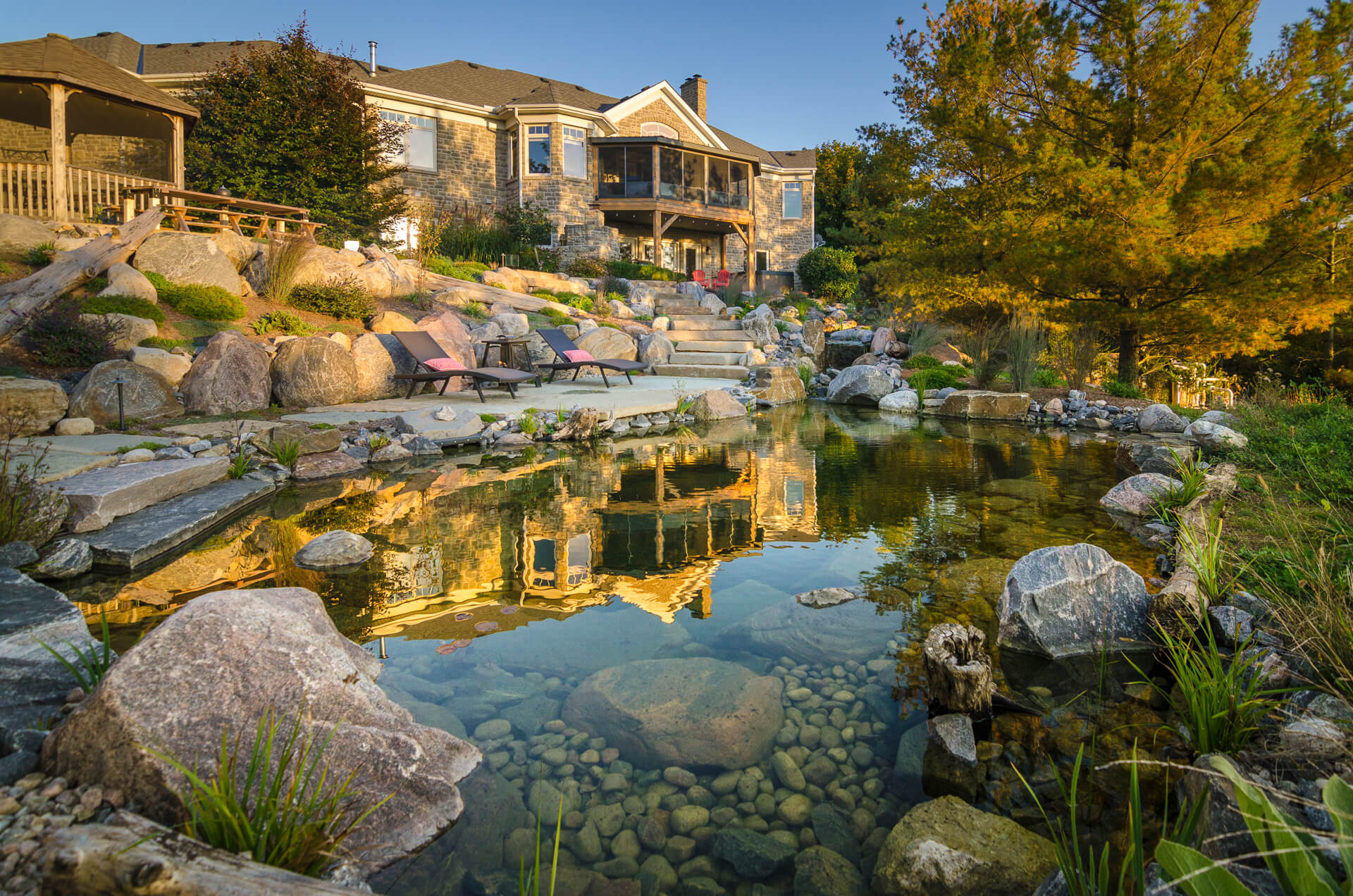
The value of a natural swimming pond is not measured exclusively by its dimensions or construction materials.It is also found in the everyday experiences it creates: a quiet morning beside the water, an afternoon swim surrounded by greenery, or an evening spent listening to a waterfall instead of the noise of the neighbourhood.
And it does not have to mean transforming an enormous estate into a private resort.
With thoughtful design, the right proportions, and an understanding of the property, a natural swimming pond can become a meaningful part of many different backyard settings.
At Quiet Nature, we believe outdoor spaces should feel connected to the people who use them and the natural environment around them.
Whether you are considering a simple swimming pond or envisioning a fully integrated outdoor retreat, the best place to begin is with
a clear understanding of your property, priorities, and investment.
Thinking about building a natural swimming pond in Ontario? Explore Quiet Nature’s natural swimming pool designs and discover how we can help
transform your backyard into a space worth spending mxaore time in.