
Outdoor Kitchens in Ontario: What Holds Up,
What Doesn’t, and Layout Rules
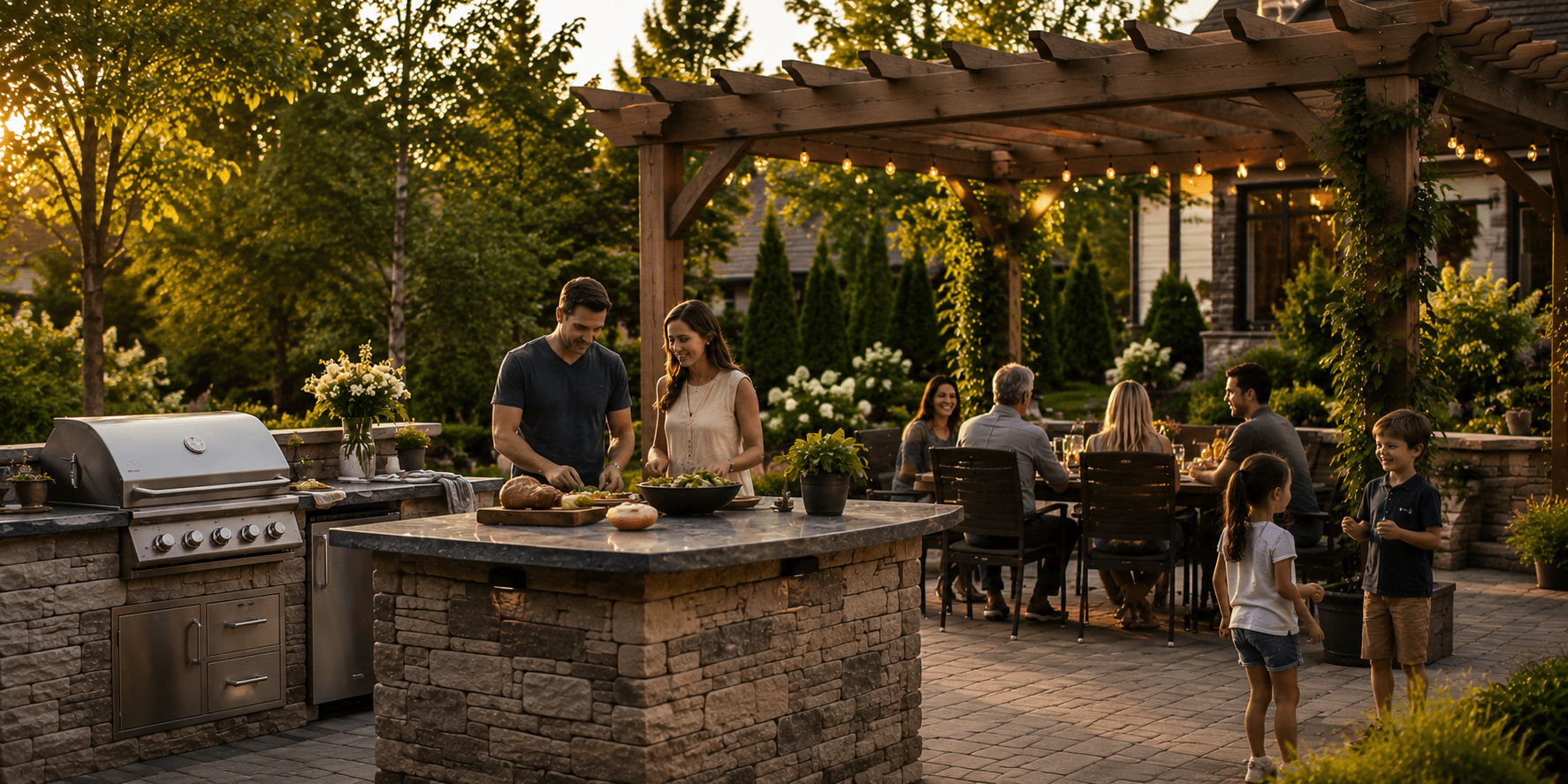
Outdoor kitchens have moved far beyond a luxury add-on. For many Ontario homeowners, they have become a natural extension of the home itself,
a place where meals are shared, conversations linger long after sunset, and everyday routines shift outdoors. But building an outdoor kitchen in
Ontario comes with challenges that homeowners in warmer climates rarely have to consider.
Freeze-thaw cycles, heavy snow loads, fluctuating humidity, intense summer heat, and months of dormant winter conditions all place stress on
materials, appliances, and construction details. An outdoor kitchen that looks beautiful in a showroom catalogue may struggle after only a few
Canadian winters. The difference between an outdoor kitchen that lasts five years and one that lasts twenty often comes down to two factors:
choosing the right materials and designing a layout that actually supports how people live.
Here’s what holds up, what doesn’t, and the design principles worth considering before investing in an outdoor cooking space.
Why Outdoor Kitchens Continue to Grow in Popularity
Homeowners are increasingly viewing their landscapes as living spaces rather than decorative backdrops.
Outdoor kitchens contribute to this shift because they create opportunities for connection.
Instead of stepping inside repeatedly to prep food, entertain guests, or wash dishes, the kitchen remains integrated with the experience.
People are also spending more intentionally. Rather than pursuing large-scale interior renovations every few years,
many families are investing in outdoor environments that support wellness, recreation, entertaining, and daily enjoyment.
A thoughtfully designed outdoor kitchen can support:
- Family dinners outside during summer evenings
- Weekend gatherings with friends
- Poolside entertaining
- Seasonal celebrations
- Multi-generational outdoor living
- Better use of underutilized backyard space
In Ontario, however, longevity should carry equal importance to aesthetics.
An outdoor kitchen must be designed for four seasons, even if it is actively used for only two or three.
What Holds Up in Ontario’s Climate
Stainless Steel: Still the Best Choice for Cabinetry
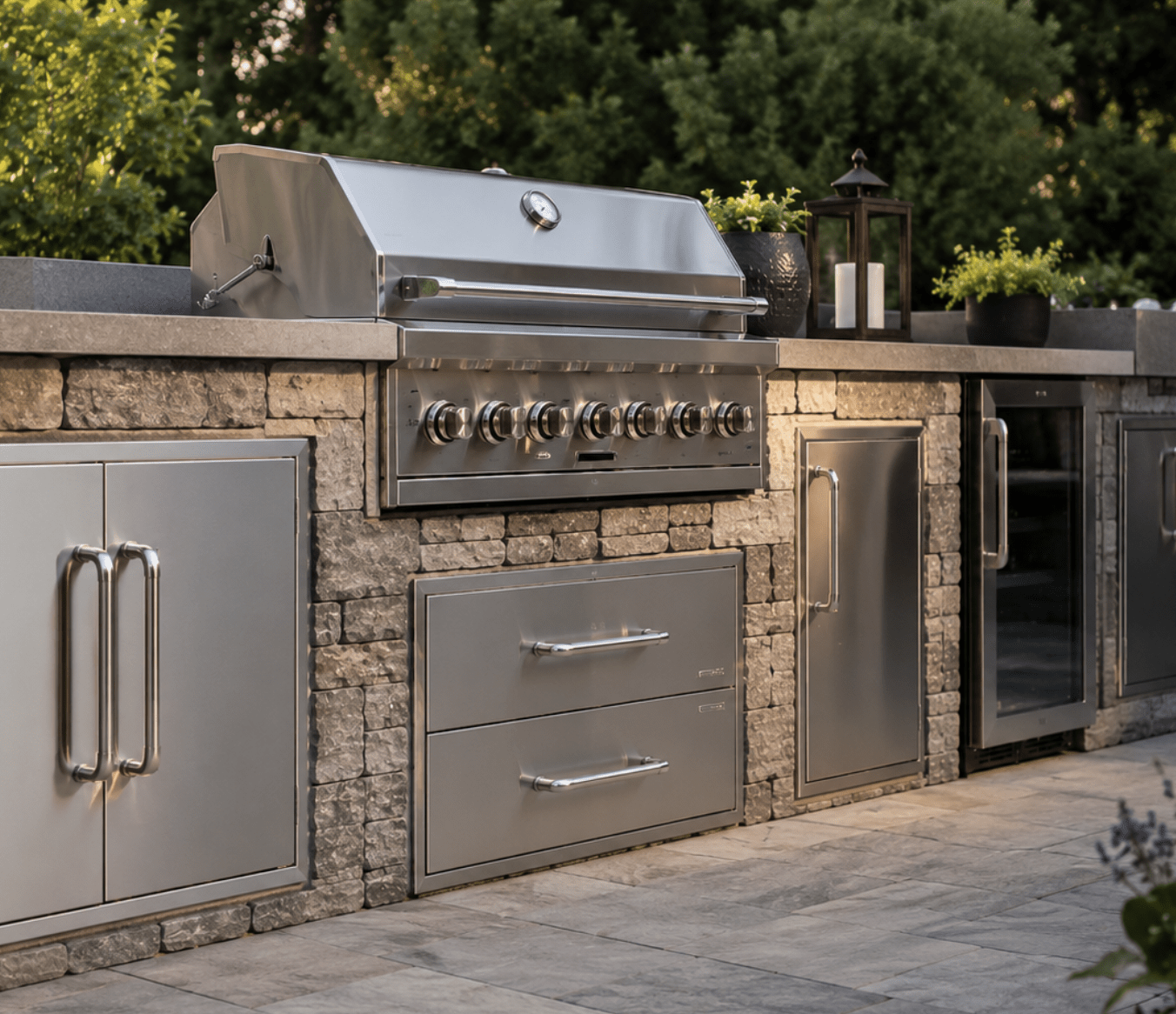
Not all stainless steel performs equally.
For Ontario conditions, marine-grade or high-quality stainless steel cabinetry offers exceptional resistance against:
- Moisture
- Snow accumulation
- Temperature fluctuations
- Corrosion
- UV exposure
Powder-coated aluminum can also perform well when manufactured specifically for exterior environments.These materials resist warping, cracking, and swelling—issues commonly associated with wood-based products.
Best applications
- Cabinet doors
- Storage units
- Built-in appliance surrounds
- Sink bases
- Access panels
Natural Stone Continues to Perform Well
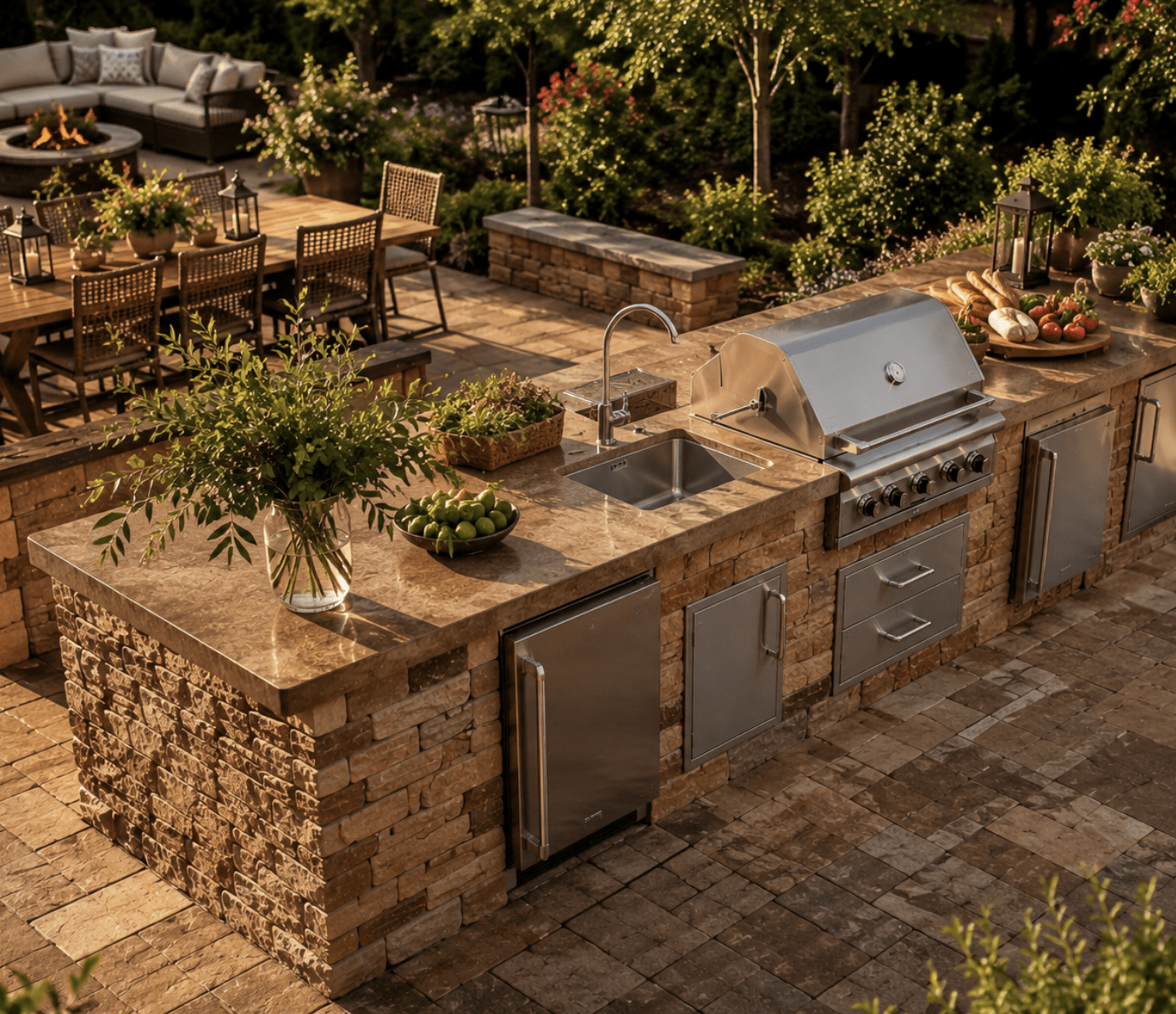
Natural stone remains one of the most resilient choices for outdoor kitchen structures.
Granite, dense limestone, and certain locally sourced stone varieties have demonstrated long-term durability in freeze-thaw climates.
Stone also ages gracefully.
Small variations, subtle weathering, and seasonal changes often add character rather than detract from appearance.
Popular stone applications include:
- Island cladding
- Seat walls
- Fireplace surrounds
- Counter supports
- Adjacent patio features
When installed properly with appropriate drainage and base preparation, stone can last for decades.
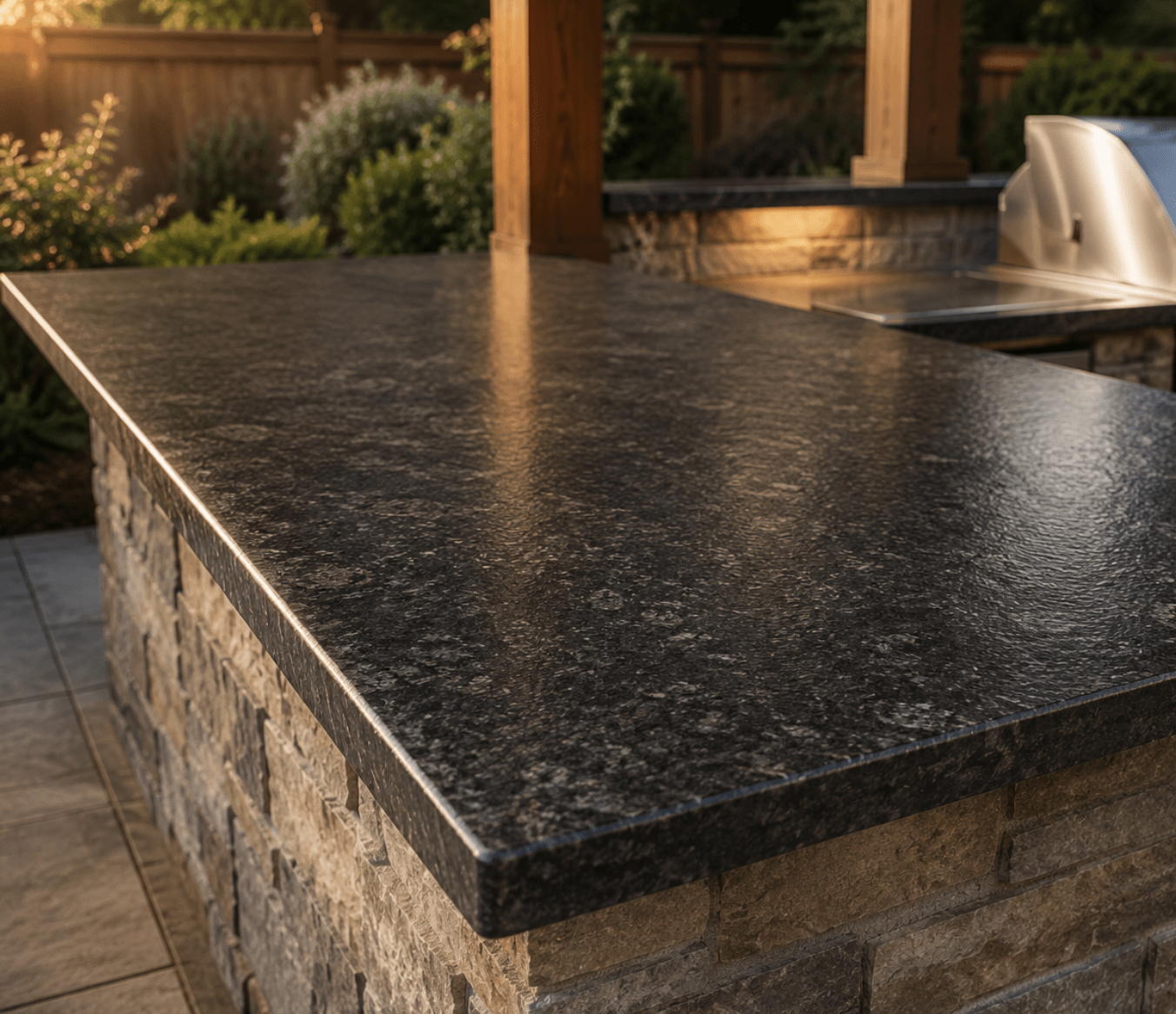
Granite Countertops Remain a Reliable Investment
Natural stone remains one of the most resilient choices for outdoor kitchen structures.
Granite, dense limestone, and certain locally sourced stone varieties have demonstrated long-term durability in freeze-thaw climates.
Stone also ages gracefully.
Small variations, subtle weathering, and seasonal changes often add character rather than detract from appearance.
Popular stone applications include:
- Island cladding
- Seat walls
- Fireplace surrounds
- Counter supports
- Adjacent patio features
When installed properly with appropriate drainage and base preparation, stone can last for decades.
Porcelain Surfaces Are Becoming More Common
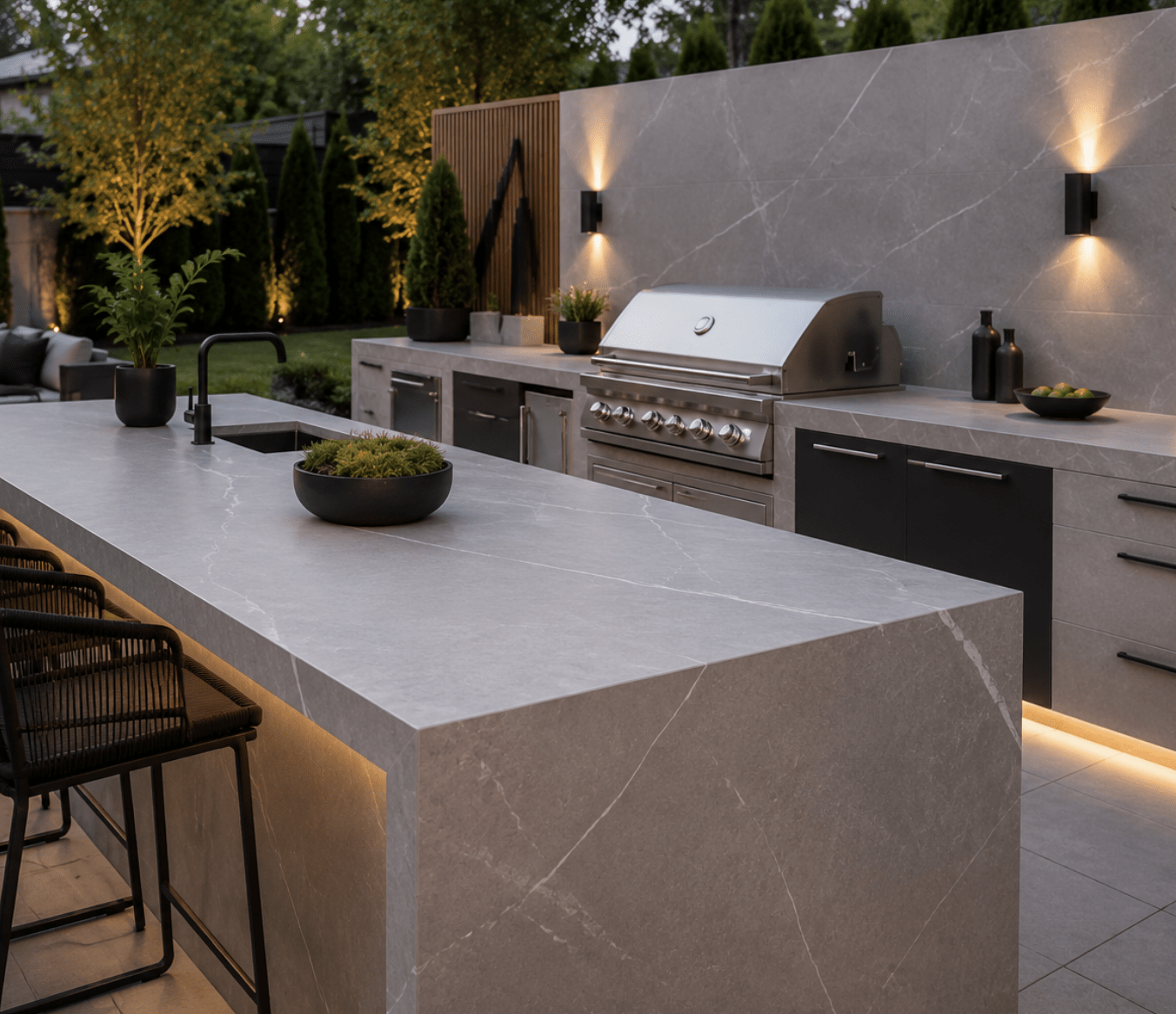
An outdoor kitchen is only as durable as the base beneath it.
Ontario’s freeze-thaw cycles cause soil movement.
Without proper excavation and drainage, even premium materials can fail prematurely.
Quality installations often include:
- Compacted aggregate foundations
- Drainage considerations
- Frost-resistant construction methods
- Appropriate spacing for expansion and contraction
- Stable structural support systems
This hidden infrastructure rarely appears in inspiration photos, yet it determines long-term performance
What Doesn’t Hold Up Over Time
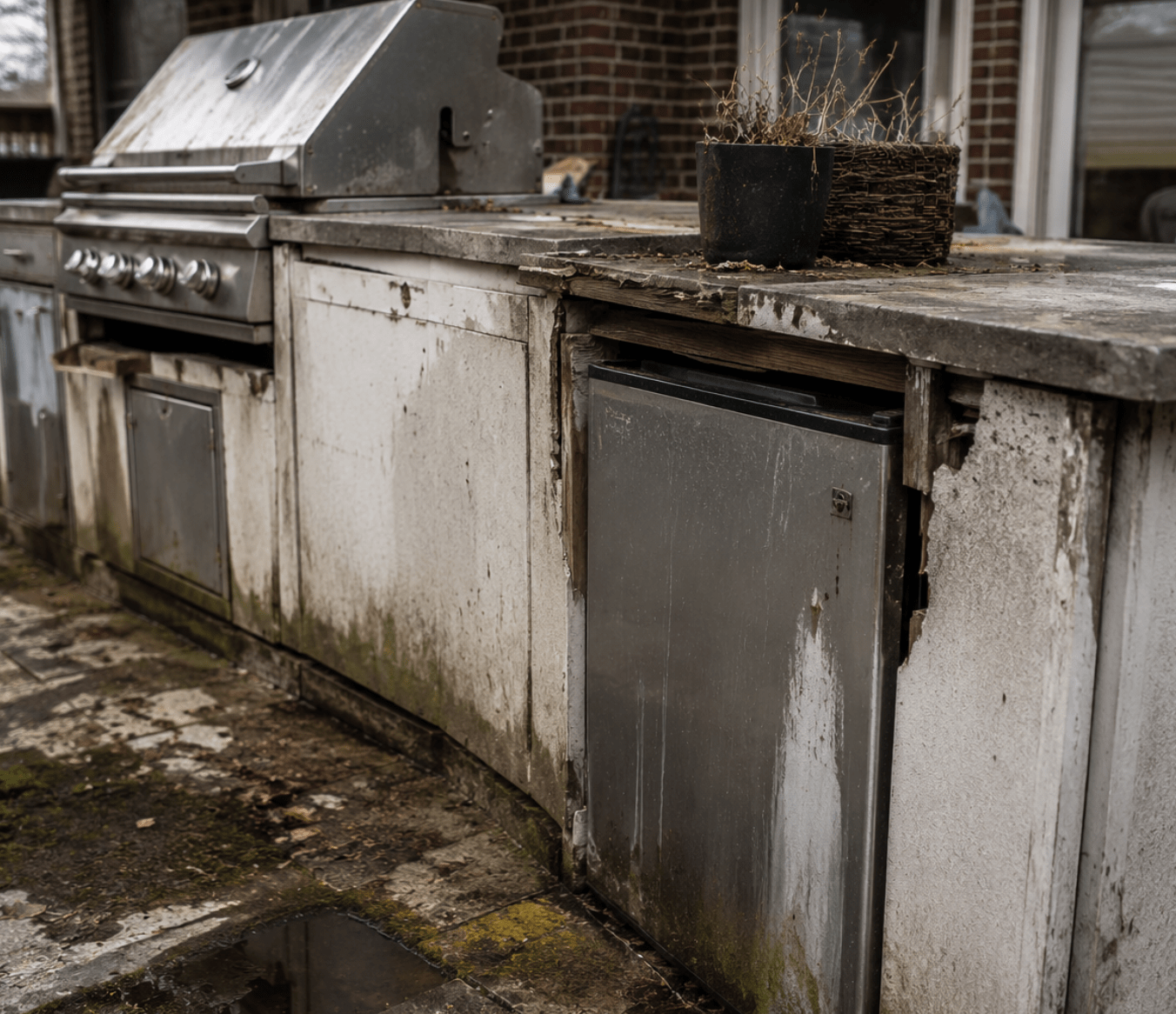
Interior Cabinetry Materials
One of the most common mistakes homeowners make is adapting indoor products for outdoor use.
Materials such as:
- MDF
- Particle board
- Laminate cabinetry
- Interior plywood
may appear attractive initially but often deteriorate quickly once exposed to moisture.
Even covered outdoor kitchens experience condensation, wind-driven rain, humidity, and seasonal temperature fluctuations.
Swelling, delamination, and structural breakdown can happen within only a few years.
Certain Countertop Materials
Quartz performs exceptionally indoors.
Outdoors, results can be inconsistent.
Extended UV exposure may contribute to fading, discoloration, or surface changes depending on the product and manufacturer specifications.
Concrete can also become problematic if not engineered correctly.
Although concrete offers beautiful customization opportunities, it requires ongoing maintenance and sealing.
Improperly reinforced concrete surfaces may develop cracking over time.
Standard Appliances Not Rated for Exterior Use
Outdoor kitchens require outdoor-rated appliances.
Using indoor refrigeration, standard cabinetry hardware, or interior-grade fixtures often results in premature failure.
Outdoor-rated products are specifically designed to tolerate:
- Humidity
- Temperature swings
- Dust
- Rain exposure
- Insects
- Seasonal shutdowns
While they represent a larger upfront investment, they typically reduce replacement costs over the lifespan of the kitchen.
Ignoring Drainage
Water is one of the greatest threats to outdoor construction.
Poor drainage contributes to:
- Frost heaving
- Surface shifting
- Staining
- Structural instability
- Accelerated wear
Even covered structures should account for rainwater movement.
Designers increasingly think about water before selecting finishes.
How water enters, exits, drains, and freezes is often one of the most important considerations in successful outdoor kitchen design.
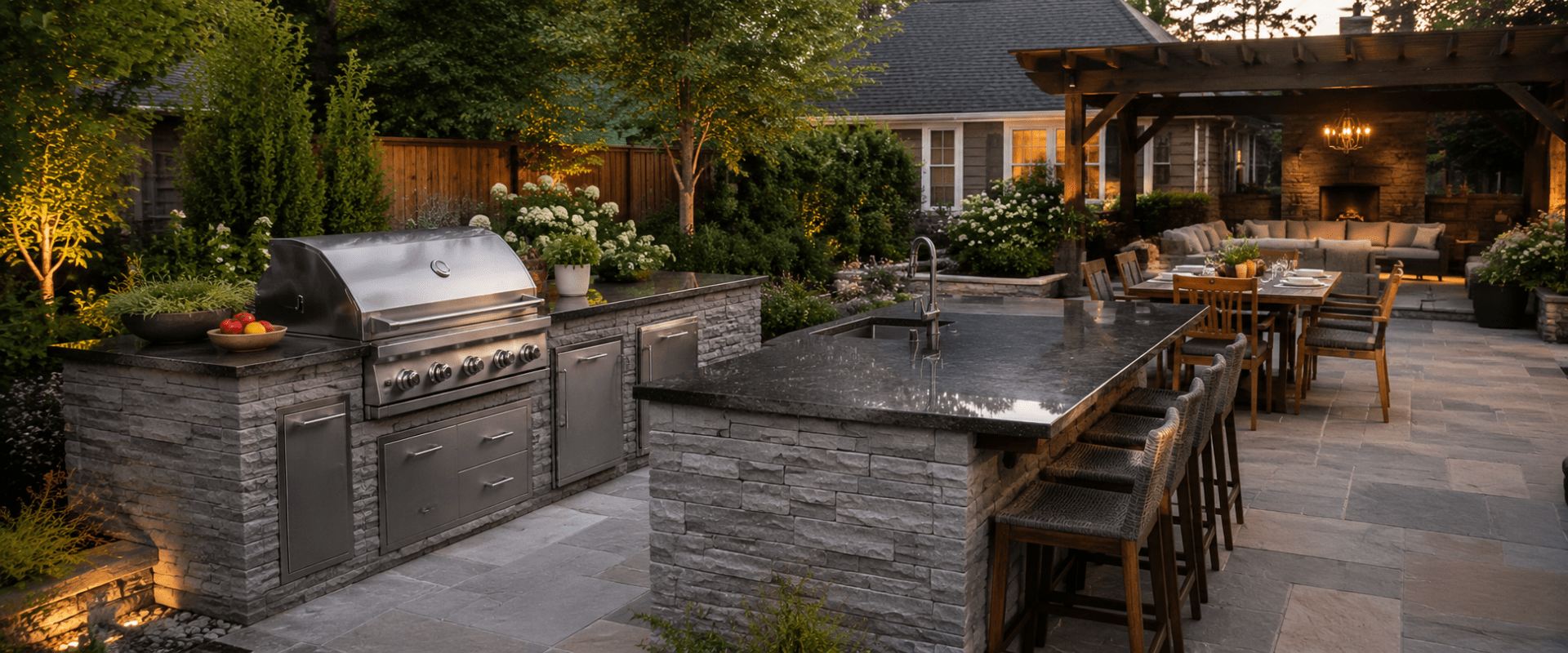
Outdoor Kitchen Layout Rules That Actually Work
Beautiful kitchens do not automatically become functional kitchens.
Layout planning often determines whether the space feels effortless or frustrating.
Rule 1: Think Beyond the Grill
Many homeowners focus almost exclusively on the cooking appliance.
But cooking represents only one component of the outdoor experience.
Consider how people naturally move through the space.
A complete outdoor kitchen typically includes:
Preparation zone
Counter space near refrigeration and storage.
Cooking zone
Grill, smoker, pizza oven, side burners, or specialty cooking equipment.
Serving zone
Space for plating, drinks, appetizers, and buffet-style entertaining.
Gathering zone
Seating that encourages conversation while allowing cooks to remain connected to guests.
These functional zones create better flow and reduce congestion.
Rule 2: Keep Travel Distances Comfortable
An outdoor kitchen should reduce trips indoors—not create more of them.
As a general principle:
- Refrigeration should sit close to preparation areas.
- Trash storage should remain accessible but discreet.
- Serving surfaces should be adjacent to cooking zones.
- Seating should maintain enough distance from heat sources.
A common frustration occurs when guests gather directly in front of the grill.
Providing designated social areas helps maintain circulation and safety.
Rule 3: Consider Wind Patterns
Prevailing winds influence comfort more than many homeowners anticipate.
Smoke drifting into seating areas can quickly diminish the experience.
Thoughtful positioning helps.
Designers often evaluate:
- Wind direction
- Existing tree cover
- Privacy screens
- Pergolas
- Adjacent structures
- Fence placement
Even subtle adjustments in orientation can significantly improve usability.
Rule 4: Plan for Shade
Ontario summers continue to experience hotter stretches and longer periods of intense sunlight.
Shade elements increase comfort dramatically.
Options include:
- Pergolas
- Covered pavilions
- Retractable canopies
- Integrated roof structures
- Strategic tree placement
Shade also protects appliances and extends the lifespan of finishes.
Rule 5: Lighting Should Be Layered
Outdoor kitchens frequently become evening destinations.
Good lighting extends usability well beyond daylight hours.
Layered lighting might include:
Task lighting
For cooking surfaces and prep stations.
Ambient lighting
To create warmth and atmosphere.
Accent lighting
Highlighting stone textures, planting, or architectural details.
Path lighting
Improving safety and navigation throughout the landscape.
Lighting transforms outdoor kitchens from daytime amenities into spaces that feel welcoming late into the evening.
Creating an Outdoor Kitchen That Lasts
An outdoor kitchen should feel effortless. It should invite people to stay outside longer, gather more often, and enjoy the landscape in ways that fit everyday life.
In Ontario, creating that experience means balancing beauty with resilience. Material choices matter. Construction details matter. Layout matters.
When those elements come together thoughtfully, an outdoor kitchen becomes more than a feature in the backyard—it becomes a place where ordinary evenings become memorable, where celebrations feel more connected, and where outdoor living becomes part of daily life.
At Quiet Nature, we believe outdoor spaces should be designed with intention, built for our climate, and crafted to support the moments people value most.
Whether integrated alongside a natural pool, garden retreat, or complete backyard transformation, an outdoor kitchen has the potential to
become the heart of outdoor living for years to come.