
Outdoor Lighting That Changes Everything:
Layers, Mood, and Safety
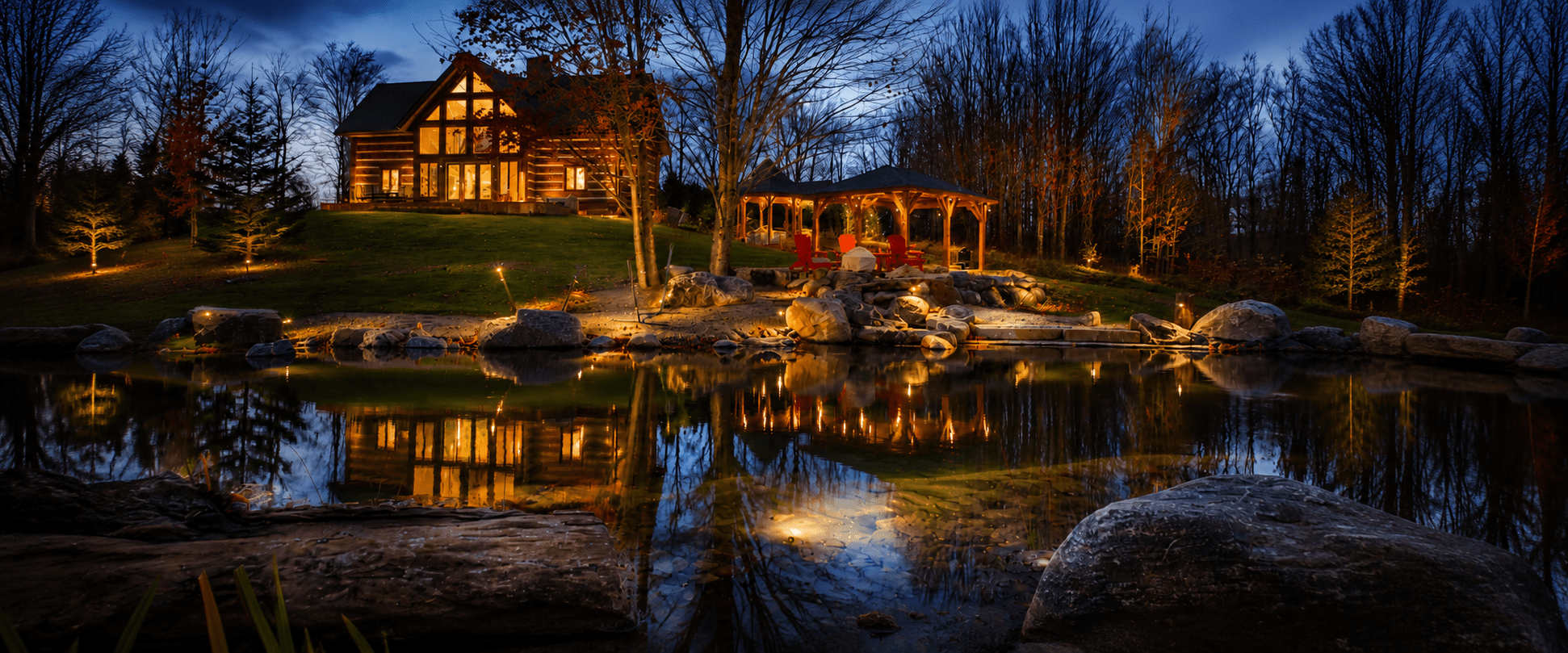
When people imagine transforming their outdoor space, they often focus on patios, gardens, retaining walls, fire features, or water elements. Lighting is
usually an afterthought. Yet outdoor lighting is one of the few design elements that can completely change how a landscape feels without changing the landscape itself.
A backyard that feels ordinary during the day can become warm, inviting, and unforgettable after sunset. A beautiful stone pathway can suddenly feel elegant.
A mature tree can become a focal point. A patio can shift from a place you occasionally use to a space where conversations continue long after dinner ends.
The difference isn’t simply adding more light. It’s using the right light in the right places. The most successful outdoor lighting designs rely on three key principles:
layering, mood, and safety. When these elements work together, the result is an outdoor environment that feels intentional, functional, and deeply welcoming.
Why Outdoor Lighting Matters More Than Most Homeowners Realize
Many homeowners invest significant time and resources into creating beautiful outdoor living spaces, yet only enjoy them for a few hours each day. As soon as the sun sets, patios, gardens, pathways, and gathering areas often fade into darkness, limiting both their functionality and their impact. Thoughtful outdoor lighting changes that completely. It extends the usability of a landscape well into the evening while enhancing safety, comfort, and curb appeal. More importantly, it transforms how a space feels.
Imagine two backyards at night. One relies on a single bright floodlight mounted to the house, casting a harsh glow across the property. The other uses carefully layered lighting to softly illuminate pathways, highlight the texture of ornamental trees, define gathering spaces, and create subtle reflections on natural stone. Both landscapes are technically lit, but the experience couldn’t be more different. One simply allows you to see your surroundings; the other invites you to stay, relax, and enjoy them. The difference isn’t the amount of light—it’s how intentionally that light is used to create atmosphere, depth, and connection.
The Secret to Great Outdoor Lighting: Layering
Professional landscape designers rarely rely on a single lighting source. Instead, they create layers of light that work together much like lighting inside a well-designed home. Layered outdoor lighting combines different fixtures and lighting techniques to create depth, balance, and visual interest.
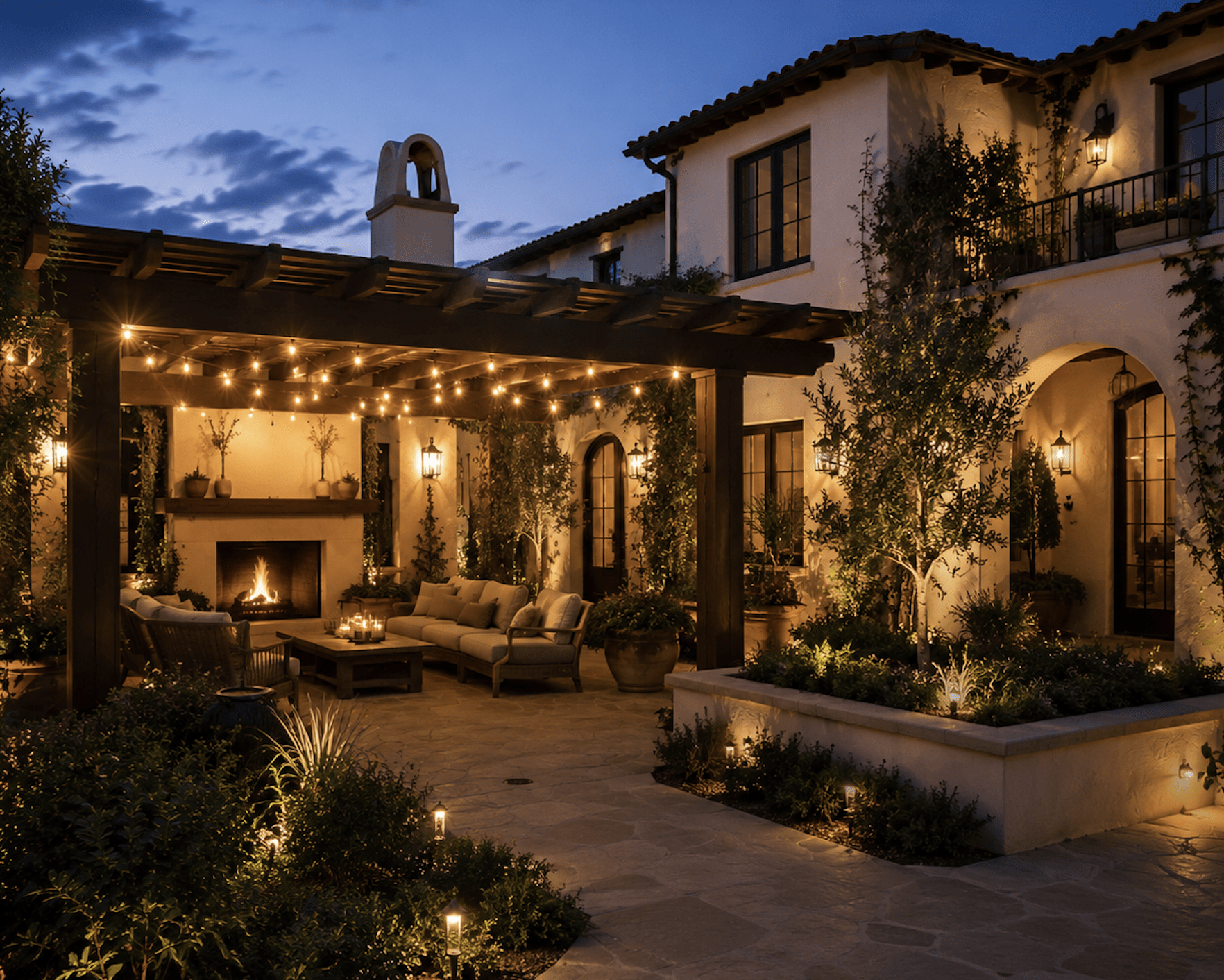
Layer 1: Ambient Lighting
Ambient lighting provides overall illumination for outdoor spaces.
This foundational layer helps establish the general mood of the landscape.
Examples include:
- Soft patio lighting
- Pergola lighting
- String lighting used strategically
- Indirect wall lighting
- Downlighting from trees
The goal isn’t brightness.
The goal is to create comfortable visibility without overwhelming the space.
Layer 2: Task Lighting
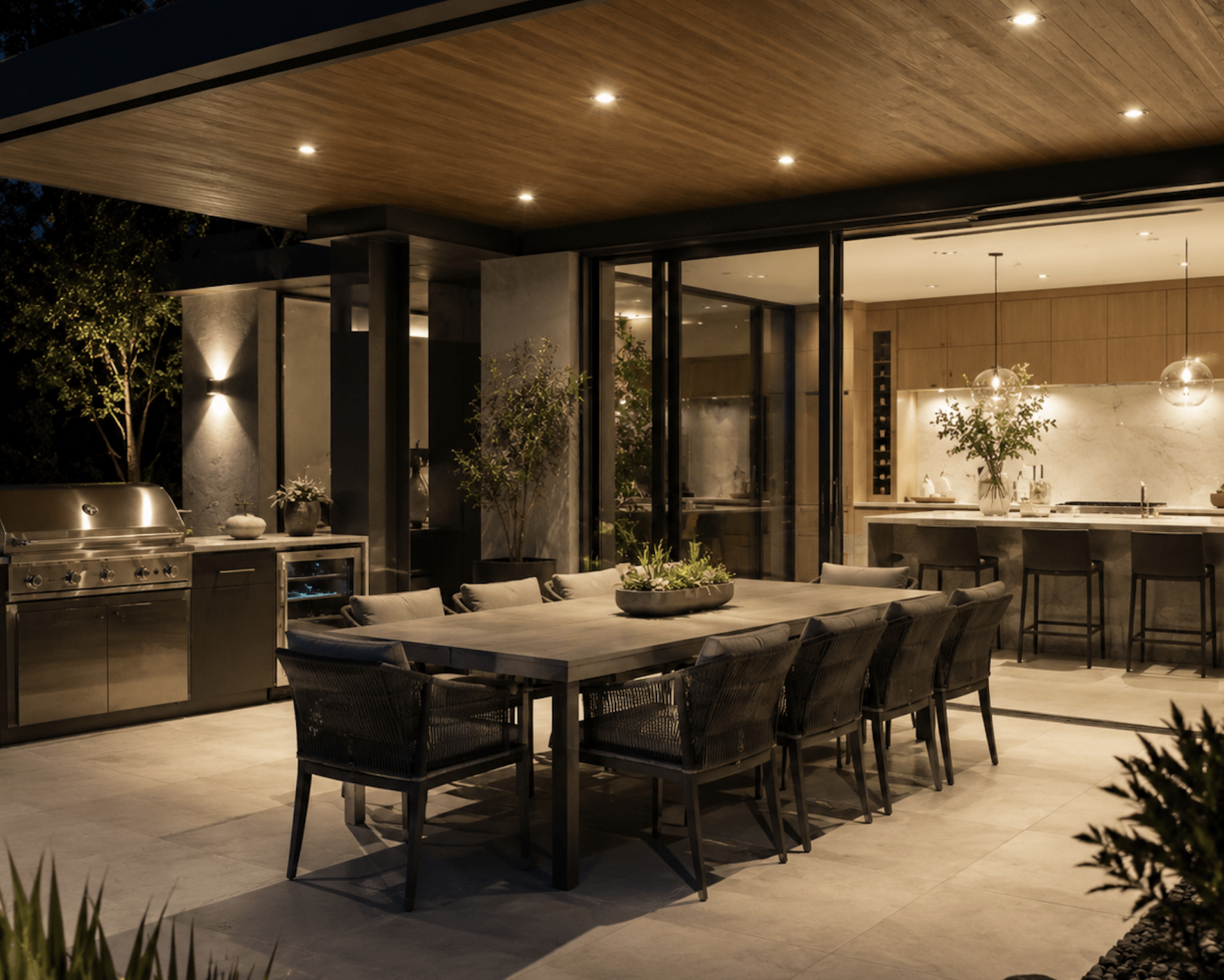
Task lighting serves a functional purpose.
These fixtures illuminate areas where people need to perform specific activities safely and comfortably.
Common examples include:
- Outdoor kitchens
- Grill stations
- Dining areas
- Steps and staircases
- Entryways
Without task lighting, even beautiful outdoor spaces can become frustrating to use after dark.
Layer 3: Accent Lighting
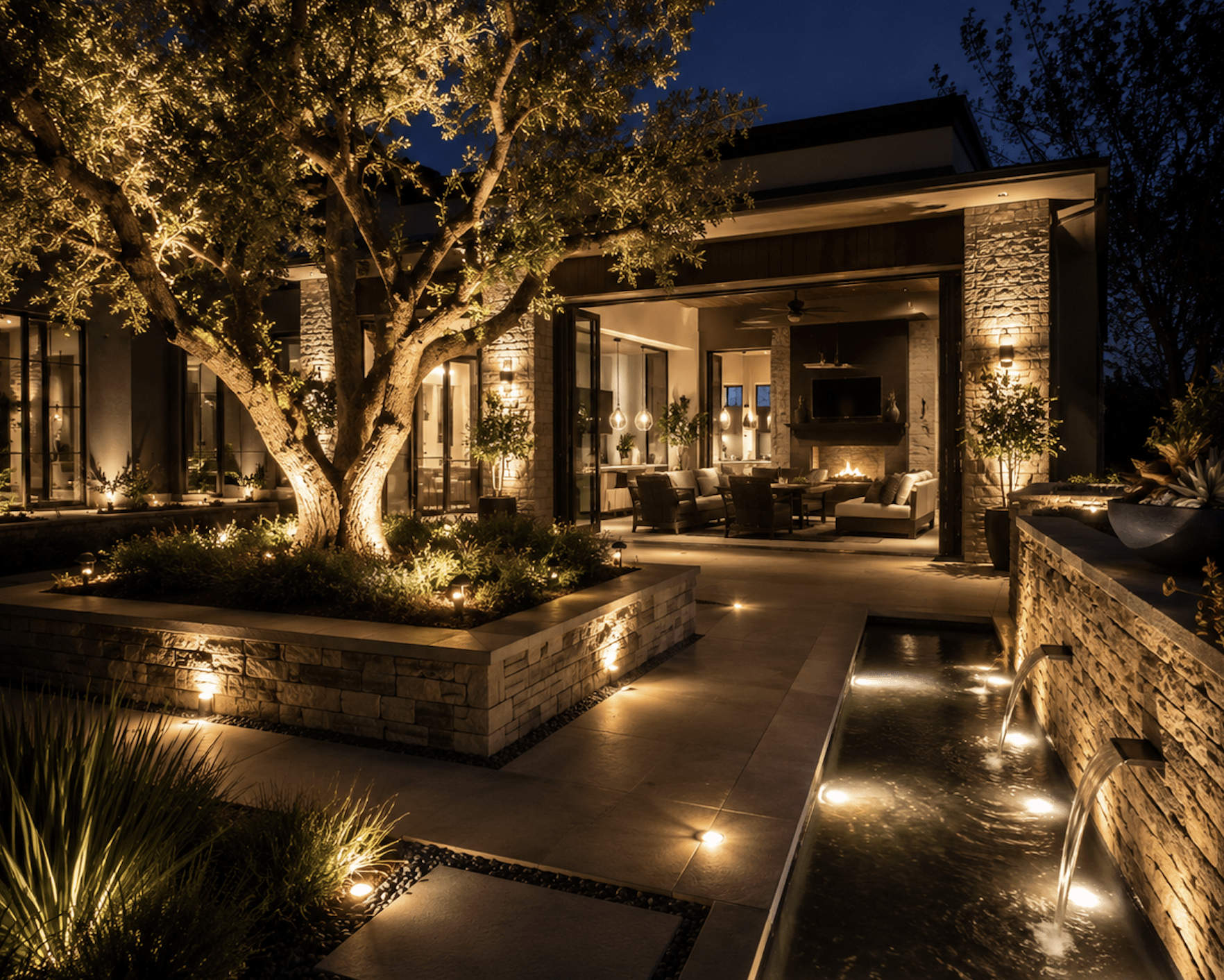
Accent lighting creates drama, focus, and visual interest.
This is where outdoor lighting starts to feel transformative.
Accent lighting may highlight:
- Feature trees
- Sculptural plants
- Water features
- Stone walls
- Architectural details
- Garden focal points
A single well-lit tree can become a nighttime centerpiece that completely changes the character of a backyard.
Layer 4: Pathway and Navigation Lighting
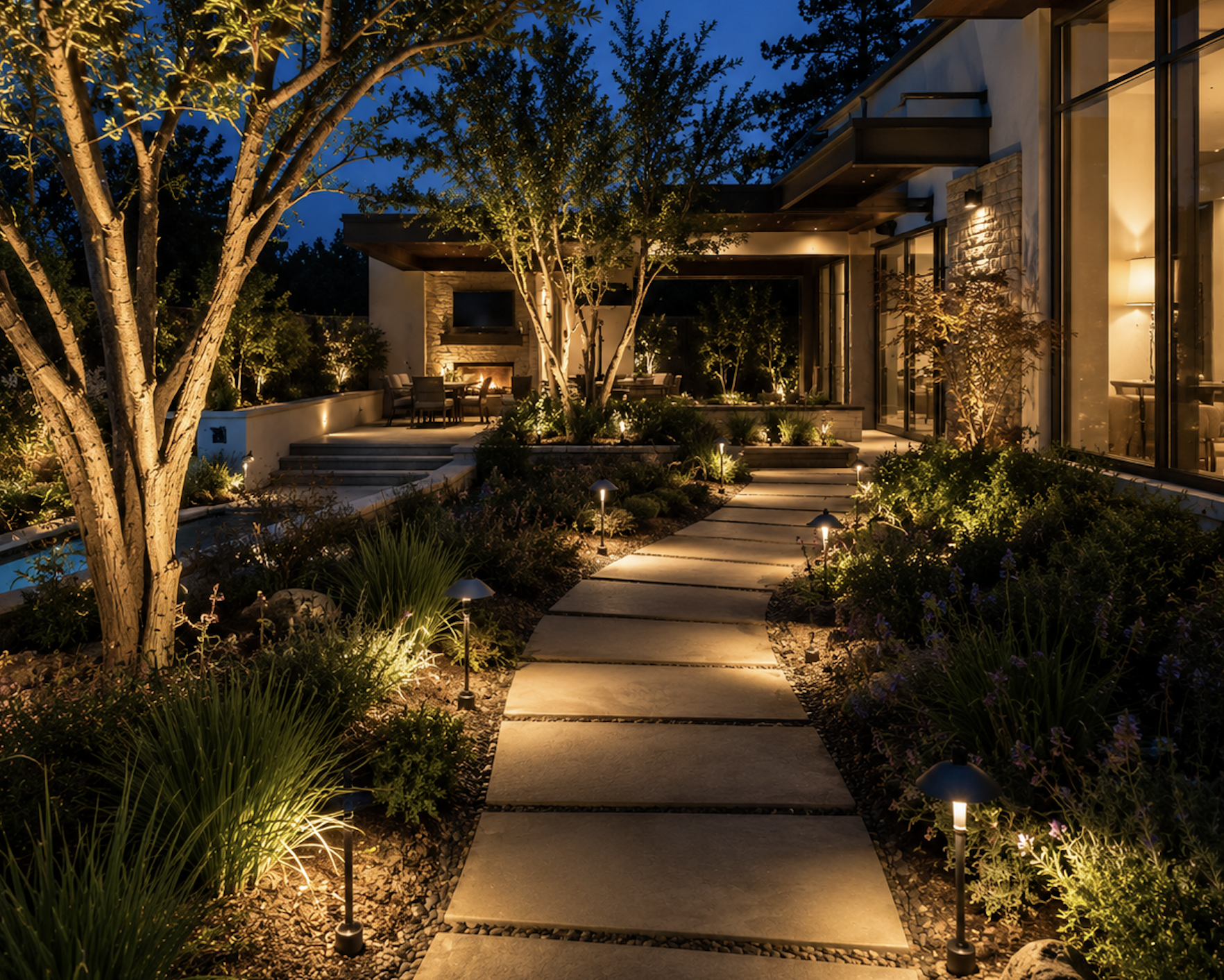
Path lights often receive little attention, but they play a critical role in both safety and aesthetics.
The best pathway lighting guides movement naturally without creating a runway effect.
Rather than placing fixtures every few feet, modern landscape lighting designs often use fewer fixtures positioned strategically to create rhythm and flow.
Creating Mood Through Light
One of the biggest mistakes homeowners make is assuming brighter is better.
In reality, excessive brightness often makes outdoor spaces feel harsh and uncomfortable.
Luxury resorts, high-end restaurants, and thoughtfully designed outdoor environments all follow a similar principle:
They prioritize atmosphere over illumination.
Warm Light Creates Comfort
Most professional landscape lighting designs use warmer colour temperatures.
Warm light tends to feel:
- Welcoming
- Relaxing
- Natural
- Timeless
Cool white lighting can sometimes feel sterile or commercial when used throughout residential landscapes.
Warm lighting complements natural materials such as:
- Stone
- Wood
- Water
- Garden plantings
- Fire features
Shadows Matter Too
Good lighting design isn’t just about what gets illuminated.
It’s also about what remains in shadow.
Contrast creates depth.
When every corner of a yard is equally bright, the landscape often appears flat and uninspiring.
Selective lighting allows focal points to stand out while maintaining a sense of mystery and softness.
Lighting and Outdoor Living
Today’s outdoor spaces function as true extensions of the home.
People are using their backyards for:
- Family dinners
- Entertaining guests
- Relaxation
- Remote work
- Evening gatherings
- Wellness activities
Lighting helps define these experiences.
For example, a seating area around a fire feature may use subtle perimeter lighting that supports conversation without competing with the fire itself.
Meanwhile, a dining space may benefit from slightly brighter overhead illumination that enhances visibility while preserving ambiance.
Safety Without Sacrificing Beauty
Safety lighting often gets treated as a purely functional requirement.
But functional doesn’t have to mean unattractive.
The most successful landscape lighting designs integrate safety features seamlessly into the overall aesthetic.
Illuminating Changes in Elevation
Steps, retaining walls, and grade changes are among the most important areas to illuminate.
Even familiar spaces can become hazardous after dark.
Subtle lighting integrated into:
- Stone steps
- Seat walls
- Retaining walls
- Deck edges
can significantly improve visibility while maintaining a refined appearance.
Making Pathways Easier to Navigate
Well-lit pathways help visitors move confidently through the landscape.
This becomes particularly important during:
- Gatherings
- Winter evenings
- Rainy conditions
- Early sunsets in autumn
Path lighting should provide guidance without creating glare.
Enhancing Security Naturally
Outdoor lighting can also contribute to security.
A thoughtfully illuminated property reduces dark, hidden areas while creating a sense of occupancy and care.
However, effective security lighting does not necessarily mean installing bright floodlights everywhere.
Layered lighting often provides better visibility while preserving the beauty of the landscape.
Outdoor Lighting Around Key Landscape Features
Different landscape elements benefit from different lighting strategies.
Patios and Outdoor Living Spaces
Patios typically require multiple lighting layers.
A well-designed patio might include:
- Ambient lighting for overall comfort
- Task lighting near cooking areas
- Accent lighting around garden beds
- Step lighting for safety
This combination allows the space to remain functional while feeling intimate.
Water Features
Water and light are natural partners.
Even subtle lighting can create stunning reflections and movement after dark.
Natural pools, ponds, waterfalls, and fountains often become entirely different experiences at night when thoughtfully illuminated.
Retaining Walls and Seat Walls
Retaining walls are often overlooked lighting opportunities.
Integrated wall lighting can:
- Define edges
- Improve safety
- Highlight craftsmanship
- Add architectural character
Seat walls become particularly inviting when softly illuminated from below or nearby.
Trees and Gardens
Mature trees often provide some of the highest visual impact in landscape lighting.
Strategically placed uplights can reveal texture, branching structure, and seasonal character.
Similarly, ornamental grasses, specimen shrubs, and perennial plantings can take on a completely new dimension after sunset.
Why Outdoor Lighting Matters More Than Most Homeowners Realize
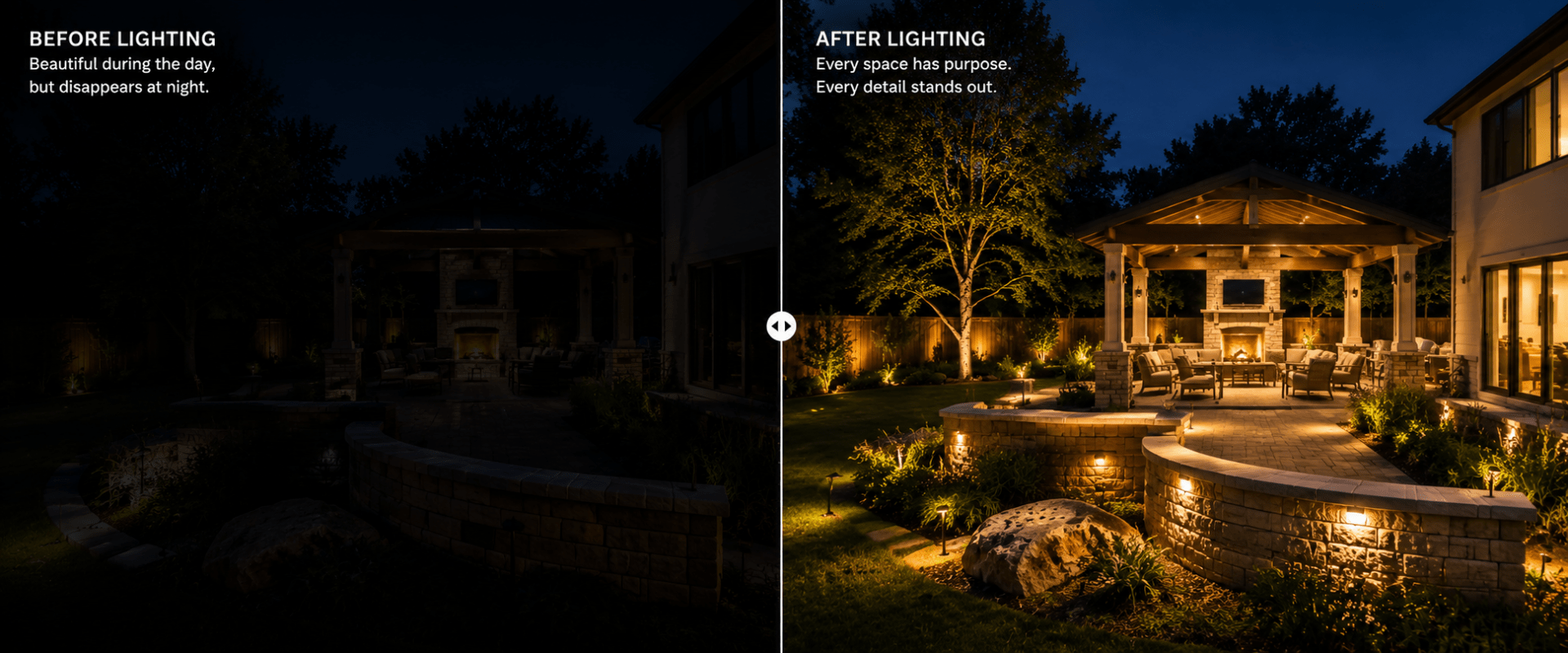
Many homeowners invest significant time and resources into creating beautiful outdoor living spaces, yet only enjoy them for a few hours each day. As soon as the sun sets, patios, gardens, pathways, and gathering areas often fade into darkness, limiting both their functionality and their impact. Thoughtful outdoor lighting changes that completely. It extends the usability of a landscape well into the evening while enhancing safety, comfort, and curb appeal. More importantly, it transforms how a space feels.
Imagine two backyards at night. One relies on a single bright floodlight mounted to the house, casting a harsh glow across the property. The other uses carefully layered lighting to softly illuminate pathways, highlight the texture of ornamental trees, define gathering spaces, and create subtle reflections on natural stone. Both landscapes are technically lit, but the experience couldn’t be more different. One simply allows you to see your surroundings; the other invites you to stay, relax, and enjoy them. The difference isn’t the amount of light—it’s how intentionally that light is used to create atmosphere, depth, and connection.
The Growing Trend Toward Intentional Lighting Design
As outdoor living continues to evolve, homeowners are becoming more intentional about how landscapes function after dark.
Rather than treating lighting as a final add-on, it is increasingly being considered during the initial design phase.
This approach allows lighting to be integrated naturally into:
- Hardscape construction
- Garden design
- Water features
- Retaining walls
- Outdoor gathering spaces
The result is a more cohesive landscape that performs beautifully day and night.

Bringing Your Landscape to Life After Sunset
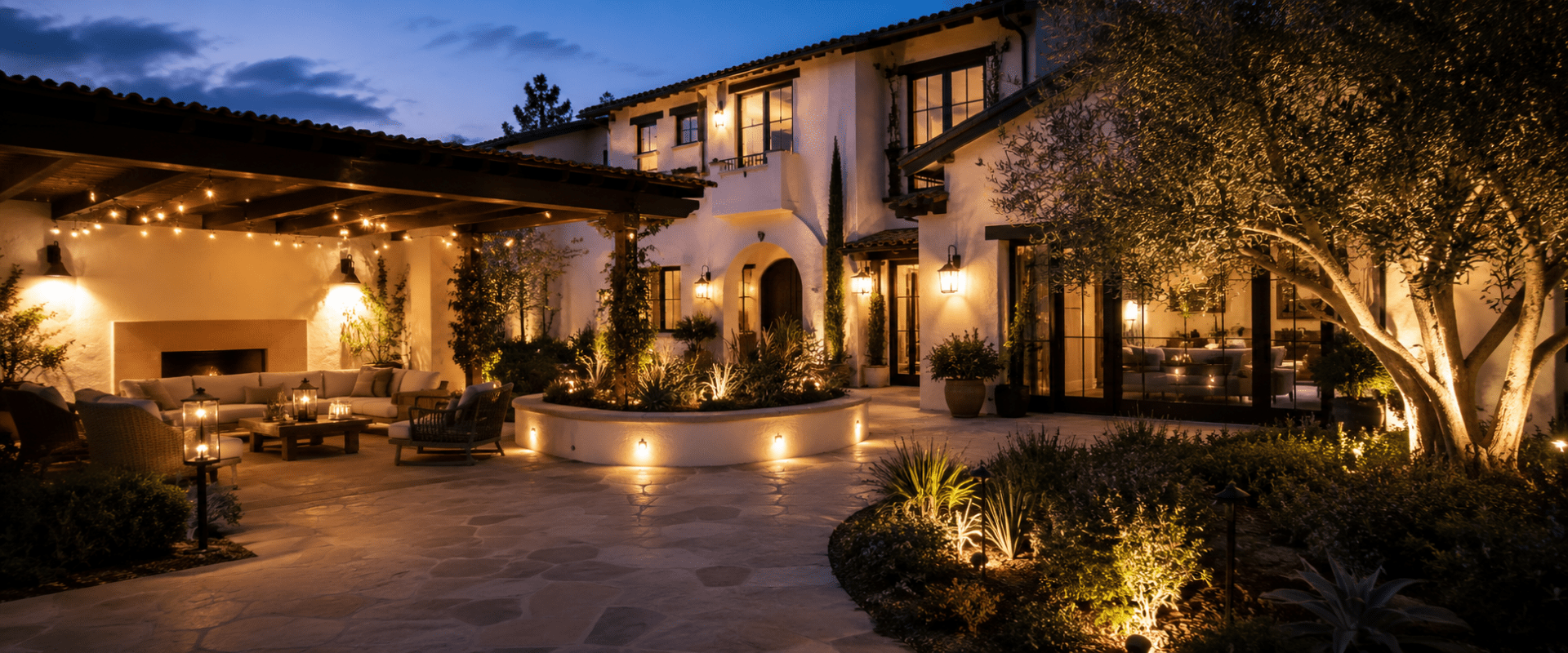
A truly exceptional landscape doesn’t disappear when the sun goes down. It evolves.
The pathways become more inviting. The gardens gain depth. The gathering spaces feel warmer. Familiar features reveal details that often go unnoticed during the day. Outdoor lighting is not simply about visibility. It’s about extending experiences, creating atmosphere, and helping people enjoy their outdoor spaces in entirely new ways. At Quiet Nature, we believe landscapes should feel intentional at every hour of the day. Whether you’re planning a new patio, a natural pool, a retaining wall, or a complete backyard transformation, thoughtful lighting can elevate every element and help your outdoor space reach its full potential long after sunset.