
Outdoor Living Maintenance:
Sealing, Joints, Drainage, and Winter Care
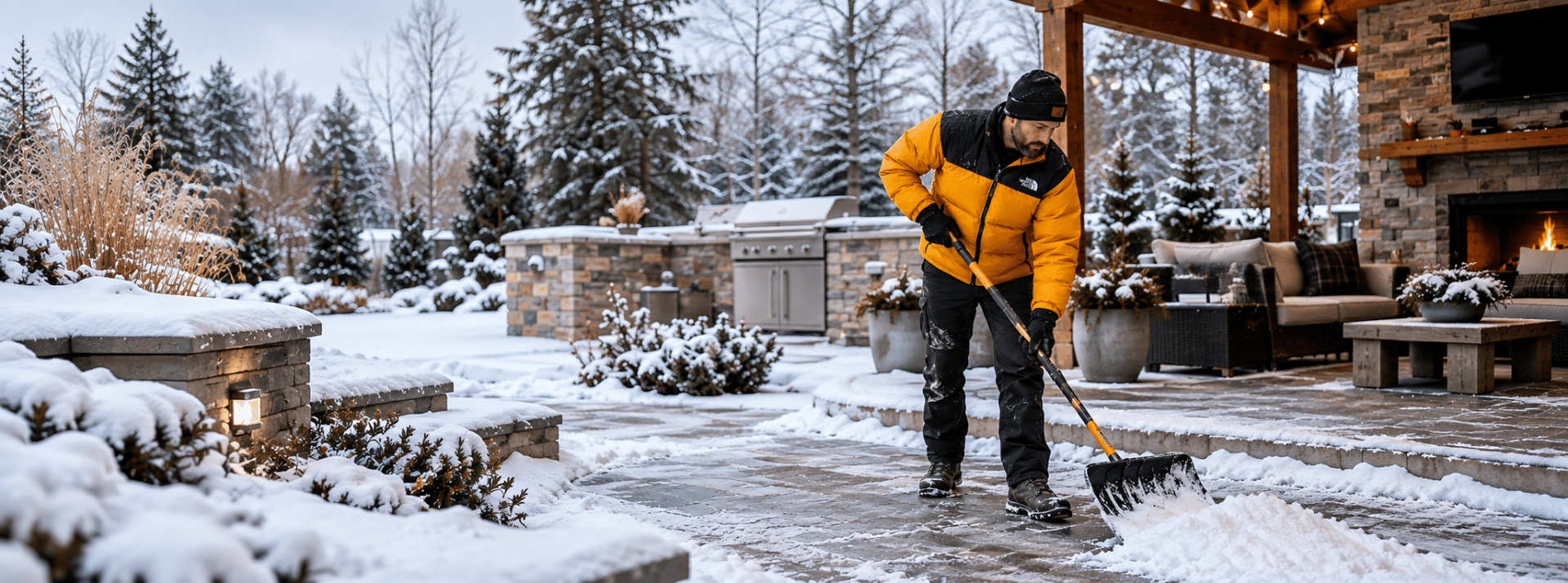
A beautiful outdoor living space is designed to withstand the elements, but that does not mean it should be left entirely to them.
Stone patios, retaining walls, outdoor kitchens, natural swimming ponds, fireplaces, pathways, and planting areas all respond to changing weather. Water moves through joints.
Soil settles. Sealants age. Freeze-thaw cycles put pressure on hardscape materials. Leaves and organic debris can collect where drainage needs to remain clear.
The good news is that outdoor living maintenance does not have to mean constantly working on your yard.
The most effective approach is usually small, intentional maintenance that protects the larger landscape investment.
For homeowners in Waterloo Region and Southern Ontario, where outdoor spaces experience wet springs, hot summers, autumn debris, and
freezing winter conditions, maintenance is particularly important. A thoughtful maintenance plan helps preserve both the appearance and performance of a custom landscape.
Why Outdoor Living Maintenance Matters
A well-designed landscape is a system. The patio connects to the drainage strategy. The drainage strategy affects the surrounding planting beds.
Joints help manage movement between hardscape materials. Grading directs water away from structures.
When one part is neglected, problems can eventually appear somewhere else.
For example, a small amount of debris blocking a drainage channel may seem insignificant. Over time, standing water can contribute to staining,
erosion, shifting materials, or ice formation during winter.
Similarly, a small joint that begins to deteriorate may allow water to penetrate beneath a paved surface. In a climate with repeated
freezing and thawing, that moisture can become part of a much larger problem.
Regular outdoor living maintenance helps homeowners identify these issues while they are still manageable.
The areas worth watching include:
- Paver and stone joints
- Patio and walkway surfaces
- Drainage channels and catch basins
- Retaining walls
- Outdoor kitchens and countertops
- Natural stone features
- Fireplaces and masonry
- Pool and natural pond edges
- Planting beds and lawn transitions
- Irrigation and water-management areas
The goal is not to make everything look untouched. It is to keep the landscape functioning as it was intended.
Sealing Outdoor Stone and Hardscape: When Is It Necessary?
Sealing is often treated as a routine step in outdoor maintenance, but not every landscape material needs to be sealed.
Natural stone, concrete products, porcelain, and other hardscape materials have different characteristics. Some are naturally resistant to
moisture and staining, while others can benefit from a properly selected penetrating sealer.
The important question is not simply, “Should I seal my patio?”
It is:
What material is it, what is it exposed to, and what are you trying to protect it from?
What sealing can help with
Depending on the material and product used, an appropriate sealer may help reduce:
- Water absorption
- Oil and food staining
- Organic staining from leaves and soil
- Weather-related discoloration
- Surface staining around outdoor kitchens and dining areas
A penetrating sealer can sometimes provide protection without creating a visibly glossy surface. This can be particularly appropriate for natural-looking
landscapes where maintaining the character of the stone is important.
Sealing is not a substitute for maintenance
Even a properly sealed patio still needs cleaning and inspection.
A sealer can wear down over time, particularly in areas exposed to frequent foot traffic, sunlight, moisture, or outdoor cooking. Applying additional product without first understanding the existing material and sealer can also create problems.
Before resealing, consider:
- What material is being sealed?
- Was it previously sealed?
- What product was originally used?
- Is the surface clean and completely dry?
- Are there existing cracks, deteriorating joints, or drainage problems?
The right maintenance strategy begins with understanding the landscape rather than simply adding another layer of product.
Why Hardscape Joints Deserve More Attention
Joints are easy to overlook because they occupy relatively little visual space. Structurally, however, they can play an important role in how a hardscape performs.
Pavers and stone surfaces experience movement caused by temperature changes, moisture, settlement, and everyday use. Jointing materials help stabilize individual pieces and reduce unwanted movement.
When joints begin to erode, wash out, crack, or become heavily colonized by weeds, it is worth investigating.
Signs your joints may need attention
Look for:
- Sand or jointing material collecting at the edges of the patio
- Noticeable gaps between pavers
- Loose or rocking stones
- Persistent weed growth
- Water washing material out of joints
- Areas that appear to be sinking
- Cracked mortar or deteriorating joints around masonry
One important distinction is that joint deterioration and settlement are not necessarily the same problem.
Replacing joint material may improve the appearance, but if the underlying base has shifted or drainage is causing erosion, the surface problem can return.
That is why experienced landscape maintenance should look beyond what is immediately visible.
Drainage: The Quiet Infrastructure of a Healthy Landscape
Drainage is one of the least glamorous parts of an outdoor living space, but it can have an enormous effect on its longevity.
A beautiful patio that does not drain properly can become a maintenance headache. Water may collect near doors, move toward retaining walls,
wash out planting beds, or remain trapped beneath hardscape.
Effective landscape drainage is not necessarily about getting rid of water as quickly as possible. It is about directing water intentionally.
What to inspect after heavy rain
Walk through your property after a significant rainfall and look for:
- Standing water on patios
- Water collecting beside foundations
- Erosion around downspouts
- Mulch or soil washing onto hardscape
- Water pooling at the bottom of steps
- Overflowing catch basins
- Saturated areas that remain wet long after surrounding areas dry
A single puddle does not automatically mean something is wrong. But recurring pooling in the same location deserves attention.
Drainage and winter maintenance are connected
Water management becomes particularly important as temperatures drop.
Water that enters cracks, joints, porous materials, or poorly drained areas can freeze and expand. Repeated freeze-thaw cycles can place stress on hardscape and masonry.
That makes autumn a valuable time to inspect drainage before winter arrives.
Preparing Outdoor Living Spaces for Winter
Winter preparation in Southern Ontario is not simply about putting furniture away.
The goal is to reduce exposure to avoidable moisture, debris, and freeze-thaw stress while making spring maintenance easier.
1. Clear drainage systems
Before freezing temperatures arrive, inspect and clear:
- Catch basins
- Drain grates
- Channel drains
- Downspout discharge areas
- Surface drainage paths
Leaves are particularly important in autumn because they can accumulate quickly and restrict water movement.
2. Inspect hardscape joints
Look for deteriorating joints before winter.
If joint material is missing or water is visibly washing through a particular area, addressing the problem before freeze-thaw conditions can help prevent further deterioration.
3. Clean outdoor cooking areas
Outdoor kitchens and entertaining spaces often collect grease, food residue, leaves, and other organic material.
Give countertops, cooking surfaces, cabinets, and surrounding hardscape a thorough seasonal cleaning using methods appropriate for each material.
4. Protect what actually needs protection
Not every outdoor feature should be wrapped or covered.
Some materials perform perfectly well outdoors when properly installed. Others may benefit from specific winter protection recommended by the manufacturer or landscape professional.
Avoid trapping moisture underneath impermeable covers where ventilation is important.
5. Manage leaves thoughtfully
Leaves do not necessarily need to disappear from every part of a natural landscape.
In planting beds, they can contribute organic matter and provide habitat. On patios, steps, drainage areas, and other high-use surfaces, however, a
ccumulated leaves can become slippery and block water movement.
The best approach is selective rather than excessive cleanup.
Natural Pools and Water Features Need Seasonal Thinking
Outdoor water features require their own maintenance considerations.
For a conventional pool, winterization may involve specific equipment and chemical procedures. Natural swimming ponds and ecological water features operate
differently because they are designed around biological systems, plants, filtration, and water movement.
Maintenance should therefore be based on the specific design.
For a natural swimming pond, seasonal considerations can include:
- Removing excessive leaf accumulation
- Checking water circulation
- Inspecting pumps and filtration components
- Managing aquatic and marginal plants
- Keeping surrounding drainage functioning
- Monitoring the transition between hardscape and water
The surrounding landscape matters just as much as the water itself. Soil, stone, planting beds, and drainage all interact with the pond environment.
A Practical Outdoor Living Maintenance Schedule
Instead of waiting until something breaks, homeowners can use a simple seasonal inspection routine.
Spring
Focus on recovery from winter.
- Inspect patios and walkways
- Check for movement or settlement
- Examine joints
- Clean drainage systems
- Look for erosion
- Inspect masonry and outdoor structures
- Assess planting beds and lawn transitions
Summer
Focus on use and water management.
- Monitor drainage after storms
- Clean outdoor kitchen areas
- Remove weeds from hardscape
- Check water features
- Watch for areas of excessive soil erosion
- Inspect heavily trafficked surfaces
Fall
Focus on winter preparation.
- Clear drainage systems
- Remove leaves from high-use surfaces
- Inspect joints
- Clean outdoor living areas
- Review stone and masonry condition
- Prepare water features according to their specific design
Winter
Focus on observation rather than unnecessary work.
After major snow or freeze-thaw events, keep an eye on:
- Ice accumulation
- Drainage areas
- Shifting or cracked surfaces
- Snow storage locations
- Damage caused by falling branches or heavy weather
This seasonal approach turns maintenance into a manageable routine instead of a springtime surprise.
When Maintenance Becomes a Landscape Problem
Some issues are straightforward maintenance. Others indicate that the original landscape system may need adjustment.
Consider professional assessment when you notice:
- Repeated standing water
- Continual joint erosion
- Pavers that repeatedly settle
- Retaining wall movement
- Significant cracking
- Drainage that overwhelms planting beds
- Water moving toward buildings
- Persistent erosion around a pond or water feature
If the same issue keeps returning after repairs, the solution may not be another repair. It may require addressing the underlying grading, drainage,
base preparation, or material selection. That distinction can save homeowners time and money over the long term.
Maintaining a Landscape Without Losing Its Character
The best outdoor living spaces are not meant to feel sterile.
A thoughtfully designed garden should evolve. Stone develops character. Plants mature. Natural materials weather. Seasonal changes become part of the experience.
Maintenance should protect the landscape without stripping away what makes it feel natural.
For a Quiet Nature project, that might mean maintaining a natural swimming pond while allowing surrounding planting to develop organically. It might mean preserving the texture of natural stone rather than making it look artificially new. Or it could mean improving drainage while keeping the landscape visually integrated with the garden.
Good maintenance is not about freezing a landscape in time.
It is about helping it age well.
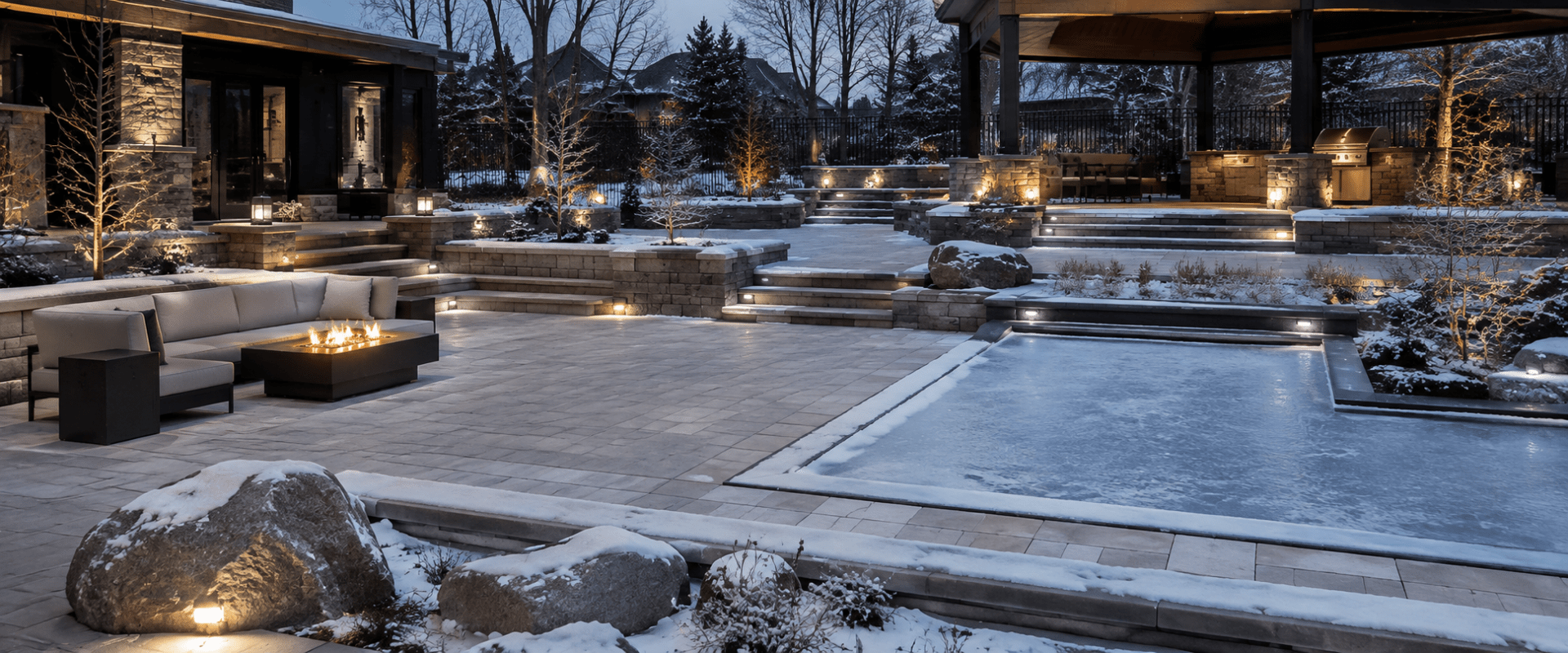
Protecting the Outdoor Spaces You Have Invested In
A custom landscape is more than a collection of beautiful materials. It is a carefully connected system of stone, water, planting, grading, drainage, structures, and living spaces.
The best maintenance strategy respects all of those relationships. Sealing when appropriate. Keeping joints healthy. Directing water intentionally. Preparing outdoor features for winter. Watching how the landscape responds to changing seasons. These small decisions can help a backyard remain functional, welcoming, and beautiful for years to come.
At Quiet Nature, we believe outdoor spaces should be designed with both beauty and longevity in mind. From custom hardscaping and natural swimming ponds to thoughtful planting and complete backyard transformations, our landscapes are created to work with the property and the way you want to live in it.
If your outdoor space needs seasonal maintenance, drainage improvements, or a more thoughtful long-term plan, Quiet Nature can help you understand what your landscape needs now and what will help it thrive in the seasons ahead.