
Patio Design Mistakes That Make Spaces Feel Awkward
(and How to Avoid Them)
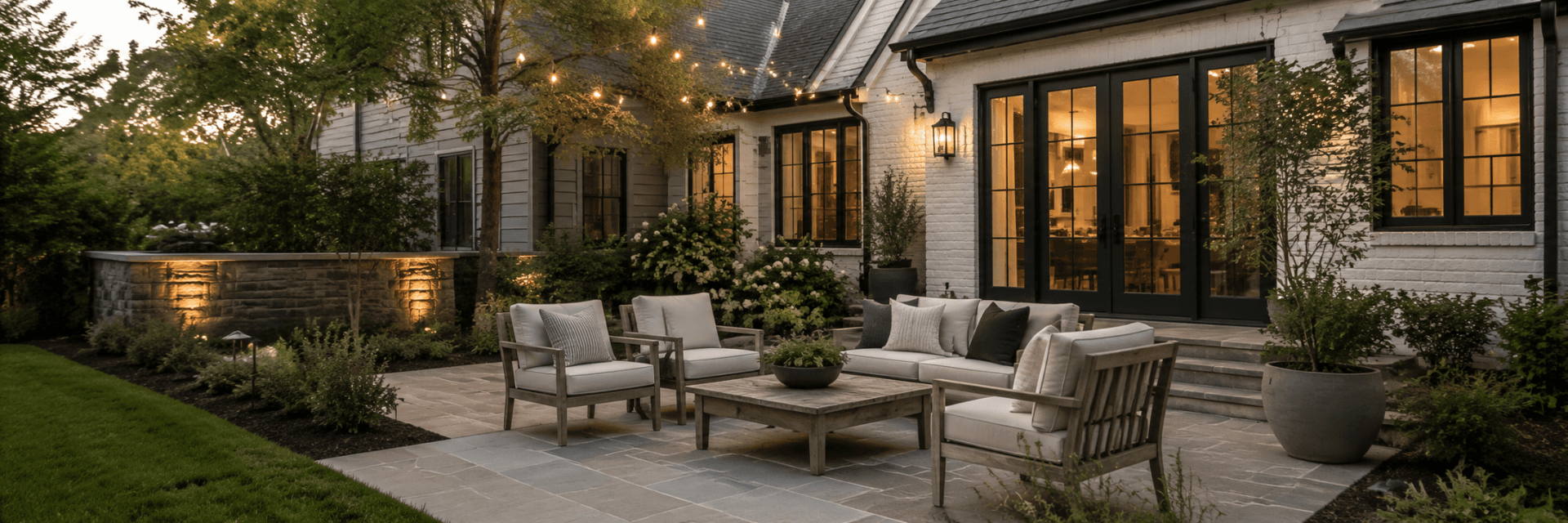
There’s a moment that happens more often than you’d think. You step into a newly finished backyard, beautiful materials,
fresh plantings, maybe even a high-end patio, and yet… something feels off. The space doesn’t invite you to sit. Conversations feel slightly disconnected.
Movement is awkward. It looks right, but it doesn’t feel right. This is one of the most common frustrations homeowners face with patio design.
And it’s rarely about budget or effort. It’s about subtle design missteps that disrupt how a space flows, functions, and ultimately—how it makes you feel.
At Quiet Nature, we believe a patio should feel like a natural extension of your home and your life. Not just visually appealing, but intuitively comfortable.
Let’s walk through the most common patio design mistakes that make spaces feel awkward—and how to design something that truly works.
1. Designing Without a Clear Purpose
The Mistake:
A patio that tries to do everything often ends up doing nothing well.
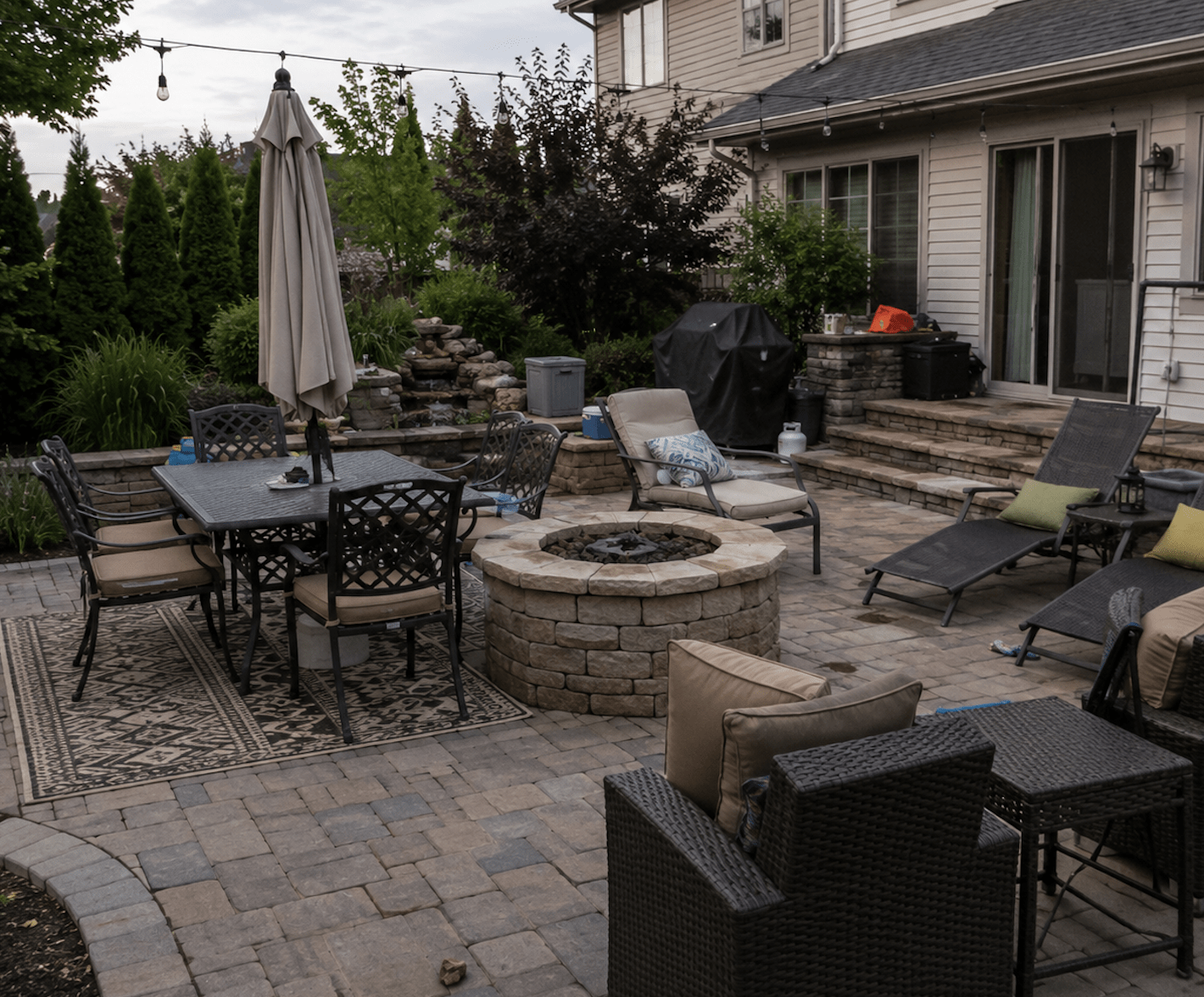
We see this frequently: a dining table squeezed beside a fire feature, with a couple of lounge chairs floating nearby—no clear zones, no intentional layout.
Why It Feels Awkward:
Your brain instinctively looks for purpose in a space. When that’s unclear, the space feels unsettled and underused.
How to Avoid It:
Start with one simple question:
“What do we actually want to do out here?”
For most homeowners, the answer falls into a few core uses:
- Relaxing quietly
- Hosting friends and family
- Dining outdoors
- Watching kids play
- Enjoying a water feature or garden
From there, design intentional zones, not just a collection of features.
Example:
A recent project included:
- A sunken lounge area for evening fires
- A separate dining terrace near the kitchen
- A quiet garden bench tucked into planting
Each space had a purpose—and the result felt effortless.
2. Poor Scale and Proportion
The Mistake:
Furniture and patio sizes are often mismatched.
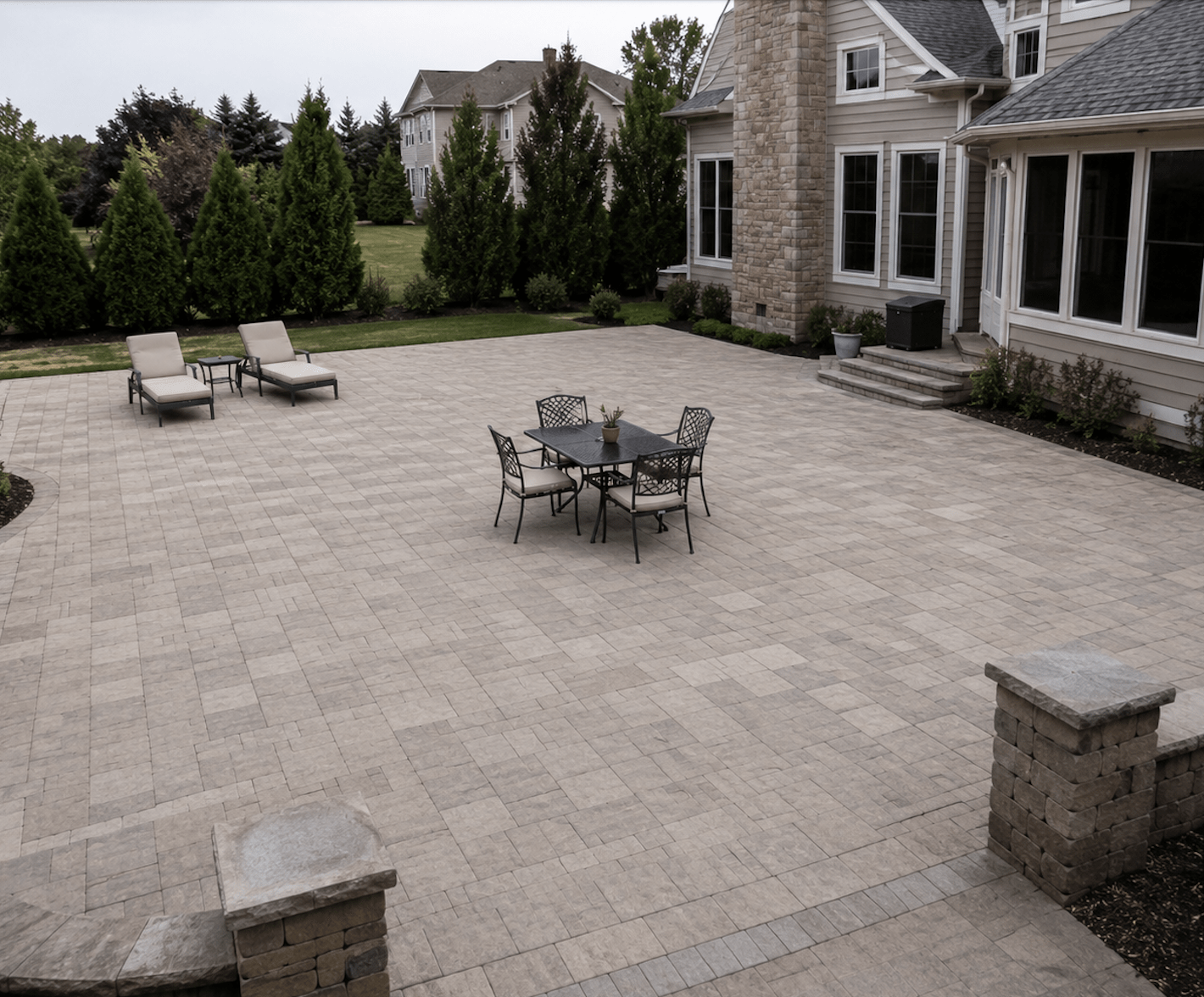
- A large patio with tiny furniture feels empty and disconnected
- A small patio packed with oversized pieces feels cramped
Why It Feels Awkward:
Scale affects how your body moves and how your eyes read the space. When proportions are off, nothing feels grounded.
How to Avoid It:
Think in terms of human comfort and spatial balance:
- Allow at least 36–48 inches for walkways
- Ensure seating areas feel intimate—not isolated
- Match furniture size to the patio footprint
A Simple Rule:
If people have to shift chairs every time someone walks by, the layout isn’t working.
3. Ignoring Natural Flow and Movement
The Mistake:
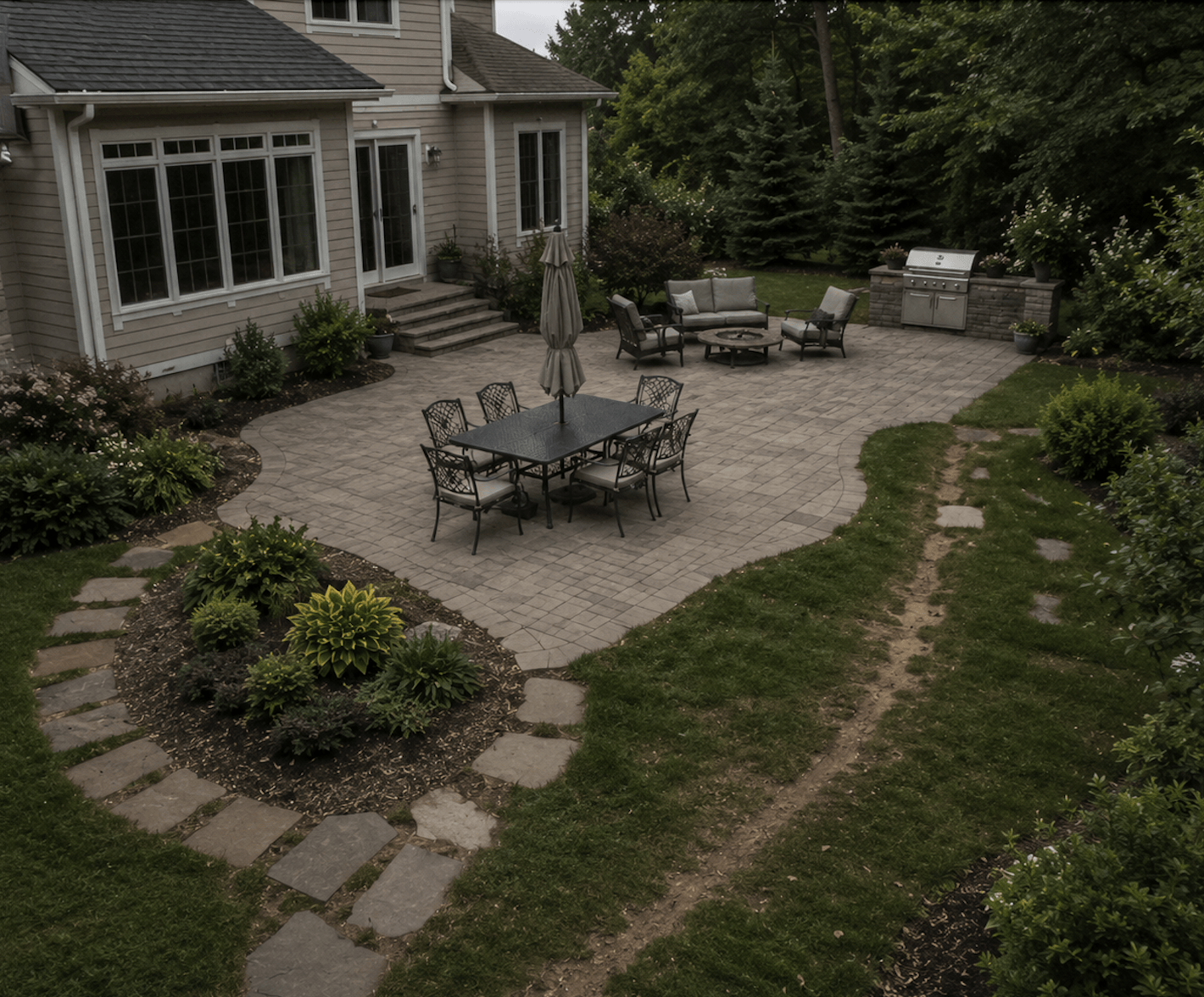
Designing a patio as a static “island” instead of part of a larger landscape.
This often results in:
- Awkward entry points
- Disconnected pathways
- People cutting across planting beds
Why It Feels Awkward:
Movement should feel intuitive. When it doesn’t, people subconsciously feel tension in the space.
How to Avoid It:
Design for natural circulation patterns.
Ask:
- How do people move from the house to the patio?
- Where do they go next?
- What paths will they naturally take?
Then support those movements with:
- Defined walkways
- Gradual transitions
- Clear visual cues
At Quiet Nature, we often say:
“If you have to think about how to move through a space, it’s already broken.”
4. Overcrowding with Features
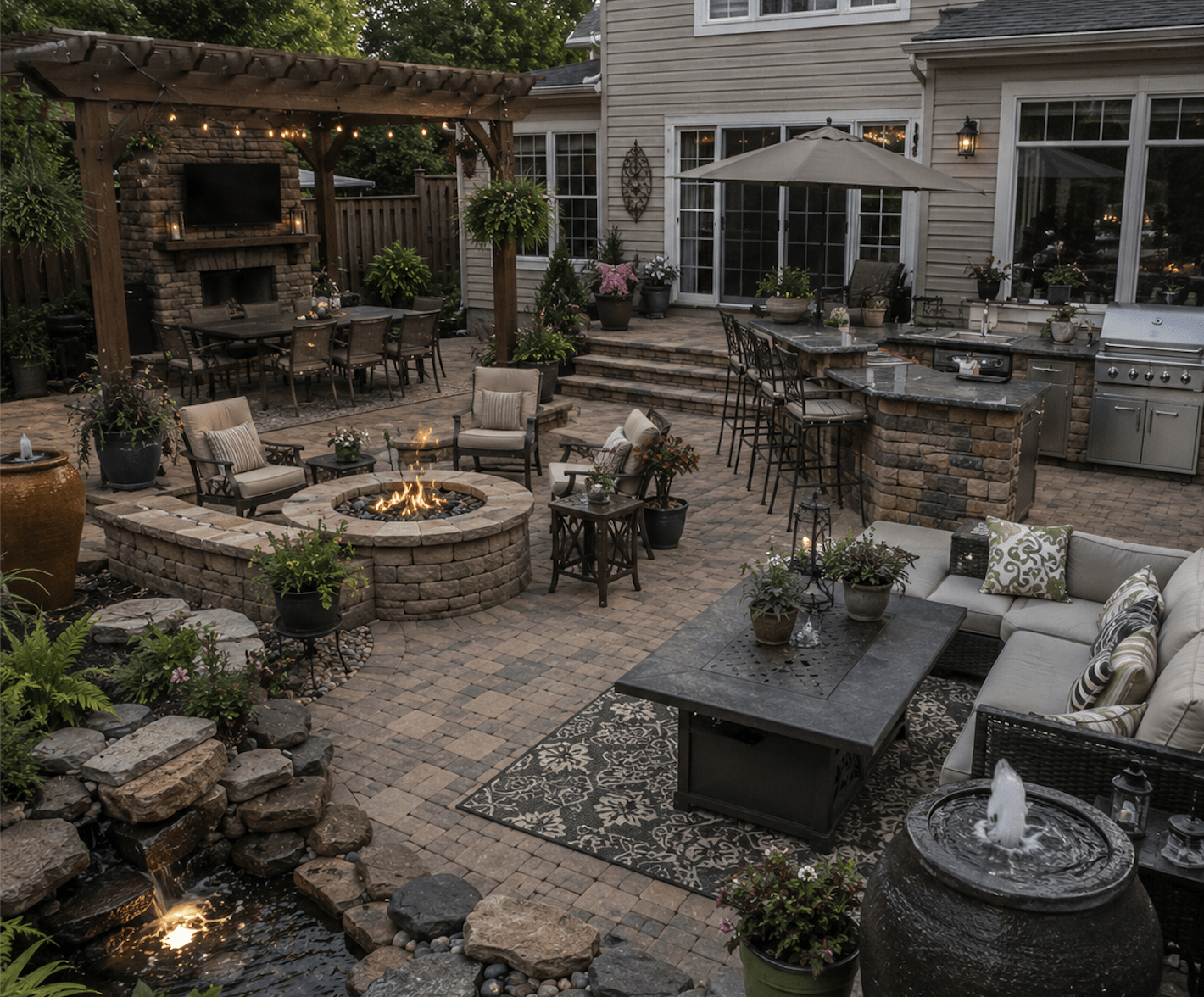
The Mistake:
Trying to include everything:
- Fire pit
- Outdoor kitchen
- Pergola
- Water feature
- Dining area
- Lounge Seating
Why It Feels Awkward:
Too many elements compete for attention. The space becomes visually noisy and emotionally overwhelming.
How to Avoid It:
Embrace restraint.
Not every feature needs to live on the patio itself. Some can be:
- Offset into the garden
- Positioned along a pathway
- Layered into the broader landscape
Design Insight:
Simplicity creates clarity.
Clarity creates comfort.
A well-designed patio often feels calm—not crowded.
5. Lack of Defined Edges
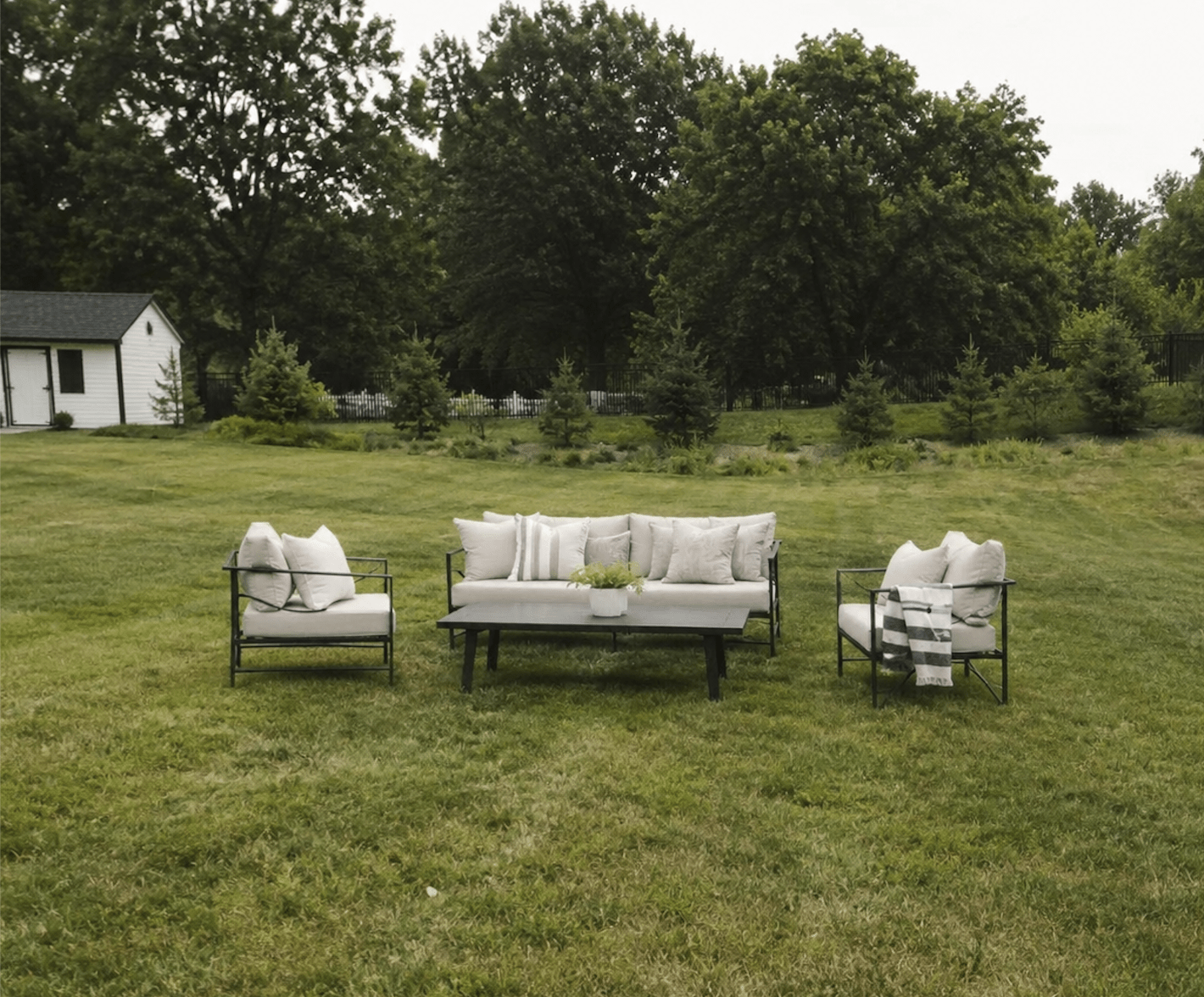
The Mistake:
A patio that just “floats” in the yard without clear boundaries.
Why It Feels Awkward:
Without edges, the space lacks definition. It feels temporary—like furniture placed in the middle of a lawn.
How to Avoid It:
Anchor the space using natural boundaries:
- Planting beds
- Low walls
- Changes in elevation
- Strategic lighting
- Built structures (like pergolas or screens)
These elements don’t need to be heavy or formal. Even soft, layered planting can create a sense of enclosure.
Real-World Insight:
The most comfortable outdoor spaces often feel slightly enclosed—like a room without walls.
6. Poor Relationship to the House
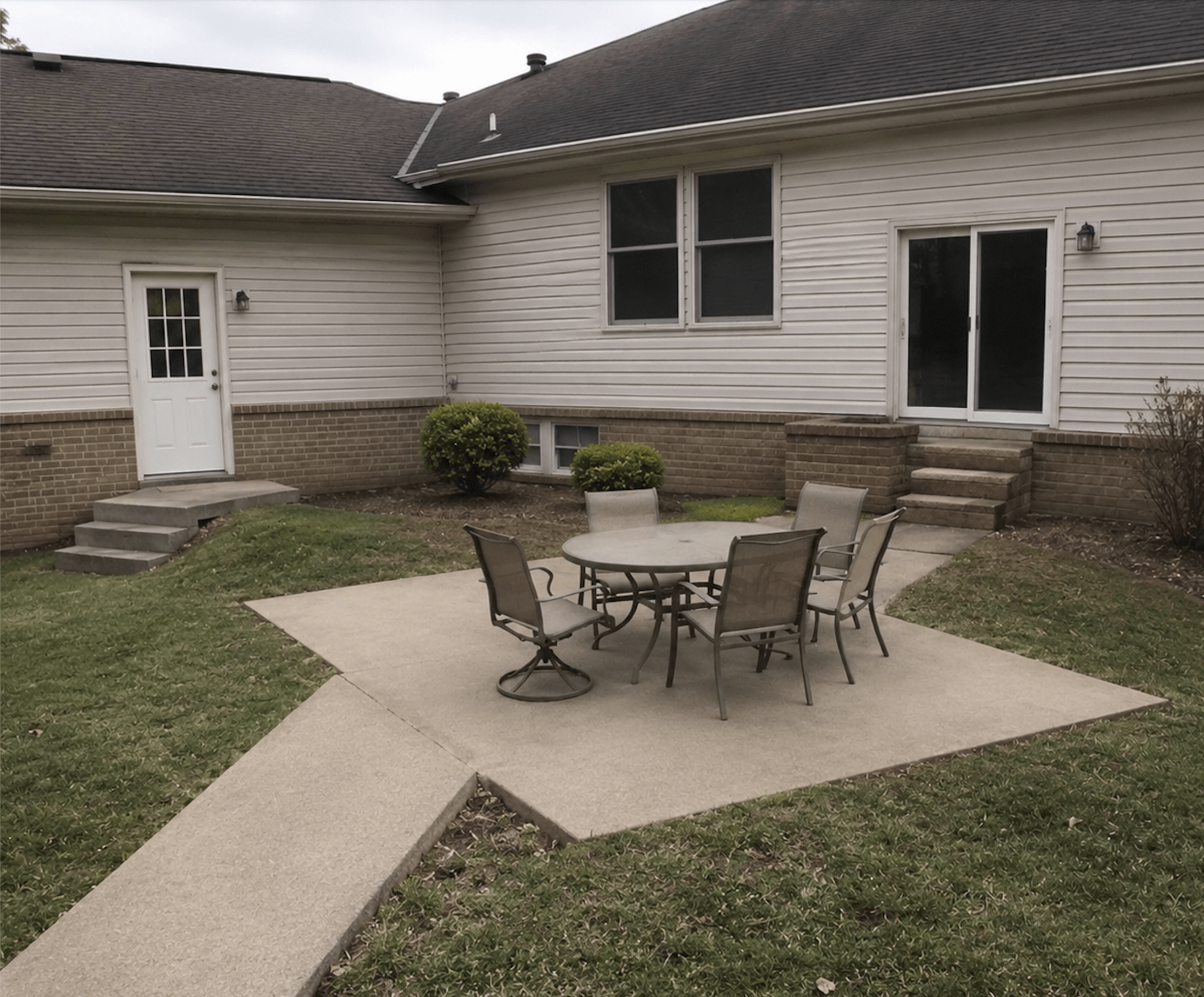
The Mistake:
A patio that doesn’t connect logically to the home.
Common issues:
- Misaligned doors and pathways
- Awkward step-downs
- No visual or functional connection
Why It Feels Awkward:
Your patio is an extension of your home. If the transition feels abrupt or disconnected, the entire space suffers.
How to Avoid It:
Design the patio as part of the home’s architecture:
- Align with doorways and sightlines
- Match or complement materials
- Maintain consistent elevation when possible
According to broader outdoor living trends, homeowners increasingly want their backyard to feel like a seamless continuation of indoor space—not a separate zone.
At Quiet Nature, we approach this as one continuous living experience, not two separate environments.
7. Ignoring Sun, Shade, and Microclimate
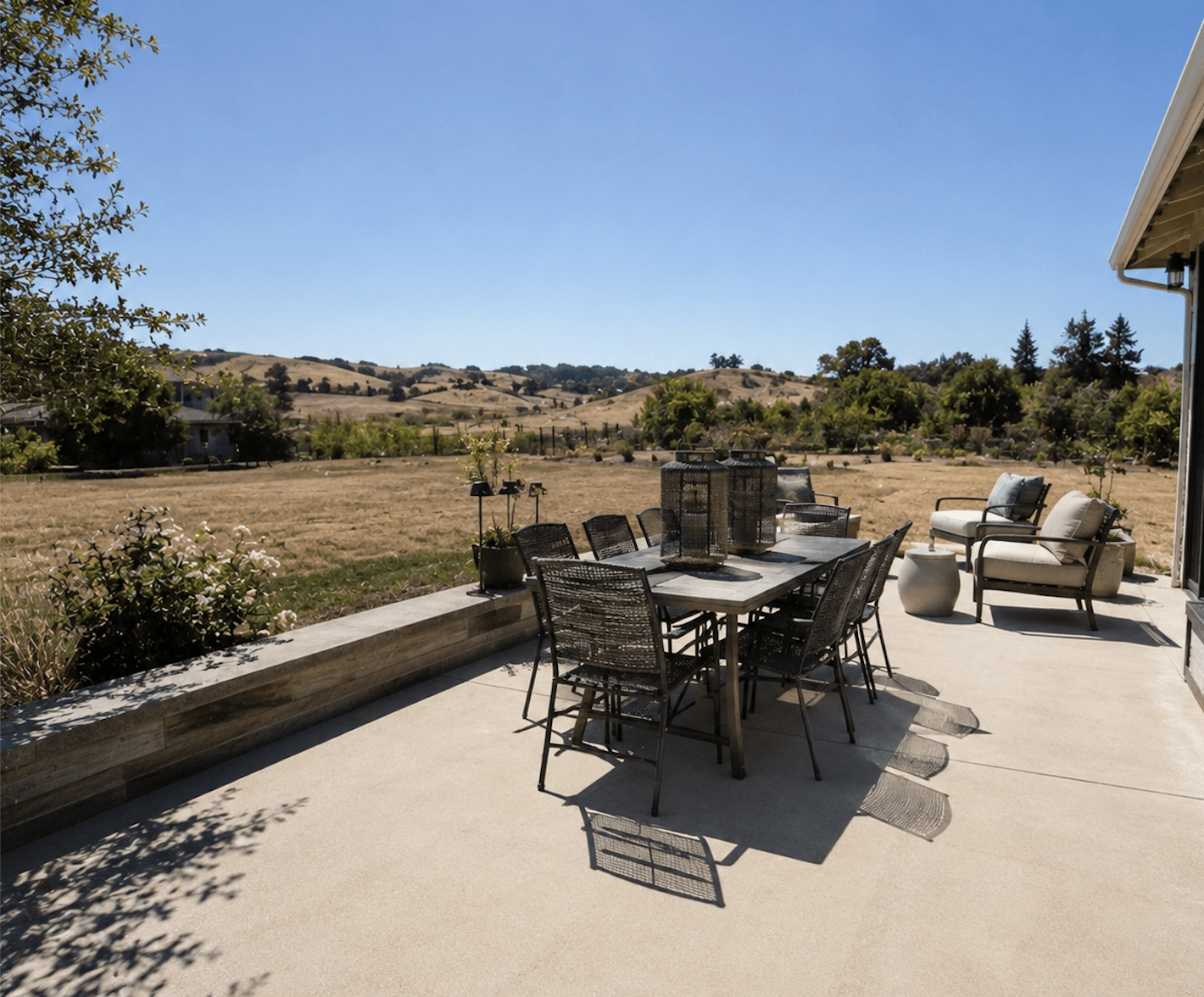
The Mistake:
Placing seating or dining areas without considering sun exposure.
Why It Feels Awkward:
A space that’s too hot, too windy, or too exposed won’t be used—no matter how beautiful it looks.
How to Avoid It:
Study how the space behaves throughout the day:
- Where does the sun hit in the afternoon?
- Where does shade naturally occur?
- How does wind move through the yard?
Then design accordingly:
- Use pergolas, trees, or structures for shade
- Position seating for comfort during peak hours
- Create sheltered zones when needed
Example:
A west-facing patio might benefit from:
- Overhead shade
- Taller planting on the sun-facing edge
- Materials that don’t retain excessive heat
8. Choosing Materials Without Context
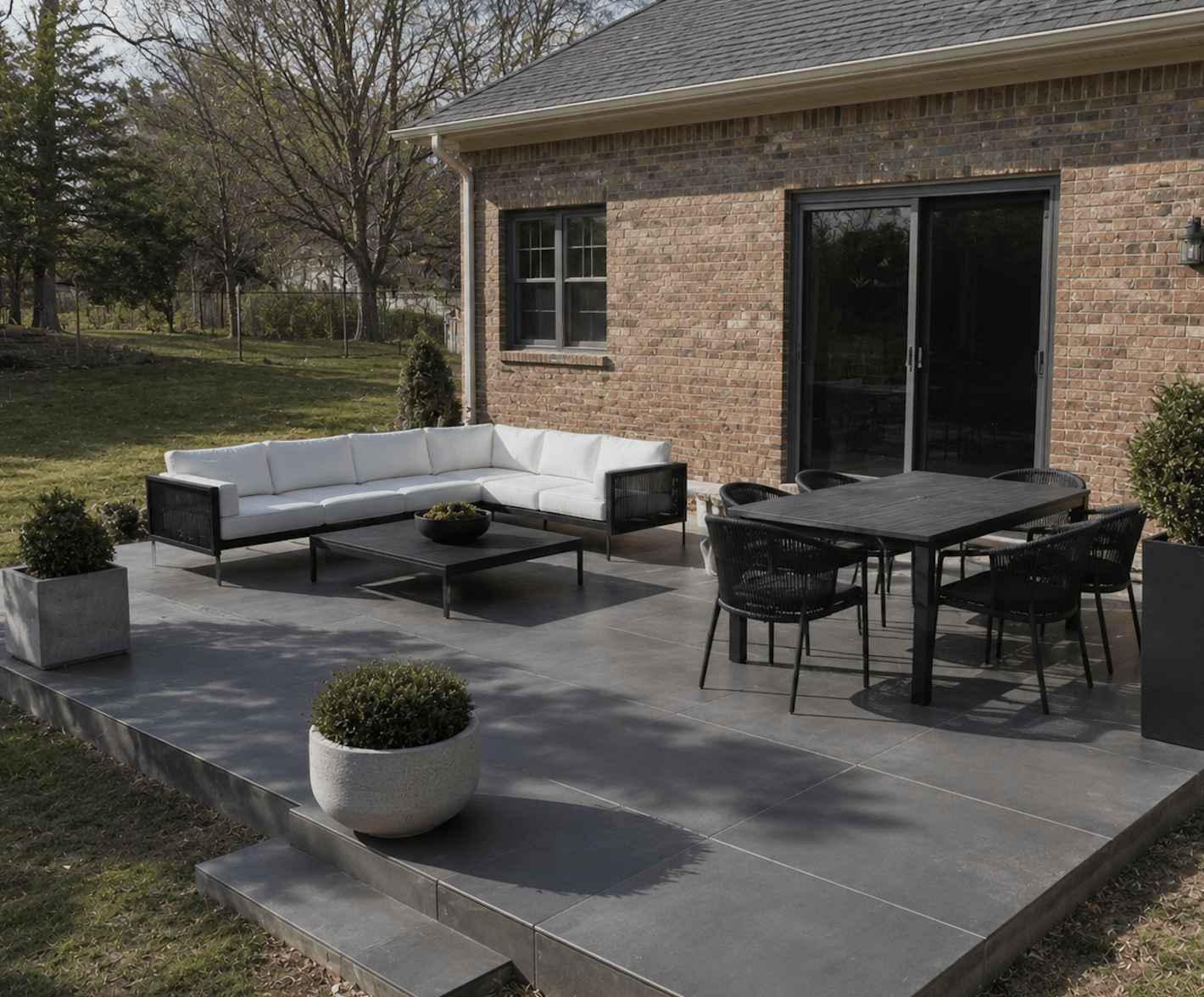
The Mistake:
Selecting materials based on trends instead of the home and landscape.
Why It Feels Awkward:
Even high-end materials can feel out of place if they don’t belong to the setting.
How to Avoid It:
Choose materials that feel natural to the environment:
- A stone that reflects local geology
- Wood that weathers gracefully
- Finishes that complement the home
At Quiet Nature, we prioritize materials that feel timeless—spaces that could look just as appropriate 20 years from now as they do today.
Because trends fade. But good design endures.
9. Forgetting About the “In-Between” Spaces
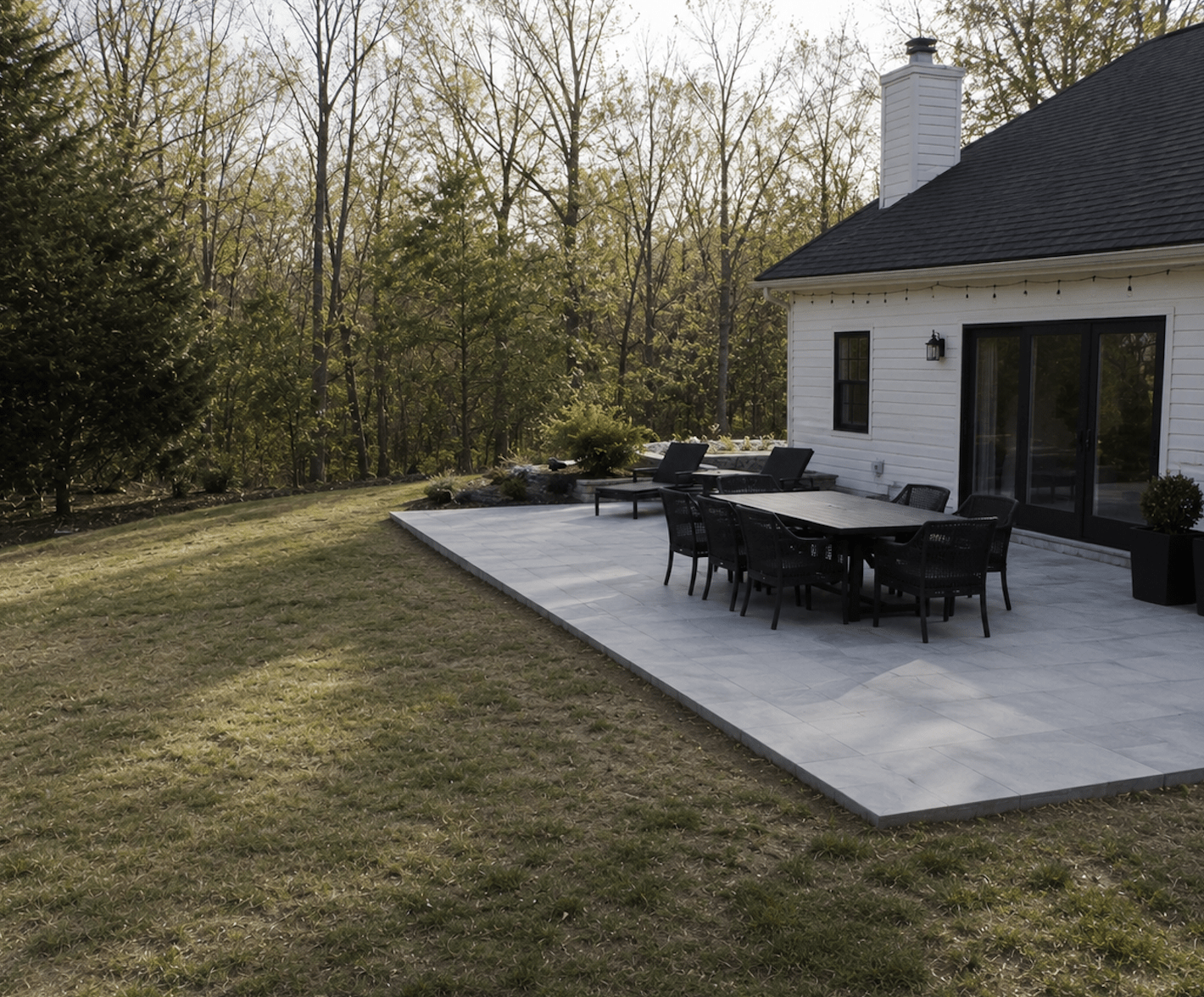
The Mistake:
Focusing only on the patio itself, ignoring the surrounding transitions.
Why It Feels Awkward:
Without thoughtful transitions, the patio feels disconnected from the rest of the landscape.
How to Avoid It:
Design the edges and transitions just as carefully as the patio:
- Soft planting that spills toward the hardscape
- Pathways that gently lead in and out
- Lighting that guides movement at night
These in-between spaces are what make everything feel cohesive.
A Patio Should Feel Effortless
The best patios don’t announce themselves. They don’t feel forced or overdesigned—they simply work. You walk outside, sit down, and everything feels right without needing to think about it. That’s the difference between a patio that just looks good and one that becomes part of your daily life. At Quiet Nature, we approach every project with that goal in mind: creating outdoor spaces that feel natural, intentional, and deeply connected to how you live. Your backyard shouldn’t just be something you look at—it should be somewhere you genuinely want to be. If you’re thinking about reworking your patio or starting fresh, we’d be happy to talk through your space, your goals, and what might be possible. No pressure—just a thoughtful conversation about getting it right.