
Pergola vs Pavilion vs Covered Porch:
What Actually Creates Comfort?
There’s a moment most homeowners recognize. You step outside into your backyard—coffee in hand, maybe early morning or just before sunset
and something feels… off. The space is beautiful, maybe even thoughtfully designed. But it’s not quite comfortable. You don’t linger.
You don’t settle in. You don’t stay. And that’s the difference between an outdoor space that looks good—and one that truly works.
At Quiet Nature, we often meet clients who already have a pergola, a pavilion, or a covered porch. Yet they still find themselves retreating
indoors more often than they’d like. The structure is there. The intention is there. But the comfort? Missing. So what actually creates comfort in an outdoor
living space? And which structure—pergola, pavilion, or covered porch—delivers it best? Let’s take a deeper look.
Understanding Outdoor Comfort in Waterloo’s Climate
Before comparing structures, it’s important to define what “comfort” really means outdoors—especially in Southern Ontario.
In the Waterloo Region, comfort is influenced by:
- Sun exposure and shade control (intense summer sun)
- Rain protection (frequent seasonal showers)
- Wind management (open suburban lots and rural properties)
- Temperature swings (hot days, cool evenings)
- Seasonal usability (maximizing shoulder seasons like spring and fall)
A well-designed outdoor structure doesn’t just block the elements—it moderates them.
Pergola: Light, Airy, and Intentionally Partial
What is a Pergola?
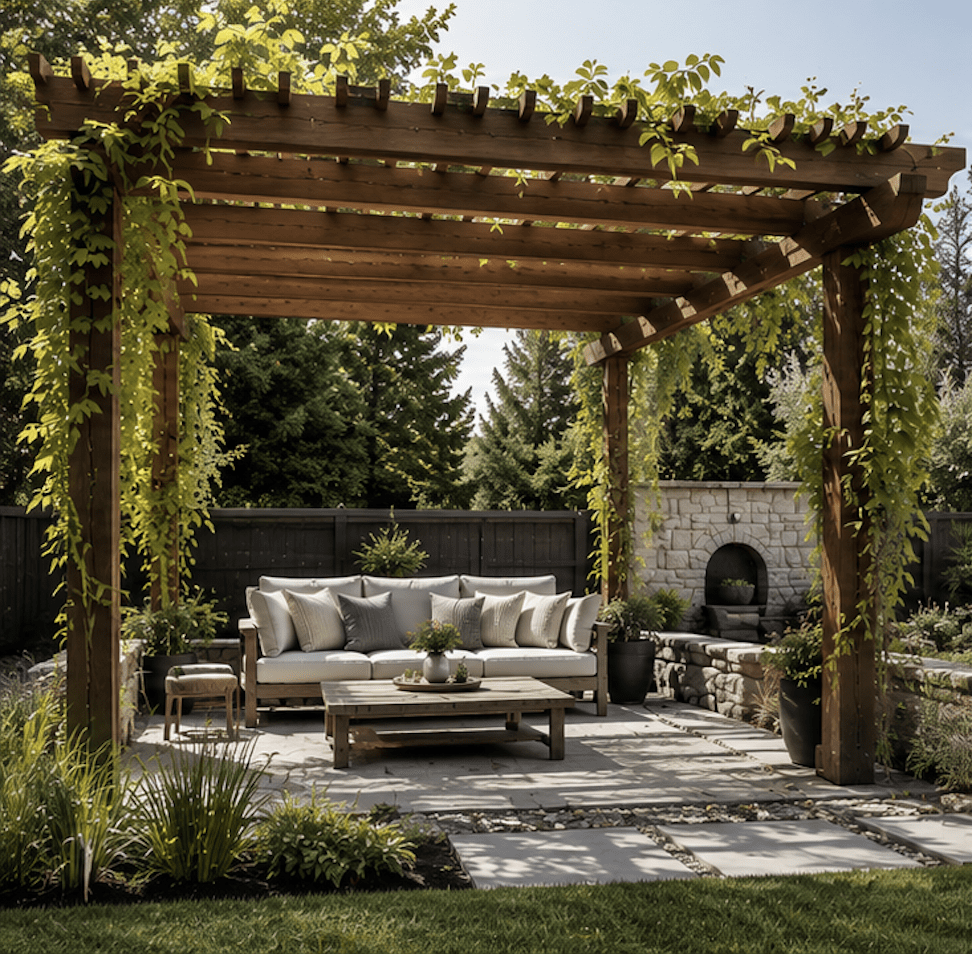
A pergola is an open-roof structure defined by vertical posts and overhead beams or slats. It provides filtered shade rather than full coverage.
Where Pergolas Shine
Pergolas are best suited for homeowners who want:
- A visually light structure that doesn’t overpower the yard
- Partial shade with sunlight filtering through
- A defined outdoor zone without fully enclosing it
- Integration with climbing plants or vines
The Comfort Reality
Pergolas offer emotional comfort—they create atmosphere, rhythm, and structure. But in Waterloo’s climate, their physical comfort is limited without enhancements.
Challenges:
- Minimal rain protection
- Limited shade during peak midday sun
- Reduced usability during unpredictable weather
How to Make a Pergola Truly Comfortable
To elevate a pergola beyond aesthetics:
- Add retractable canopies or louvered roofs
- Incorporate outdoor curtains or screens
- Use strategic planting for natural shade
- Layer with lighting and heating elements
Real Scenario:
A Kitchener homeowner installs a cedar pergola over a dining area. Initially beautiful, it becomes underused during midday heat. After adding a retractable shade system and soft perimeter drapery, it transforms into a go-to evening and weekend space.
Bottom line: Pergolas create ambiance—but require thoughtful upgrades to deliver consistent comfort.
Pavilion: Shelter, Stability, and Year-Round Potential
What is a Pavilion?
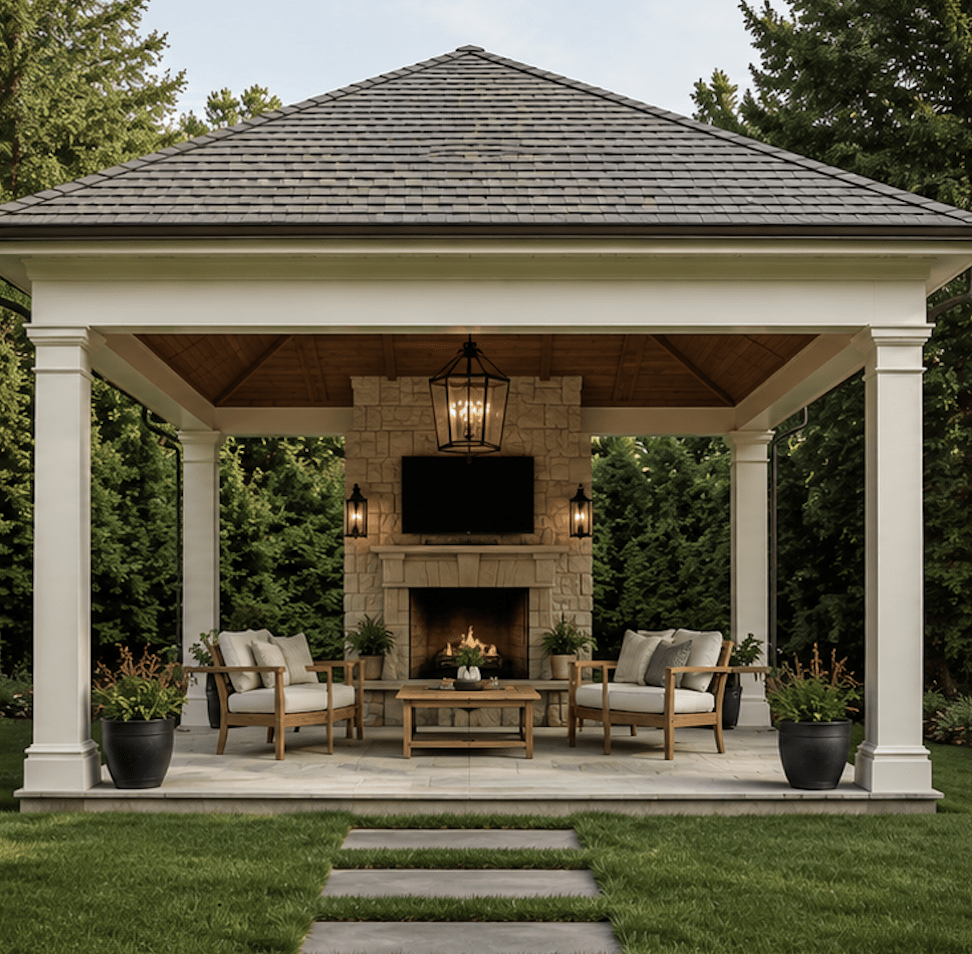
A pavilion is a freestanding structure with a fully solid roof, typically supported by columns. It offers complete overhead protection.
Pavilions are ideal for:
- Full weather protection (sun and rain)
- Outdoor kitchens and dining areas
- Poolside lounging spaces
- Homeowners seeking a destination-style backyard
The Comfort Advantage
In terms of pure physical comfort, pavilions are the strongest contender.
They provide:
- Reliable shade throughout the day
- Complete rain coverage
- A sense of enclosure without confinement
- Compatibility with fans, heaters, and lighting
Designing for Waterloo’s Seasons
To maximize a pavilion’s potential:
- Install infrared heaters for cooler evenings
- Add a ceiling fan for humid summer days
- Use durable roofing materials suited for snow loads
- Consider partial walls or screens for wind control
Real Scenario:
A Waterloo family builds a pavilion adjacent to their natural pool. With integrated lighting and a wood-fired oven, it becomes the centerpiece of gatherings—from summer dinners to crisp fall evenings.
Bottom line: If comfort is defined by usability and protection, pavilions deliver consistently across seasons.
Covered Porch: Seamless Living,
Effortless Comfort
What is a Covered Porch?
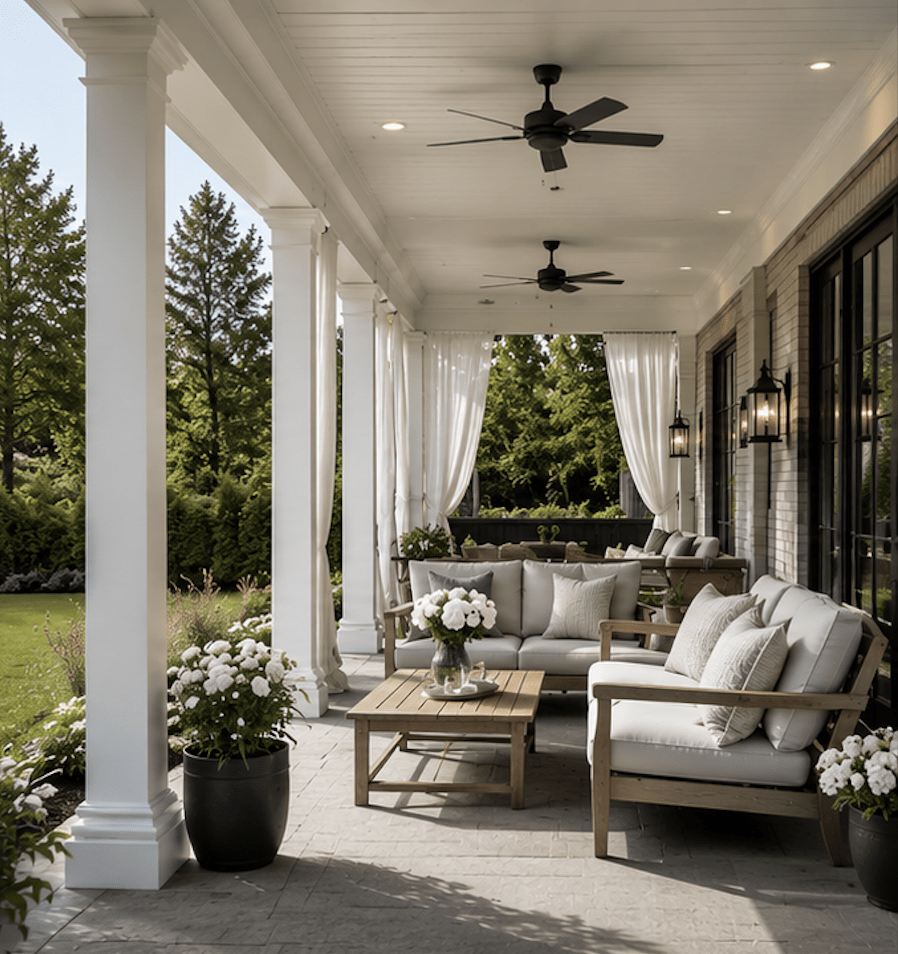
A covered porch is attached directly to the home, extending the roofline to create a sheltered outdoor area.
Where Covered Porches Stand Out
Covered porches are perfect for homeowners who want:
- A natural extension of indoor living
- Easy access from the home (kitchen, living room)
- A cohesive architectural look
- A space that feels intimate and grounded
The Comfort Experience
Covered porches offer a unique blend of:
- Full protection from sun and rain
- Proximity to indoor amenities
- A stronger sense of privacy and enclosure
Because they are attached, they also benefit from:
- Shared structural warmth
- Easier integration of electricity, heating, and lighting
Considerations in Waterloo
- Ensure proper drainage and snow management
- Design for natural light flow into the home
- Balance enclosure with ventilation
Real Scenario:
In Cambridge, a homeowner converts a small back deck into a covered porch with skylights and built-in seating. What was once a transitional space becomes the most-used “room” in the home—morning coffee, remote work, and evening unwinding all happen here.
Bottom line: Covered porches excel in everyday comfort and convenience, especially for homeowners who value seamless indoor-outdoor living.
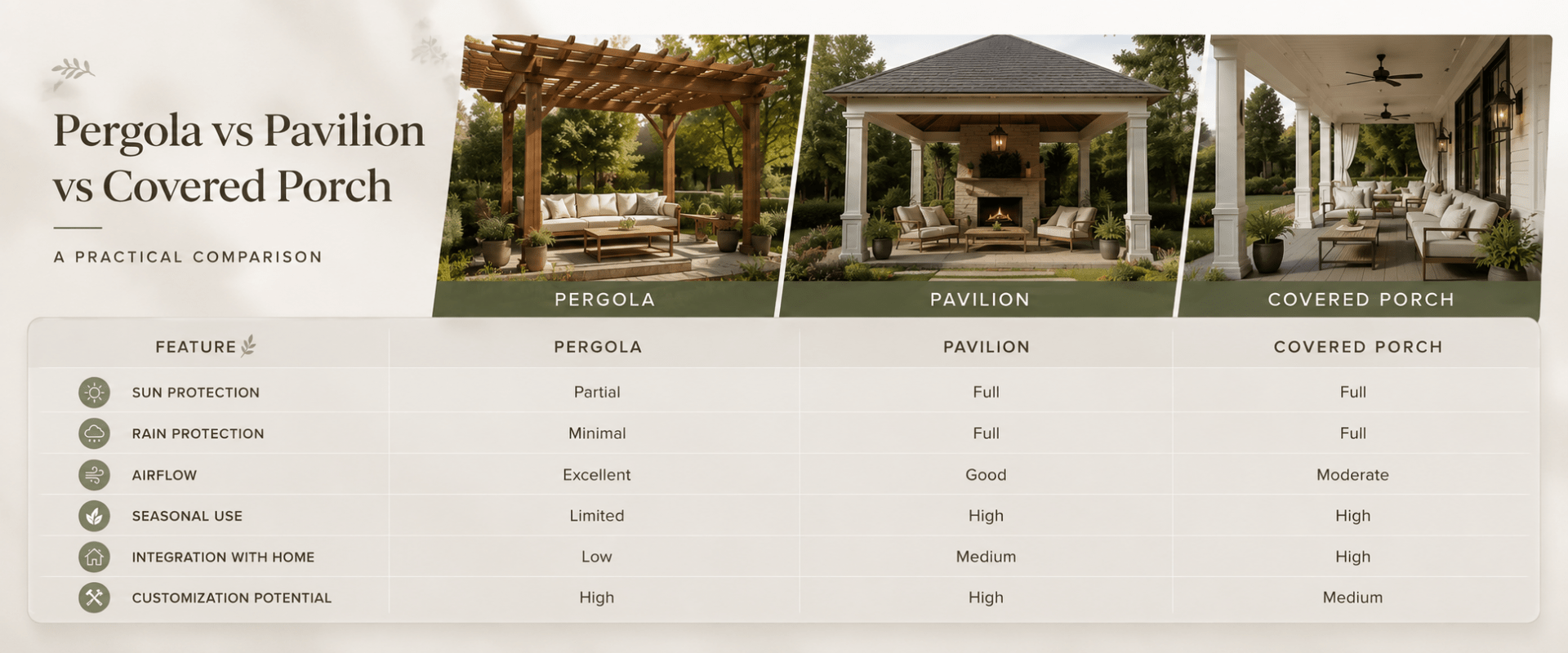
So, What Actually Creates Comfort?
The answer isn’t one-size-fits-all. It depends on how you live.
Choose a Pergola if:
- You value aesthetic lightness and garden integration
- You primarily use the space in mild weather
- You’re willing to layer in comfort features over time
Choose a Pavilion if:
- You want maximum usability regardless of weather
- You host frequently or plan for entertaining
- You’re building a destination-style outdoor space
Choose a Covered Porch if:
- You want effortless daily use
- You prefer a space that feels like an extension of your home
- Convenience and proximity matter most
Designing Beyond the Structure
Here’s what many homeowners overlook:
The structure alone doesn’t create comfort. The ecosystem around it does.
To truly elevate your outdoor living experience, consider:
- Material selection (natural wood vs composite vs stone)
- Furniture scale and layout
- Lighting design (layered, warm, intentional)
- Sound and water elements (like natural pools or fountains)
- Landscaping integration (softening edges, adding privacy)
In the Waterloo Region, where outdoor time is precious and seasonal, every design choice should work harder.
A More Intentional Way to Build Comfort
At its core, outdoor comfort isn’t about adding a structure—it’s about creating a space that invites you to stay. In the Waterloo Region, where the seasons shape how and when we gather, the right choice isn’t just about style. It’s about how your space supports your life—quiet mornings, shared meals, spontaneous evenings, and everything in between. Whether it’s the openness of a pergola, the protection of a pavilion, or the familiarity of a covered porch, the goal is the same: To create a place that feels as good as it looks.
Let’s Design Something That Feels Right
At Quiet Nature, we believe comfort isn’t something you add at the end—it’s something you design from the very beginning. Every pergola, pavilion, and covered porch we create is shaped around real life: how you gather, how you rest, how you want your space to feel at the end of a long day. If you’re starting to imagine what’s possible for your own backyard, one of the best places to begin is by seeing what’s already been thoughtfully brought to life.
Explore our portfolio to experience how different structures come together in real spaces—how light moves through a pergola, how a pavilion anchors a backyard, how a covered porch becomes part of the home itself. You might just recognize the feeling you’ve been trying to create. When you’re ready, we’re here to help you shape something just as intentional—designed not just to look beautiful, but to truly be lived in.