
Soil Health for Residential Gardens:
Simple Fixes That Change Everything
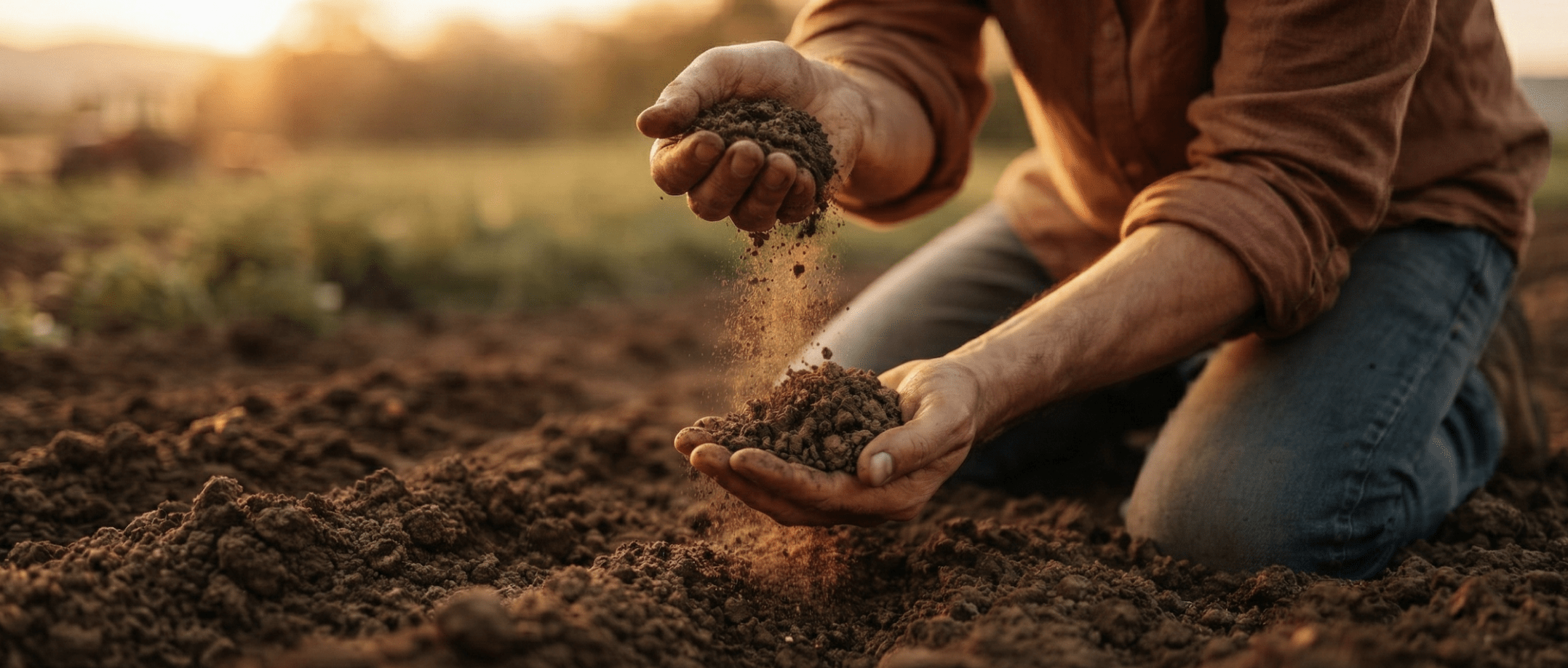
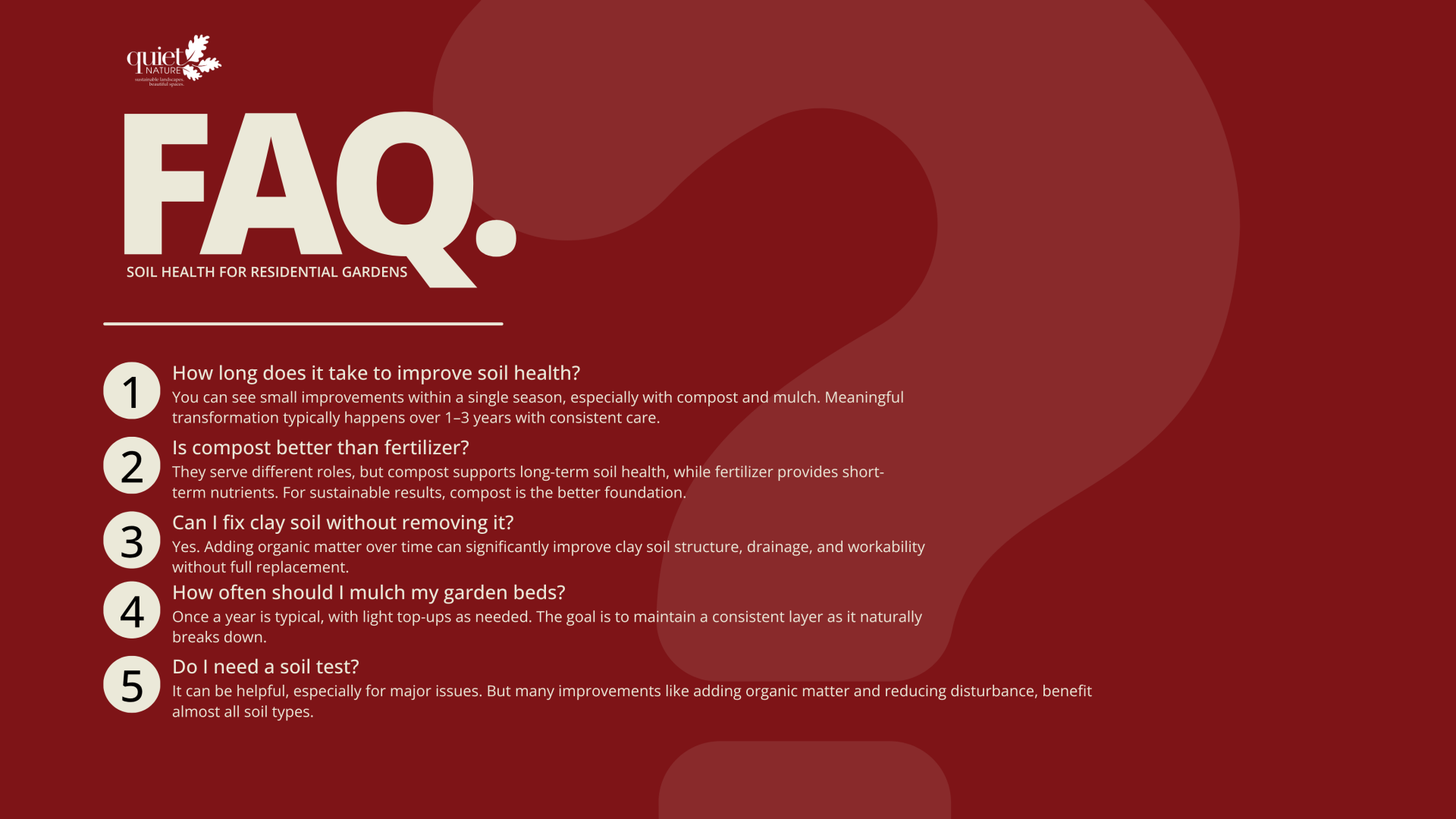
In late spring, many homeowners notice their garden quietly stalls. The plants are in, the beds are clean, and there’s even fresh mulch—but something feels off. Growth slows, leaves lose their vibrancy, and the space doesn’t come alive the way it should. It’s easy to assume the issue is what was planted, but more often, the real problem lies beneath it. Soil health is the foundation of every thriving landscape. When it’s right, plants establish more easily, maintenance becomes simpler, and the entire space begins to feel more natural and alive. The encouraging part is that you don’t need a complete overhaul—small, thoughtful improvements to your soil can make a remarkable difference.
Why Soil Health Matters More Than You Think
Healthy soil isn’t just “dirt.” It’s a living ecosystem.
A single teaspoon of healthy garden soil can contain billions of microorganisms—bacteria, fungi, and other life forms working together to support plant growth.
This underground network helps plants access nutrients, retain water, and resist stress.
When soil is depleted or compacted, everything becomes harder:
- Water runs off instead of soaking in
- Roots struggle to expand
- Plants become more dependent on fertilizers
- Weeds and pests gain an advantage
In contrast, healthy soil creates a kind of quiet resilience. Plants don’t just survive—they settle in, mature, and begin to feel like they belong.
At Quiet Nature, this is where every successful landscape begins. Before materials, before plant selection, before layout—there’s always a conversation about the soil.
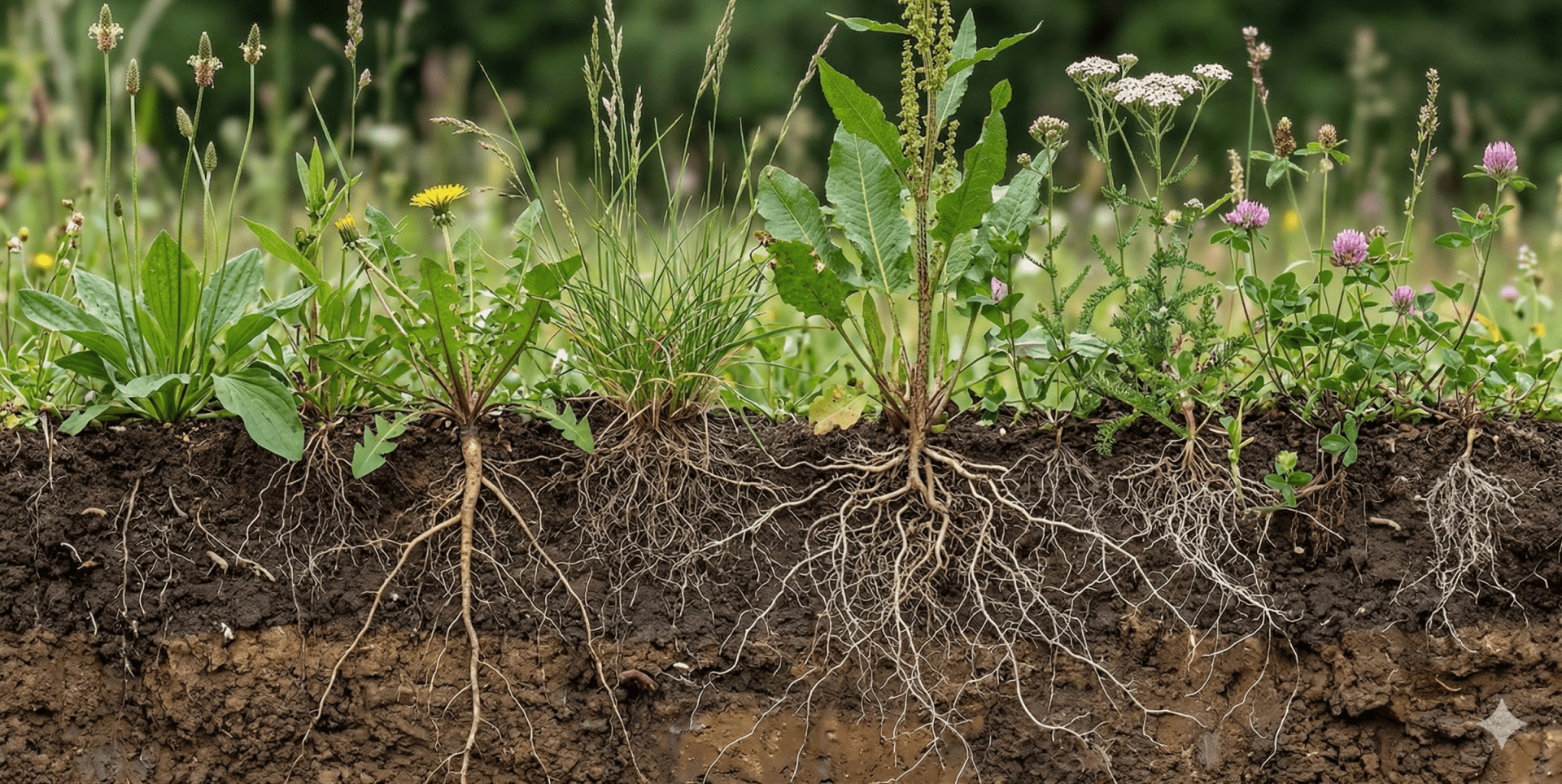
The Hidden Signs Your Soil Needs Help
Most soil issues don’t announce themselves clearly. But if you know what to look for, the signs are there.
Common indicators of poor soil health:
- Water pooling after rain or irrigation
- Dry, cracked ground in summer
- Plants that struggle despite proper care
- Heavy weed pressure in garden beds
- Thin or patchy lawn areas
- Soil that feels hard and compacted
These aren’t just surface-level problems. They’re symptoms of an ecosystem that’s out of balance.
And that’s important—because it means the solution isn’t just adding more plants or more fertilizer. It’s restoring function.
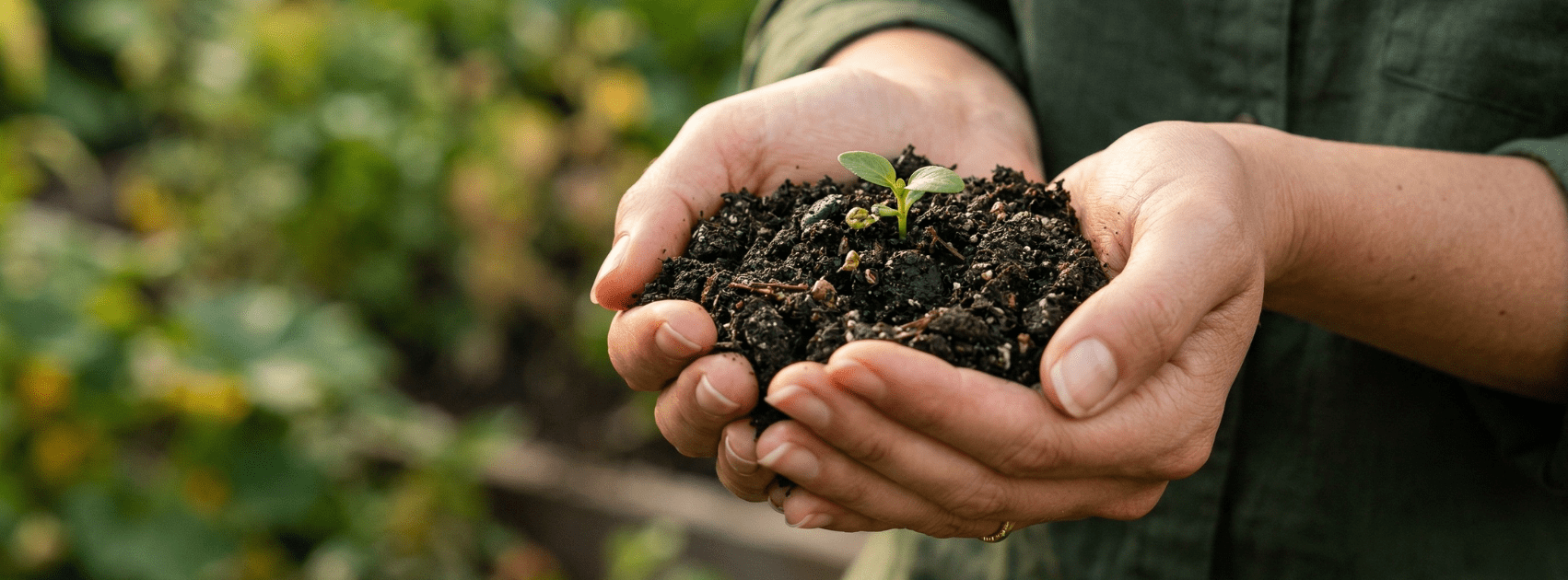
Simple Soil Fixes That Make a Big Impact
Improving soil health doesn’t require complicated systems or expensive inputs. In fact, the most effective approaches tend to be the simplest—and the most natural.
1. Add Organic Matter (Consistently, Not Just Once)
If there’s one habit that changes everything, it’s this.
Organic matter—like compost, shredded leaves, or well-aged mulch—feeds the soil. It improves structure, increases water retention, and supports microbial life.
But here’s the key: it’s not a one-time fix.
Think of it as an ongoing relationship with your garden.
Simple ways to start:
- Top-dress garden beds with compost each spring and fall
- Leave shredded leaves in place instead of removing them
- Use natural mulches that break down over time
Over a season or two, the difference becomes noticeable. Soil becomes darker, softer, and more workable. Plants respond accordingly.
2. Stop Over-Tilling (Less Disturbance = Better Soil)
It’s a common instinct: when soil looks poor, we try to “fix” it by turning it over.
But excessive tilling can actually make things worse.
It breaks down soil structure, disrupts beneficial organisms, and accelerates moisture loss.
In natural systems, soil is rarely disturbed. Layers build gradually. Life organizes itself.
A better approach:
- Loosen soil gently when needed, rather than fully turning it
- Add compost on top and let natural processes incorporate it
- Use planting techniques that minimize disruption
This shift—from forcing change to supporting it—aligns more closely with how healthy landscapes evolve over time.
3. Use Mulch Intentionally (Not Just for Looks)
Mulch is often treated as a finishing touch. But in reality, it’s one of the most powerful tools for improving soil health.
A good mulch layer:
- Regulates soil temperature
- Retains moisture
- Suppresses weeds
- Slowly adds organic matter as it breaks down
But not all mulch is created equal.
At Quiet Nature, we often lean toward natural, minimally processed materials—wood chips, leaf mulch, or bark—because they behave more like what you’d find in a forest.
Best practices:
- Apply 2–3 inches of organic mulch
- Keep it slightly away from plant stems and tree trunks
- Refresh annually, as it decomposes
Done properly, mulch becomes part of the soil-building process—not just a surface layer.
4. Improve Drainage Without Overengineering
Poor drainage is one of the most common—and frustrating—soil issues.
Water either sits too long or disappears too quickly. Both extremes stress plants.
Before jumping to complex solutions, it’s worth looking at natural ways to improve water movement.
Simple fixes include:
- Adding organic matter to improve soil structure
- Slightly reshaping beds to encourage water flow
- Incorporating deep-rooted plants that help break up compacted soil
- Creating areas where water can naturally infiltrate instead of running off
In many cases, the goal isn’t to eliminate water—but to slow it down and give it somewhere to go.
This approach aligns with a broader philosophy: working with the site, not against it.
5. Choose Plants That Fit the Soil (Not the Other Way Around)
One of the most overlooked principles in residential landscaping is this:
Not every plant belongs in every soil.
Trying to force mismatched plants to thrive often leads to ongoing frustration—extra watering, fertilizing, and maintenance.
A more sustainable approach is to observe what your soil naturally supports.
Is it sandy and fast-draining? Clay-heavy and moisture-retentive? Shaded and cool?
When plant selection aligns with those conditions:
- Establishment is faster
- Maintenance drops significantly
- The overall look feels more natural and cohesive
This idea—“right plant, right place”—is foundational to long-term success.
6. Feed the Soil, Not Just the Plants
It’s tempting to focus on quick fixes—fertilizers that promise immediate results.
And while they can provide short-term boosts, they don’t address the underlying system.
Healthy soil creates its own fertility over time.
Instead of feeding plants directly, the goal is to support the soil ecosystem that feeds them.
That means:
- Prioritizing compost and organic inputs
- Reducing reliance on synthetic fertilizers
- Encouraging biological activity
Over time, this creates a self-sustaining cycle. The garden becomes less dependent on intervention—and more resilient overall.
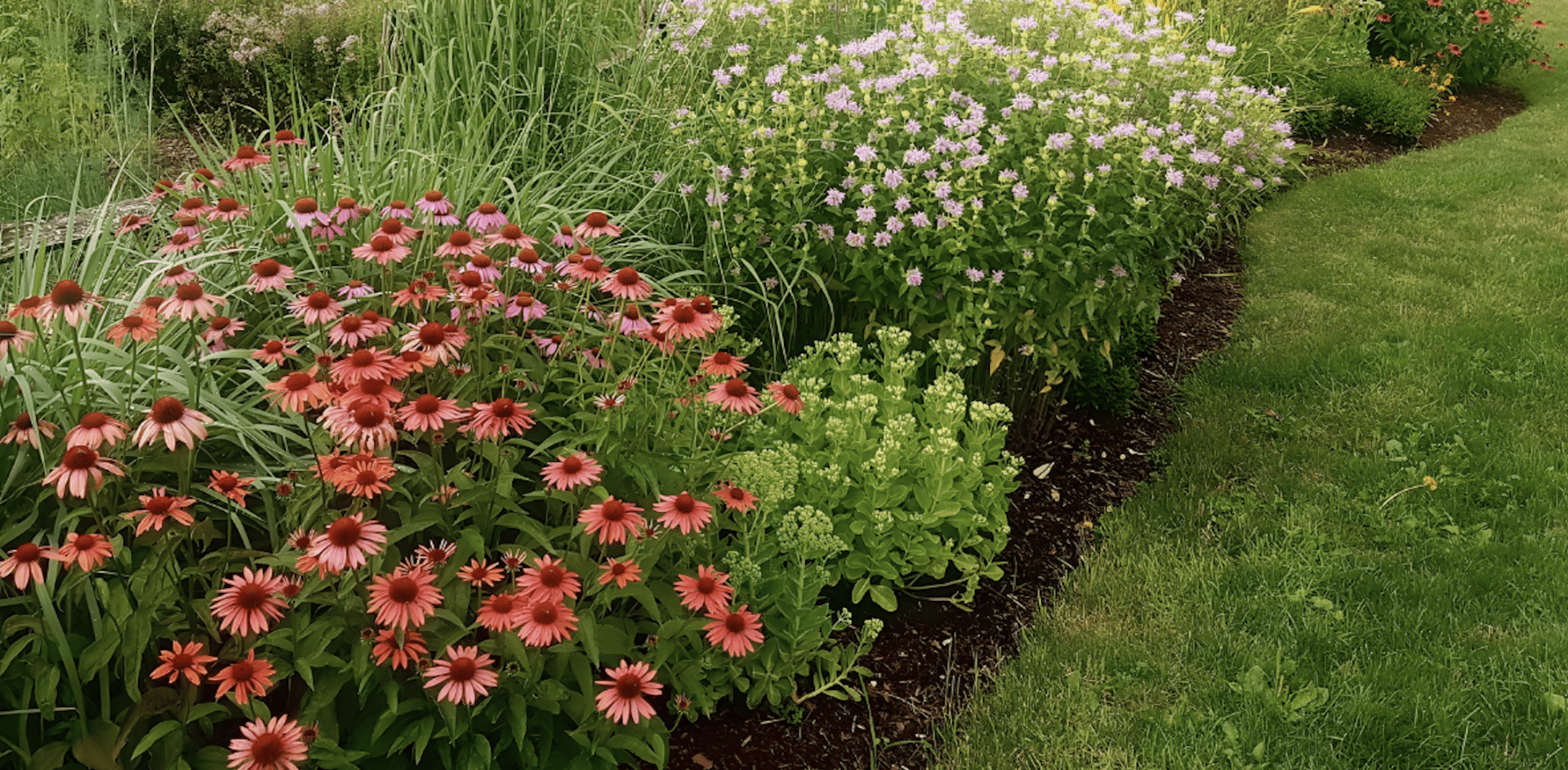
A Real-World Shift: From Struggling Beds to a Living Garden
We often see this transformation in stages.
A homeowner starts with a common frustration: plants that never quite take off. The beds look tidy, but they lack depth, movement, and vitality.
Instead of replacing everything, we focus on the soil.
Compost is added. Mulch is applied more intentionally. Plant selections are adjusted to better suit the conditions.
In the first season, the changes are subtle.
By the second, the difference is clear:
- Plants fill in more naturally
- Weeds become less aggressive
- Watering needs decrease
- The space begins to feel established
It’s not dramatic in the way a full renovation is, but it’s often more meaningful. The garden starts to function as a system, not just a collection of elements.
Soil Health Trends in Modern Landscaping (2025 and Beyond)
There’s a noticeable shift happening in residential landscapes.
Homeowners are moving away from high-input, high-maintenance approaches—and toward systems that are more ecological, more durable, and more connected to place.
Some key trends include:
- Regenerative landscaping practices that prioritize soil biology
- Reduced lawn areas in favor of layered planting beds
- Increased use of native and adaptive plants
- On-site nutrient recycling (composting, leaf retention)
- Water-conscious design that improves infiltration and reduces runoff
These aren’t just trends—they’re responses to real challenges: climate variability, water management, and the desire for spaces that feel grounded and lasting.
And at the center of all of it is soil.
A Final Thought: The Garden Beneath the Garden
It’s easy to focus on what we can see—the plants, the stonework, the layout. But the real transformation happens below the surface. Healthy soil doesn’t just support a garden it shapes how it feels. It allows spaces to mature gracefully, to soften over time, to become something more than designed.
At Quiet Nature, we believe the most beautiful landscapes are the ones that feel effortless.
And that kind of effortlessness starts quietly, in the soil.