Top 10 Garden Mistakes We See
(and How to Fix Them Fast)

There’s a moment we see often. A homeowner walks us through their yard—beautiful home, good intentions, maybe even a few expensive upgrades
But something feels… off. The space doesn’t flow. The plants struggle. The garden looks “done,” but not alive. And almost always,
it comes down to a handful of common garden mistakes. The good news? Most of them are fixable—quickly, and often without starting from scratch.
If you’re investing in your outdoor space (or thinking about it), understanding these pitfalls can save you time, money, and years of frustration.
Let’s walk through the top 10 garden mistakes we see—and how to fix them fast.
1. Designing Without a Clear Purpose
The mistake:
Starting with plants or features instead of how you want to use the space.
We often hear:
“I just want it to look nice.”
But “nice” isn’t a function. It’s a result.
Why it matters:
Without a clear purpose, landscapes feel disconnected—beautiful in pieces, but not cohesive.
How to fix it:
Start with lifestyle questions:
- Where do you actually spend time outside?
- Do you host? Relax? Play with kids?
- Do you want sun, shade, or both?
Then design around those answers.
Example:
Instead of adding random seating, create a defined lounging area oriented toward evening sun, with nearby planting that frames—not blocks—the view.
2. Choosing the Wrong Plants for the Space
The mistake:
Falling in love with a plant without considering light, soil, or moisture conditions.
Why it matters:
Plants that are mismatched to their environment will always struggle—no matter how much you water or fertilize.
How to fix it:
Follow a simple principle: right plant, right place.
Pay attention to:
- Sun vs. shade exposure
- Soil type (clay, sandy, well-drained)
- Water patterns (dry slopes vs. wet low spots)
Quick win:
Replace struggling plants with species that naturally thrive in your conditions—you’ll reduce maintenance instantly.
3. Overcomplicating the Design
The mistake:
Too many materials, too many plant varieties, too many competing ideas.
Why it matters:
Complexity often reads as chaos, not sophistication.
How to fix it:
Simplify and repeat.
- Limit your plant palette
- Use consistent materials
- Create visual rhythm through repetition
Case insight:
We’ve seen gardens with 40+ plant types feel overwhelming—then become calm, elegant spaces after reducing that to 10–15 thoughtfully grouped varieties.
4. Ignoring Long-Term Maintenance
The mistake:
Designing a garden that looks great on day one—but becomes a burden over time.
Why it matters:
A landscape that requires constant upkeep eventually gets neglected.
How to fix it:
Design for ease of maintenance from the beginning:
- Group plants with similar care needs
- Avoid high-maintenance species unless you love gardening
- Define clean bed edges for easier mowing and upkeep
Reality check:
The best gardens aren’t the ones that require the most effort—they’re the ones that age gracefully with minimal intervention.
5. Poor Layout and Flow
The mistake:
Spaces that don’t connect logically—awkward pathways, disconnected zones, or wasted areas.
Why it matters:
Even a beautiful garden can feel frustrating if it doesn’t function well.
How to fix it:
Think in terms of movement:
- How do you enter and exit the space?
- What paths do people naturally take?
- Where do transitions feel abrupt?
Quick fix:
Add or adjust pathways so movement feels intuitive, not forced.
6. Underestimating Scale
The mistake:
Plants, patios, or features that are too small (or too large) for the space.
Why it matters:
Scale is one of the biggest factors in whether a garden feels “right.”
How to fix it:
- Use larger plant groupings instead of scattered singles
- Size patios and seating areas based on actual use
- Allow room for plants to mature
Example:
A tiny patio in a large backyard feels like an afterthought. Expanding it—even modestly—can anchor the entire space.
7. Neglecting Soil Health
The mistake:
Treating soil as an afterthought.
Why it matters:
Healthy soil is the foundation of every successful garden. Without it, plants will always underperform.
How to fix it:
- Add organic matter (compost, mulch)
- Avoid overworking or stripping soil
- Let natural processes build structure over time
Trend insight:
There’s a growing shift toward working with existing soil conditions rather than replacing them entirely—resulting in more resilient landscapes.
8. Leaving Bare Spaces (or Too Much Lawn)
The mistake:
Large areas of exposed soil or unnecessary lawn.
Why it matters:
Nature rarely leaves space empty. Bare areas invite weeds, erosion, and visual imbalance.
How to fix it:
- Fill gaps with layered planting
- Use groundcovers or natural mulch
- Reduce the lawn where it isn’t actively used
Practical example:
Replacing unused lawn with a meadow-style planting can dramatically increase visual interest while lowering maintenance.
9. Ignoring Water (Both Too Much and Too Little)
The mistake:
Not planning for how water moves through the landscape.
Why it matters:
Water issues—whether pooling or drought stress—are one of the most common causes of garden failure.
How to fix it:
- Observe how water behaves after rain
- Address drainage issues early
- Consider irrigation where needed
Quick upgrade:
Even simple grading adjustments or adding a rain garden can solve persistent problems.
10. Treating the Garden as a One-Time Project
The mistake:
Expecting the landscape to be “done” once installation is complete.
Why it matters:
Gardens are living systems. They evolve.
How to fix it:
Shift your mindset:
- Think in phases, not finality
- Plan for seasonal changes and growth
- Embrace ongoing refinement
Case insight:
The most beautiful properties we maintain today didn’t start perfect—they improved year after year through thoughtful care and adjustments.
What These Mistakes Have in Common
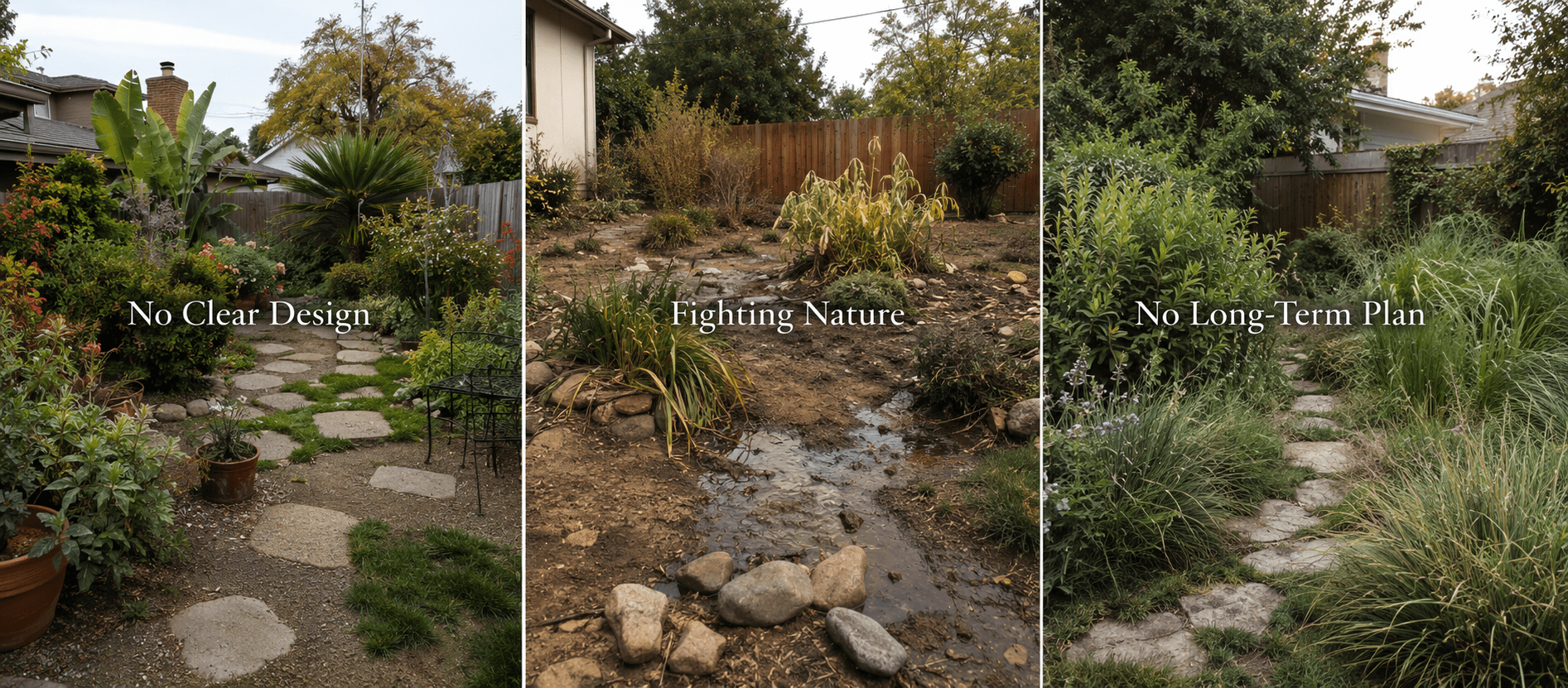
If you zoom out, most garden mistakes fall into three categories:
- Design without intention
- Ignoring natural systems
- Underestimating long-term care
When those are addressed, everything changes.
A garden stops being something you manage…
and starts becoming something you experience.
A Final Thought: Gardens Should Feel Effortless
The best gardens don’t feel overdesigned. They feel natural. Intentional. Calm. They invite you outside without asking for constant work in return.
At Quiet Nature, we believe your outdoor space should feel like a seamless extension of your home—a place to unwind, host, and reconnect with nature,
without stress or second-guessing. Thoughtful design, clear communication, and craftsmanship are what turn good spaces into lasting ones.
If you’re looking at your garden and thinking something’s not quite right, you’re probably correct.
And more importantly, you’re closer to fixing it than you think.
Ready to Rethink Your Garden?
If you want a space that feels intentional, low-stress, and built to evolve beautifully over time, we’d be happy to take a look with you.
Start with a conversation. Walk the property. Understand what’s working, and what isn’t.
From there, the next right step becomes clear.